
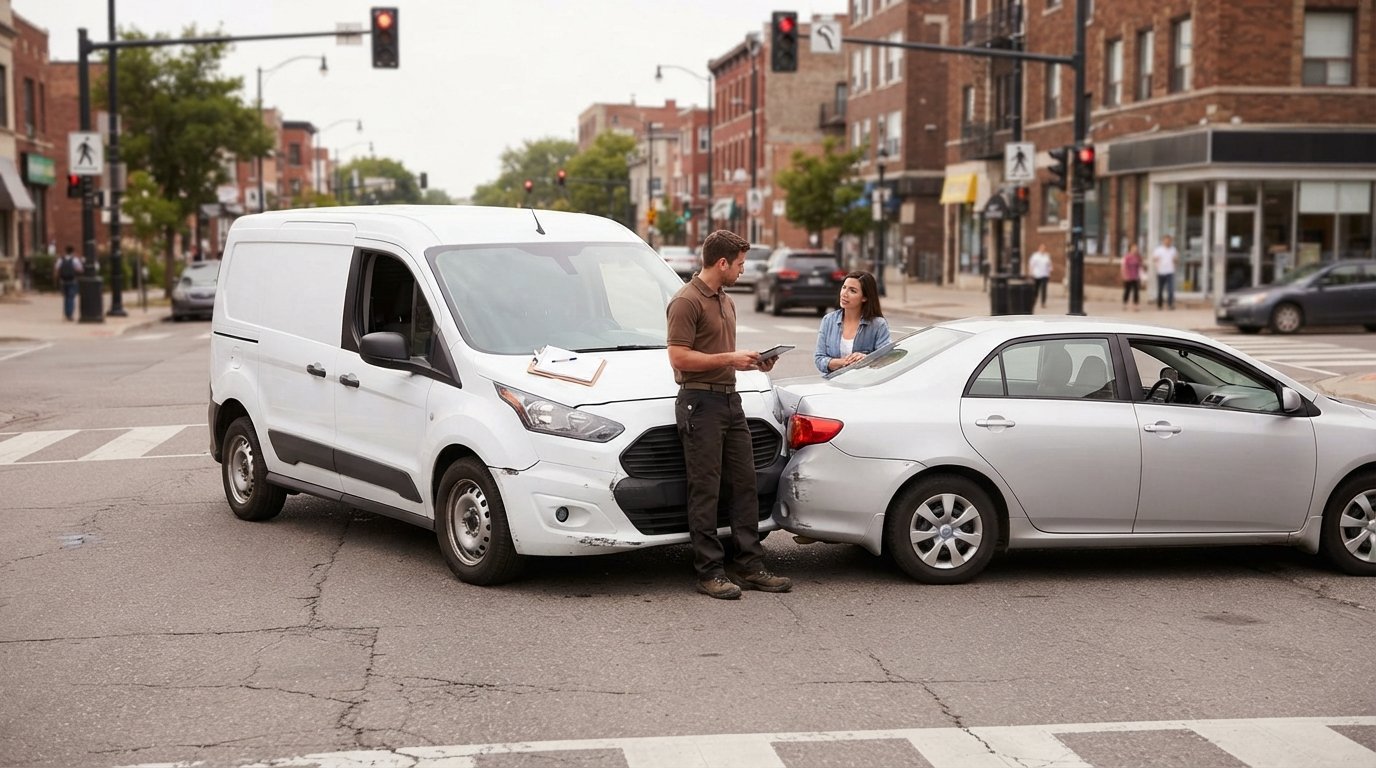
Delivery Van Accident Claim: Who Is Liable, Driver or Company?
Delivery van accident claim who is liable the driver or the company? Call (855)-545-2917 for a free case review and protect your right to compensation.

By Thomas Carter
A delivery van accident can leave you with injuries, vehicle damage, and a confusing set of questions about who should pay. The driver was behind the wheel, but the van may belong to a company, the driver may work for a larger logistics network, or the delivery might be part of a gig app. Understanding who is legally responsible is not just a technicality; it directly affects which insurance policy responds and how much compensation may be available. This article breaks down the key legal principles, evidence, and practical steps that help you sort out liability after a collision with a delivery vehicle.
The Core Legal Question: Driver or Company?
When a delivery van hits you, the first instinct is to blame the person driving. But in many cases, the driver is not the only party on the hook. The legal doctrine of respondeat superior (Latin for "let the master answer") holds employers liable for the negligent acts of employees committed within the scope of their employment. In plain terms, if a delivery driver causes a crash while making deliveries for an employer, that employer can be held financially responsible for the harm caused.
However, this is not automatic. The critical issue is whether the driver was acting within the scope of employment at the time of the accident. If the driver was on a personal detour, running a personal errand, or using the van without permission, the employer may argue it is not liable. On the other hand, minor deviations from the delivery route, such as stopping for a quick coffee or taking a slightly longer path, often still fall within the scope of employment.
Scope of employment generally includes activities that are of the kind the employee is employed to perform, occur substantially within the authorized time and space limits, and are actuated at least in part by a purpose to serve the employer. For delivery drivers, this means the analysis often centers on the driver's route, schedule, and purpose at the moment of the crash. Evidence linking the driver's delivery schedule and route to the accident scene can be decisive.
Respondeat Superior and Scope of Employment in Plain Terms
To determine whether an employer is liable under respondeat superior, courts look at several factors. These include whether the driver was on duty, whether the vehicle was owned or leased by the company, whether the driver was following company instructions, and whether the accident happened during a delivery or a related task. If the driver was clocked in and making deliveries, the employer is likely to be held responsible.
But companies often try to distance themselves from liability by arguing that the driver was an independent contractor rather than an employee. This distinction is crucial. Independent contractors are generally not covered by respondeat superior, and the company may not be liable for their negligence. However, the label in a contract is not controlling; courts look at the actual working relationship, including how much control the company exercises over the driver's work, whether the driver uses their own vehicle, and how they are paid.
For example, if a delivery company sets the driver's schedule, requires uniforms, dictates routes, and provides the vehicle, the driver is more likely to be considered an employee even if the contract says "independent contractor." Conversely, if the driver owns the van, chooses their own hours, and can work for multiple companies, they may truly be an independent contractor. This distinction is a frequent battleground in delivery van accident claims.
Why Gig Delivery Drivers Complicate the Liability Picture
The rise of app-based delivery services has added layers of complexity. Gig drivers often use their personal vehicles, work flexible hours, and are classified as independent contractors by the platforms they serve. When a gig driver causes an accident, the platform may deny liability, pointing to the independent contractor relationship. However, there are situations where the platform can still be held responsible, such as when the driver was actively engaged in a delivery at the time of the crash, or when the platform's policies and incentives encouraged risky behavior.
Additionally, gig drivers may have personal auto insurance that excludes commercial use. Many personal policies exclude coverage for delivering goods for pay, leaving injured victims with limited options. Some gig platforms provide commercial liability coverage, but it often applies only during specific periods, such as when the driver is en route to pick up an order or actively delivering. Understanding the timing and the platform's insurance policy is essential.
Another wrinkle: if the gig driver was using a rented vehicle through a platform's partnership, the rental company's insurance may also come into play. Sorting out these overlapping policies requires careful investigation and often the help of an attorney who understands the gig economy landscape.
How a Company's Insurance and Safety Policies Affect Your Claim
Companies that operate delivery fleets typically carry commercial auto insurance and workers' compensation insurance. Commercial auto policies are designed to cover accidents involving company vehicles, and they often have higher liability limits than personal policies. If the driver was an employee acting within the scope of employment, the company's commercial policy is likely to be the primary source of compensation.
But insurance companies are not on your side. They may argue that the driver was not at fault, that you contributed to the accident, or that the driver was off-duty. They may also try to settle quickly for less than your claim is worth. A company's safety policies can also be relevant: if the company failed to train the driver, ignored a history of complaints, or pressured drivers to meet unrealistic delivery times, those facts can support a claim for negligent hiring, training, or supervision.
In some cases, evidence of a company's safety violations can unlock additional compensation beyond the driver's negligence. For instance, if the company knowingly allowed a driver with a suspended license to operate a van, the company may be directly liable for its own negligence. Investigating the company's safety record and policies is a key part of building a strong delivery van accident claim.
Evidence Linking the Driver's Route and Delivery Schedule to the Crash
Proving that the driver was acting within the scope of employment requires evidence. The following types of evidence can be crucial:
- Delivery records and manifests: These show the driver's assigned deliveries and the expected route.
- GPS and telematics data: Many company vans are equipped with tracking devices that record speed, location, and stops.
- Time cards and work schedules: Establish whether the driver was on the clock at the time of the accident.
- Witness statements: Bystanders or other drivers may have seen the van's markings or the driver's actions.
- Vehicle ownership and registration: Confirms whether the van belongs to the company or the driver.
Preserving this evidence is time-sensitive. Companies may delete or overwrite electronic data, and witnesses may become hard to find. An attorney can send spoliation letters to preserve evidence and subpoena records if necessary. The faster you act, the better your chances of securing the proof needed to hold the right party accountable.
Why Attorney Review Helps Untangle Driver Versus Company Liability
Determining who is liable in a delivery van accident claim is rarely straightforward. Multiple parties may be involved, including the driver, the company, the vehicle owner, and various insurers. Each may point fingers at the others, and the insurance companies may try to shift blame to reduce their payouts. An experienced attorney can cut through the confusion by investigating the employment relationship, reviewing insurance policies, and gathering evidence to build a compelling case.
Attorney review also helps you understand your rights under your state's laws. Fault rules vary by state; some follow pure comparative negligence, while others use modified comparative negligence or contributory negligence. Understanding how your state's rules apply to your situation is essential for evaluating offers and deciding whether to pursue a claim. For a deeper look at how fault is allocated, see our guide on comparative negligence in car accident claims.
Moreover, an attorney can help you avoid mistakes that could jeopardize your claim, such as giving a recorded statement to an insurance adjuster or signing a release prematurely. If you are considering legal help, you can use a platform like LawyerOffer to connect with attorneys who handle vehicle accident claims. Such services can help you find qualified legal professionals in your area, though they are not a substitute for personalized legal advice.
Remember, AutoInjuryAccident.com is not a law firm or lawyer referral service and does not provide legal advice. However, it offers a free, confidential case review to help you understand your options. Submitting a form does not create an attorney-client relationship and does not obligate you to hire a lawyer.
Steps to Take After a Delivery Van Accident
If you have been involved in an accident with a delivery van, taking the right steps can protect your health and your legal rights. Here is a numbered list of actions to consider:
- Ensure safety and seek medical attention: Move to a safe location, call 911, and get checked by a medical professional even if you feel fine.
- Document the scene: Take photos of the vehicles, the van's markings, and any visible injuries. Exchange information with the driver, including their name, employer, and insurance details.
- Identify witnesses: Collect names and contact information from anyone who saw the accident.
- Report the accident: Notify your insurance company and, if required, the police. Be cautious when speaking with the other driver's insurer.
- Preserve evidence: Keep your medical records, repair estimates, and any correspondence. Avoid posting about the accident on social media.
Following these steps creates a record that can support your claim. It also demonstrates that you took the accident seriously, which can be important if liability is disputed.
How Insurance Companies Handle Delivery Van Accident Claims
Insurance companies for delivery companies are sophisticated and experienced in defending these claims. They may employ teams of adjusters and attorneys who immediately begin building a defense. Common tactics include arguing that the driver was not at fault, that you were partially or fully responsible, or that the driver was an independent contractor not covered by the company's policy.
They may also contact you quickly with a low settlement offer before you have had a chance to understand the full extent of your injuries. It is important not to accept a quick settlement without evaluating whether it covers all your current and future medical expenses, lost wages, and pain and suffering. An attorney can help you assess the offer and negotiate for a fair resolution.
If the company denies liability, your attorney may need to file a lawsuit to obtain evidence through the discovery process. This can include depositions of the driver and company representatives, requests for internal documents, and subpoenas for electronic tracking data. The litigation process can be lengthy, but it may be necessary to achieve a just outcome.
Special Considerations for Commercial Vehicles and Federal Regulations
Delivery vans are often subject to federal and state regulations that govern commercial motor vehicles. For example, the Federal Motor Carrier Safety Administration (FMCSA) sets rules for hours of service, vehicle maintenance, and driver qualifications. If the delivery van meets the definition of a commercial motor vehicle (typically those with a gross vehicle weight rating over 10,000 pounds), additional regulations may apply. Violations of these rules can be powerful evidence of negligence.
Even smaller delivery vans may be subject to state-specific regulations. For instance, some states require commercial plates, periodic inspections, or specific insurance minimums. An attorney can investigate whether the company complied with all applicable regulations and use any violations to strengthen your claim.
What Compensation Can You Recover?
In a successful delivery van accident claim, you may be able to recover compensation for:
- Medical expenses (current and future)
- Lost wages and loss of earning capacity
- Pain and suffering
- Property damage
- Emotional distress
- Punitive damages in cases of gross negligence
The exact amount depends on the facts of your case, the severity of your injuries, and the insurance coverage available. An attorney can help you calculate a realistic value and pursue the responsible parties.
Delivery van accident claims can be complex, but you do not have to navigate them alone. Understanding the legal principles of liability, gathering the right evidence, and seeking professional guidance can make a significant difference in your ability to recover fair compensation. If you have been injured, consider reaching out for a free case review to explore your options.