
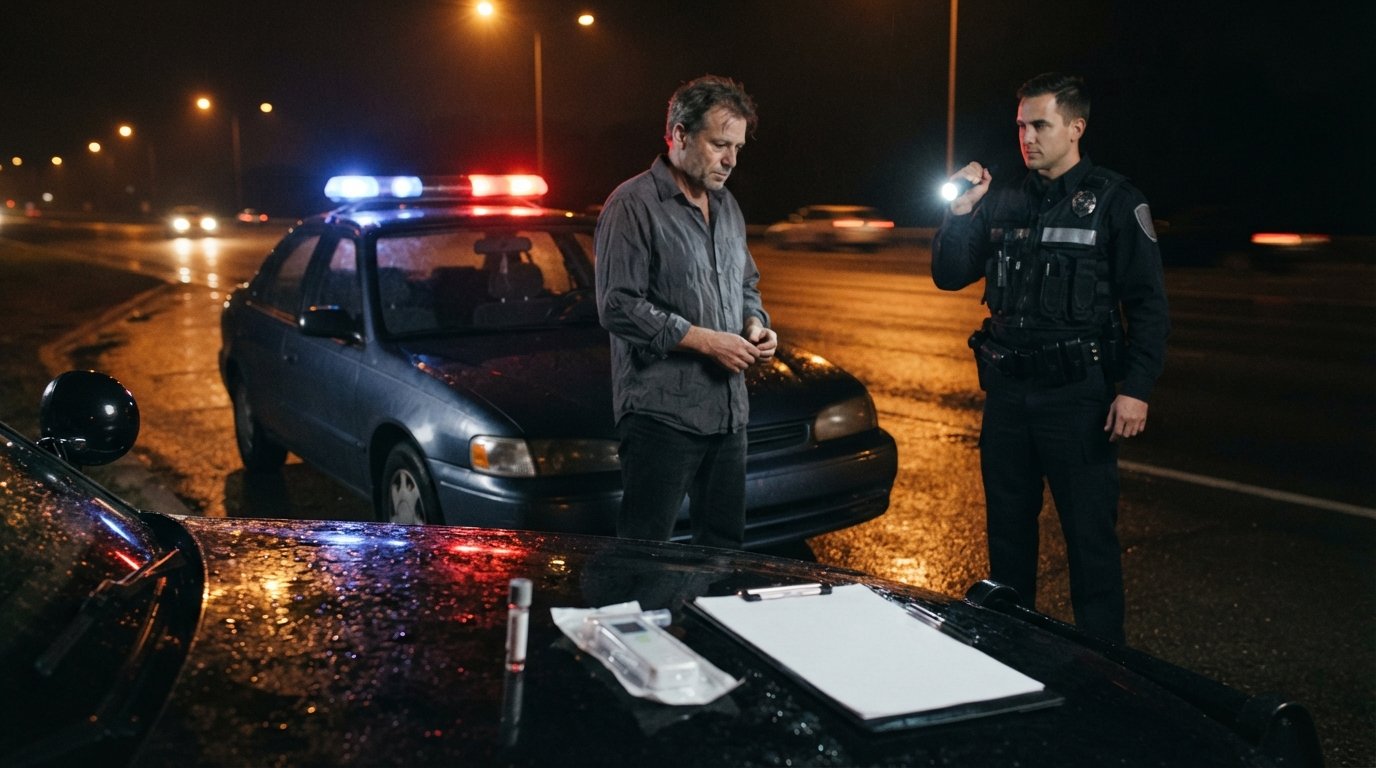
DUI Arrest, No Blood Test Result: What Happens Next
Facing a DUI arrest with no blood alcohol test result? Understand the next steps and your defense options. Call (855)-545-2917 for a free case review.

By Marcus Hale
A DUI arrest without a blood alcohol test result can feel like a legal limbo. You were handcuffed, booked, and released, but the one piece of evidence everyone talks about, the chemical test number, does not exist. Maybe you refused the breathalyzer. Maybe the blood draw was botched, the sample was lost, or the machine malfunctioned. Whatever the reason, you are probably wondering whether the case will simply fall apart or whether prosecutors can still convict you. The short answer: a missing test result does not automatically end a DUI case, but it dramatically changes the battlefield. Prosecutors must now rely on officer observations, field sobriety tests, and circumstantial evidence, and your defense attorney gains powerful cross-examination angles. Understanding what happens next helps you make smarter decisions in the critical days after arrest.
How Prosecutors Build a DUI Case Without a Chemical Test
When no blood or breath test result exists, the prosecution's case shifts from hard science to human perception. Officers document everything from the moment they first saw your vehicle to the moment you stepped out of the car. Those notes become the backbone of the state's evidence. Prosecutors will look for signs like erratic driving, the odor of alcohol, slurred speech, bloodshot eyes, fumbling with your license and registration, and unsteady balance. Each observation is a brick in a wall that does not require a single lab report.
Field sobriety tests, including the walk-and-turn, one-leg stand, and horizontal gaze nystagmus, often become the centerpiece of a no-test DUI prosecution. Officers claim these tests reveal impairment based on standardized clues. In many jurisdictions, prosecutors will argue that the totality of these observations proves you were impaired beyond a reasonable doubt. They may also introduce dashcam or bodycam footage, witness statements from other drivers, and any admissions you made during the stop. The absence of a chemical number does not erase any of this evidence.
However, observation-based cases have well-known weaknesses. Human memory is fallible, officers sometimes exaggerate signs of impairment, and field sobriety tests are notoriously difficult even for sober people with medical conditions, fatigue, or anxiety. Your attorney can challenge whether the officer administered the tests correctly, whether lighting or road conditions affected the results, and whether the officer's report matches the video footage. These challenges can create reasonable doubt where a chemical test might have provided a definitive answer.
Why Refusal or a Missing Sample Cuts Both Ways
If you refused a breath or blood test, the prosecution cannot use the test result against you, but refusal is not a free pass. Many states allow prosecutors to introduce evidence of refusal as consciousness of guilt, meaning they may argue you refused because you knew you were intoxicated. This inference is not automatic, and your attorney can fight it, but it gives the state a narrative tool. Refusal also triggers civil penalties through implied consent laws, which we will cover shortly.
If the sample was unavailable for reasons outside your control, such as a machine malfunction or a lost blood kit, the calculus changes. You did not refuse, so the consciousness-of-guilt argument is weaker. Prosecutors might still proceed on observation evidence, but they lose the benefit of a chemical number. Your attorney can point to the missing sample as a failure of the state's investigation, arguing that the prosecution cannot meet its burden without the very evidence it chose not to preserve. In some cases, the state may offer a favorable plea bargain because it knows a no-test case is harder to win at trial.
Refusal or unavailability also affects how the Department of Motor Vehicles handles your license. An administrative license suspension often runs on a parallel track to the criminal case, and the rules differ depending on whether you refused or whether no test was completed. This is why you should not ignore the paperwork you received at arrest, even if you never saw a test result.
Challenging Officer Observations and Test Procedure
Your defense strategy should focus on dismantling the reliability of the officer's observations. Start with the traffic stop itself: Did the officer have reasonable suspicion to pull you over? If the stop was unlawful, evidence gathered afterward may be suppressed. Next, scrutinize the field sobriety tests. Were they performed on a slope, in poor lighting, or on a noisy roadside that made instructions hard to hear? Did the officer account for your age, weight, medical conditions, or footwear? These details matter because field sobriety tests are not pass-fail exams; they are subjective assessments that can be challenged.
The officer's report and any video footage are critical. If the report claims you stumbled but the video shows you walking steadily, your attorney can highlight the inconsistency. If the officer omitted exculpatory details, such as your explanation that you had only one drink hours earlier, that omission can undermine credibility. In some cases, an expert witness can testify about the limitations of field sobriety tests and the effects of medical conditions on balance and coordination.
Challenging test procedure also means examining how the blood or breath sample was handled, even if no result exists. Was the blood drawn by a qualified phlebotomist? Was the kit expired? Was the sample stored properly? If the sample was lost or mishandled, your attorney can argue that the state's failure to preserve evidence violates your right to due process. These arguments are fact-specific, which is why you need an attorney who understands the science and the local court rules.
Implied Consent Penalties May Apply Separately
Even if your criminal case is weak, the civil side of a DUI arrest can pack a punch. Every state has an implied consent law, which means that by driving on public roads, you agree to submit to a chemical test if lawfully arrested for DUI. If you refuse, the DMV can suspend your license administratively, often for a year or more, regardless of whether you are convicted in criminal court. This suspension is separate from any criminal penalties and can take effect quickly.
You usually have a short window, sometimes only seven to ten days from the arrest, to request an administrative hearing to challenge the suspension. Miss that deadline, and the suspension may become automatic. If no test result exists because of a refusal, the implied consent penalty is likely to apply. If the test was unavailable for other reasons, you may still face a suspension if the officer claims you failed to cooperate, so read your paperwork carefully.
An attorney can help you navigate both tracks: the criminal case and the administrative license action. In some situations, the outcome of one affects the other, but they are not identical. For example, you might beat the criminal charge but still lose your license at the DMV hearing, or vice versa. Early legal review helps you protect your driving privileges while building a defense.
Why Early Attorney Review Shapes the Defense Strategy
The first 72 hours after a DUI arrest are critical. Evidence can disappear, witnesses can become hard to find, and deadlines for administrative hearings can pass. An experienced DUI defense attorney will request the police report, dashcam and bodycam footage, calibration records for any breath machine, and maintenance logs for the blood kit. They will interview witnesses and, if necessary, hire an expert to review field sobriety test procedures.
Early review also helps you decide whether to fight the charges or negotiate a plea. In a no-test case, the prosecution may be more willing to reduce charges or offer alternatives like diversion programs. Your attorney can evaluate the strength of the observation evidence and advise you on the best path. If you are facing a DUI arrest but no blood alcohol test result, what happens next depends heavily on how quickly you act. Waiting weeks to hire a lawyer can limit your options and weaken your bargaining position.
If you are also dealing with the stress of a court date, understanding the process can ease your anxiety. For a detailed walkthrough of the first appearance, see our guide on court date and arraignment after a DUI arrest. Knowing what to expect at arraignment helps you prepare mentally and legally.
Connecting with the right attorney does not have to be complicated. Platforms like LawyerOffer help individuals find qualified legal representation for DUI and other civil matters. A free, confidential case review can provide clarity without obligation. Remember that submitting a form does not create an attorney-client relationship, but it can start the conversation about your defense.
Steps to Take Immediately After a No-Test DUI Arrest
If you were arrested and released without a chemical test result, you likely have questions about what to do first. The following steps can protect your rights and preserve evidence while you find legal counsel.
- Locate your paperwork. Find the citation, arraignment date, and any DMV notice. Note the deadline to request an administrative hearing, which is often short.
- Write down everything you remember. Details about the traffic stop, what you said, what the officer said, and any medical conditions or medications you were taking can be crucial. Do this while your memory is fresh.
- Do not discuss the case online. Social media posts can be used against you. Avoid posting about the arrest or your version of events.
- Contact a DUI defense attorney. Many offer free consultations. Ask about their experience with no-test cases and their familiarity with local courts and DMV procedures.
- Request a DMV hearing if applicable. Your attorney can often handle this for you, but you must act before the deadline.
These steps are not a substitute for legal advice, but they can prevent common mistakes that make a difficult situation worse. The sooner you act, the more options you preserve.
What a Missing Test Result Means for Your Defense
Without a chemical test, the state's case hinges on the quality of its observations. Your attorney can attack every link in that chain: the reason for the stop, the administration of field sobriety tests, the accuracy of the officer's memory, and the absence of any corroborating scientific evidence. In some cases, the prosecutor may dismiss charges outright if the observation evidence is weak. In others, the case goes to trial, and a jury decides whether the officer's account proves impairment beyond a reasonable doubt.
It is important to understand that a missing test does not guarantee a favorable outcome. Juries sometimes convict based on strong video evidence or multiple witness accounts. But the absence of a test gives your attorney more room to negotiate and more opportunities to create reasonable doubt. A skilled lawyer can also challenge the implied consent suspension, potentially restoring your driving privileges while the criminal case proceeds.
Every case is different, and the outcome depends on the specific facts, the local court, and the quality of your defense. What matters most is that you do not face the process alone. An early, informed defense strategy can make a significant difference in protecting your record and your license.
Facing a DUI charge without a blood alcohol test result is confusing, but it is not hopeless. The prosecution must work harder to prove its case, and your defense attorney has more avenues to challenge the evidence. By acting quickly, understanding the dual tracks of criminal and administrative proceedings, and securing experienced counsel, you can navigate the uncertainty with confidence. Whether you ultimately fight the charges or negotiate a resolution, the key is to get informed and get representation early.