
DUI Checkpoints: What Happens and Your Legal Rights
Know what happens at a DUI checkpoint and your rights before you drive. Call 8555452917 for a free, confidential case review today.

By Elena Vasquez
A DUI checkpoint can turn a routine drive into a stressful encounter. Blue lights flash ahead, traffic slows to a crawl, and an officer leans toward your window. Knowing what happens at a DUI checkpoint and your rights before you reach one helps you stay calm, respond appropriately, and avoid mistakes that could complicate your case. This guide explains how checkpoints work, what officers can and cannot do, and the practical steps that protect you whether you are sober or facing a DUI allegation.
What Is a DUI Checkpoint and Why Do Police Set Them Up?
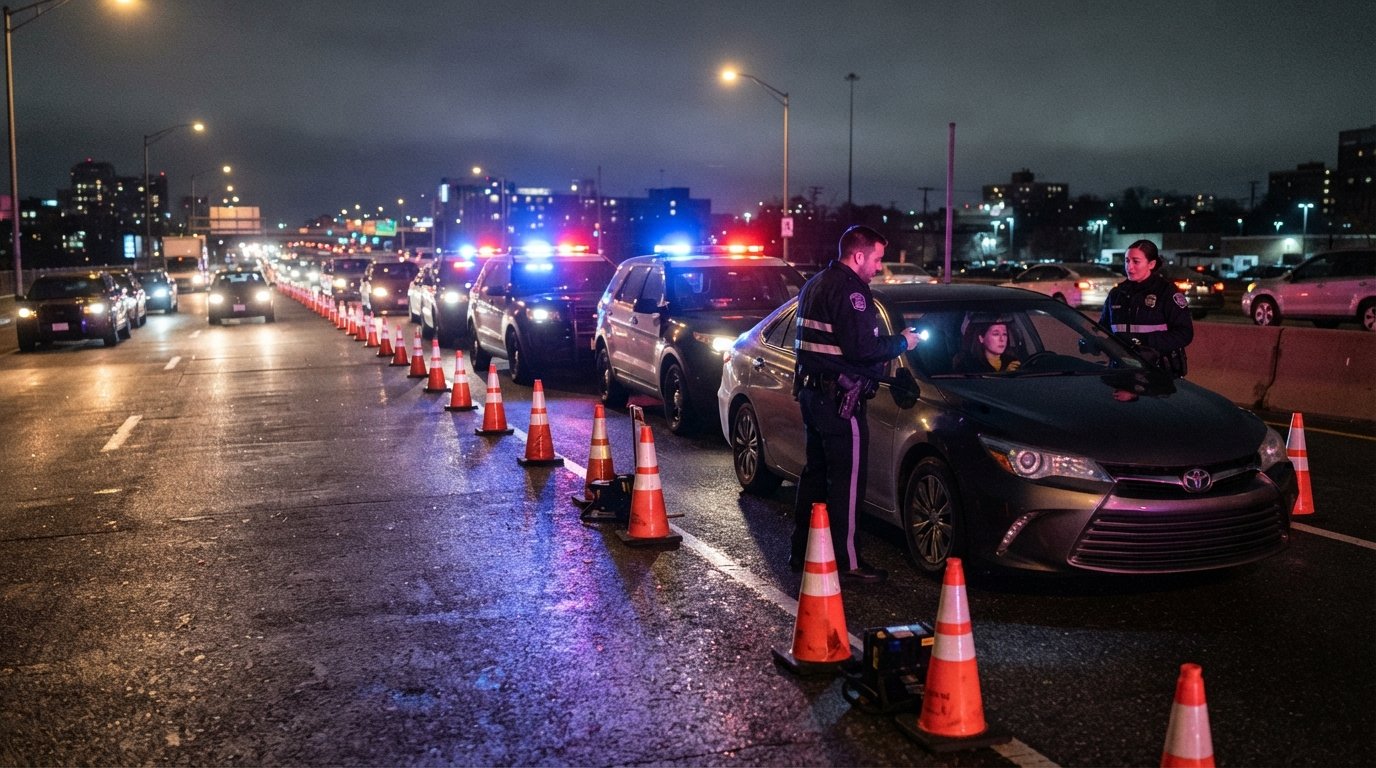
A DUI checkpoint, sometimes called a sobriety checkpoint, is a roadblock where law enforcement stops vehicles according to a neutral formula, such as every third car, to look for signs of impaired driving. Instead of needing individualized suspicion before each stop, officers rely on a plan approved in advance by a supervisor. That plan typically identifies the location, the time window, the number of officers involved, and how vehicles will be selected. The goal is deterrence as much as detection: publicity about checkpoints is meant to discourage people from driving after drinking.
The legal foundation for checkpoints comes from a balance between public safety and constitutional protections. Courts have generally allowed them because the stop is brief, the intrusion is limited, and the primary purpose is to remove impaired drivers from the road rather than to gather general criminal evidence. However, that balance depends on strict rules. If officers deviate from the approved plan, single out drivers unfairly, or turn a brief safety stop into an extended interrogation, the stop can be challenged later in court.
Checkpoints differ in size and style. Some involve a dozen officers and marked lanes with signs and lighting; others are smaller saturation efforts on a holiday weekend. Many are announced in advance through media or social media, though not every agency does this. Because laws and procedures vary by state, two drivers in different states can have very different experiences at what looks like the same type of roadblock.
Step by Step: What Actually Happens at a Checkpoint
Understanding the typical sequence helps you anticipate what is coming. While details vary, most checkpoints follow a similar pattern from the moment you enter the queue to the moment you drive away.
- Approach and queue: You slow down and join a line of vehicles. Officers or signs direct you into a specific lane, and you may be waved forward one car at a time.
- Initial contact: An officer greets you, identifies themselves, and explains that this is a sobriety checkpoint. They will usually ask to see your driver's license, registration, and proof of insurance.
- Observation phase: While you hand over documents, the officer looks and listens for signs of impairment: bloodshot eyes, slurred speech, the odor of alcohol, open containers, or fumbling movements.
- Brief questions: The officer may ask where you are coming from, whether you have been drinking, or whether you would submit to a breath test. Your answers and demeanor become part of their observations.
- Decision point: If nothing suggests impairment, you are typically waved through within a minute or two. If the officer suspects impairment, you may be asked to pull into a secondary area for further investigation.
What happens next in that secondary area matters enormously. Officers may ask you to perform field sobriety tests, such as the walk-and-turn or one-leg stand, or to blow into a preliminary breath test device. These are voluntary in many states, though refusing them can have consequences. If the officer still believes you are impaired, you may be arrested and asked to take a chemical test of your breath or blood under implied consent laws. Refusing that test can trigger automatic license suspension, even if you are never convicted of DUI.
One important reminder: a checkpoint stop is not the same as a full investigation, and you are not required to answer every question. You must provide your license and basic identifying information, but you can politely decline to answer questions about where you have been or what you have consumed. You can also decline field sobriety tests and preliminary breath tests, though you should understand your state's rules before deciding. A DUI attorney can explain how your state treats each refusal.
Your Rights at a DUI Checkpoint
Checkpoints are a unique blend of police power and constitutional limits. You still retain core rights, even though you are being stopped without individualized suspicion. Knowing these rights helps you respond without panic.
- The right to remain silent: Beyond providing your license and identifying information, you generally do not have to answer questions about drinking or your destination. You can say, respectfully, that you prefer not to answer.
- The right to refuse field sobriety tests: In many states, you can decline roadside physical tests. There may be evidentiary consequences at trial, but the choice is usually yours.
- The right to refuse a preliminary breath test: A handheld preliminary breath test is often optional, unlike the chemical test after arrest. Refusing the preliminary test may not trigger implied consent penalties, but refusing the later chemical test usually will.
- The right to be free from unreasonable detention: A checkpoint stop should be brief. If officers hold you far longer than necessary without suspicion, that prolonged detention can be challenged.
- The right to record: In many jurisdictions, you can record the interaction from your vehicle as long as you do not interfere with officers. Recording laws vary, so know your state's rules.
- The right to counsel after arrest: If you are arrested, you have the right to speak with a lawyer. Asking for one early can shape how the rest of the process unfolds.
These rights are not loopholes. They exist because a brief safety stop can quickly escalate into a criminal charge, and the stakes include license suspension, fines, higher insurance premiums, and even jail time. Exercising your rights politely and clearly is not an admission of guilt; it is simply protecting your position while the facts are sorted out.
If you are arrested or charged after a checkpoint stop, it is worth speaking with an experienced DUI defense attorney as soon as possible. If you are also dealing with injuries from a separate crash, or you want to explore how a free case review works, you can browse a nationwide lawyer directory to find attorneys in your area who handle DUI and accident matters. Early legal guidance often makes the difference between a manageable outcome and a long, expensive fight.
What Officers Look For and How Small Details Matter
Officers at checkpoints are trained to spot patterns. They watch how you pull up, whether you roll down the window fully, how you speak, and whether your eyes are glassy or your movements are delayed. They may shine a flashlight into the vehicle to look for open containers or the smell of alcohol. Even your paperwork matters: fumbling for your license or handing over the wrong document can be interpreted as a sign of impairment.
This is why calm, deliberate behavior helps. Keep your hands visible on the steering wheel, lower your window, turn down the radio, and speak clearly. If you have not been drinking, say so once, plainly, and avoid arguing or over-explaining. If you have consumed alcohol but believe you are under the legal limit, remember that officers are not required to accept your assessment. They are building a record. What you say and do at the checkpoint can be used later, so treat every word and gesture as potentially significant.
It also helps to understand that checkpoint stops are not the only way DUI cases begin. A traffic stop for a broken taillight or a lane violation can lead to the same investigation. The rights and practical tips here apply to both situations. The common thread is that brief, polite interactions usually serve drivers better than confrontations, and early legal advice usually serves them better than waiting until a court date.
Common Myths and Misunderstandings
Misinformation about checkpoints spreads quickly, and relying on myths can lead to costly decisions. Here are some of the most common misunderstandings and what is actually true.
- Myth: You can turn around and avoid a checkpoint. In many places, turning away is legal, but officers watch for evasive maneuvers and may stop you for a traffic violation. If the turn itself is illegal, you can be pulled over and investigated.
- Myth: You must answer every question. You generally must identify yourself and provide documents, but you are not required to answer questions about drinking or your evening plans.
- Myth: Refusing all tests means no case. Refusing a chemical test after arrest usually triggers automatic license suspension under implied consent laws. Refusals can also be used against you in some proceedings.
- Myth: Checkpoints are always illegal. Courts have upheld properly planned and conducted checkpoints. The legality depends on how the checkpoint was set up and run, not simply on its existence.
- Myth: If you are innocent, you have nothing to worry about. Even innocent drivers can say things that sound incriminating under stress. Knowing your rights protects everyone.
The practical takeaway is that checkpoints are governed by rules, and those rules cut both ways. Officers must follow procedure, and drivers must understand what is required of them. When either side oversteps, the consequences can ripple through the entire case.
What to Do If You Are Arrested After a Checkpoint
If a checkpoint stop leads to an arrest, the next hours and days are critical. You will likely be booked, asked to submit to a chemical test, and given paperwork about your license and court date. Do not try to talk your way out of the situation. Instead, focus on protecting your rights and building a clear record.
Start by writing down everything you remember as soon as you can: the location of the checkpoint, the officers' names or badge numbers if visible, what questions you were asked, what tests you took or refused, and how long the stop lasted. Details fade quickly, and a written timeline can be valuable to your attorney. Next, contact a DUI defense lawyer in your state. Procedures, penalties, and deadlines vary widely, and a local attorney can explain your options, including whether to challenge the stop itself or negotiate a resolution.
If you were also injured in a crash related to the incident, or if you are dealing with a separate accident claim, you may be juggling two legal matters at once. A free, confidential case review can help you understand how a DUI charge and an injury claim might interact. Submitting a request does not create an attorney-client relationship and does not obligate you to hire anyone, but it can give you a clearer picture of what comes next. For many people, the most important step is simply not facing the process alone.
Finally, be cautious about what you post online. Social media comments, photos, and check-ins can be used as evidence. Assume that anything you share publicly could end up in front of a prosecutor or insurance adjuster. Keeping a low profile online while your case is pending is almost always the safer choice.
How a Lawyer Can Help After a Checkpoint Stop
A DUI charge is not just about one night. It can affect your license, your job, your insurance rates, and your record for years. An attorney can review whether the checkpoint was properly authorized, whether officers followed their own plan, whether the detention was unreasonably long, and whether any statements or tests were obtained improperly. These issues can sometimes lead to suppressed evidence or a reduced charge. Even when a charge stands, skilled counsel can often negotiate alternatives, such as diversion programs or reduced penalties, depending on the state and the facts.
If you are also pursuing compensation for injuries from a crash, an attorney can help you organize medical records, communicate with insurers, and understand deadlines. Fault rules, insurance requirements, and filing windows vary by state, so local guidance matters. The earlier you involve a lawyer, the more options you usually have. Waiting can mean missed deadlines, lost evidence, and fewer bargaining chips.
None of this guarantees a particular outcome. No honest lawyer can promise a specific result, and anyone who does should be viewed with caution. What a lawyer can do is explain the process, protect your rights at each stage, and help you make informed decisions rather than reacting under pressure.
Checkpoints are meant to make roads safer, but they also create high-pressure moments where small choices carry lasting consequences. Knowing what happens at a DUI checkpoint and your rights turns a frightening encounter into a manageable one. Stay calm, be polite, share only what is required, and reach out for legal guidance early. Whether you are facing a DUI allegation or recovering from an accident, understanding your options is the first step toward protecting your future.