
Ignition Interlock Device Requirements After DUI: Key Rules
Understand ignition interlock device requirements after DUI and how to stay compliant. Call 8555452917 for a free, confidential case review.

By Marcus Hale
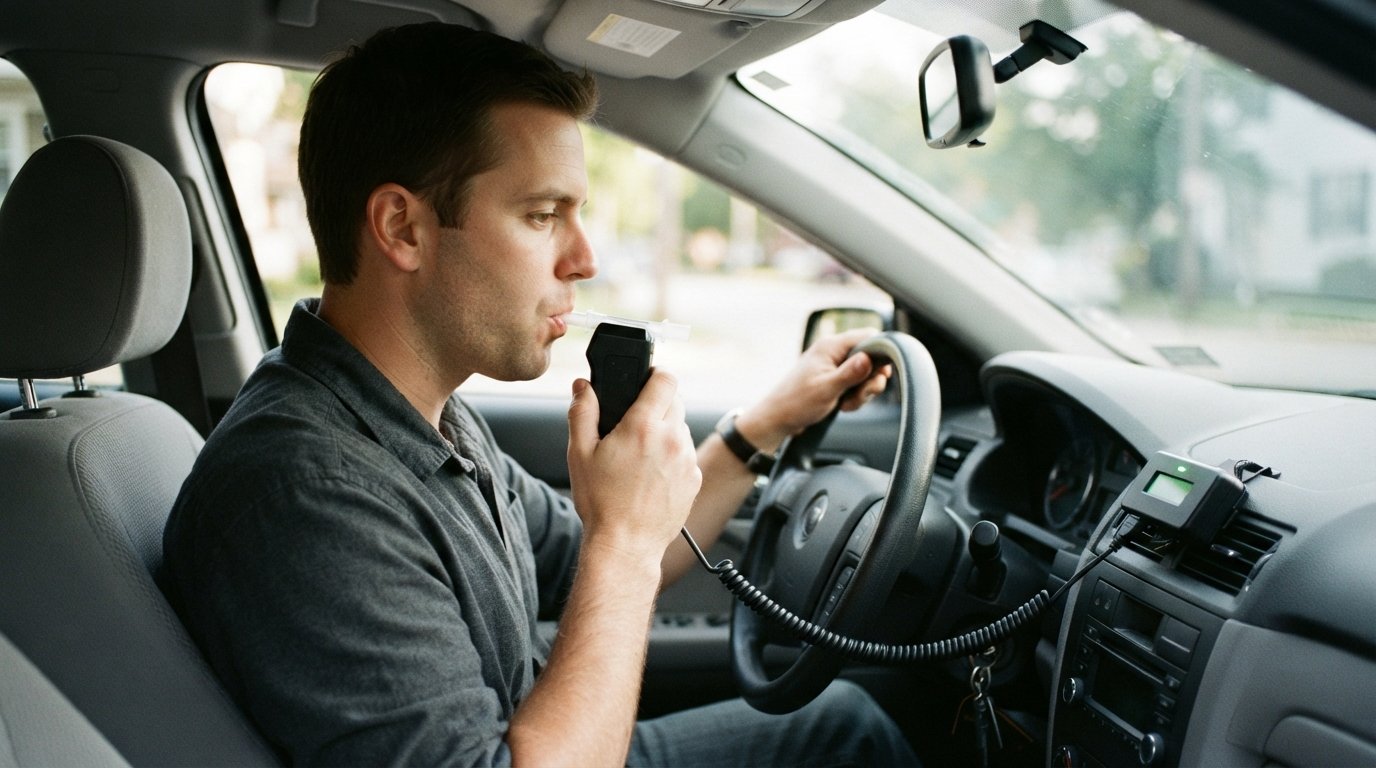
An ignition interlock device is a breath alcohol analyzer wired into your vehicle's ignition system. Before the engine will start, you must blow into a handheld mouthpiece. If your blood alcohol concentration registers above a preset limit, usually 0.02 or 0.025, the vehicle will not start. For many people facing a DUI charge, the ignition interlock device requirements after DUI become the single most practical and expensive part of the entire sentence. The device follows you into your daily routine: school drop-offs, work commutes, grocery runs, and every errand in between. Understanding how these requirements work, who must comply, and what happens if you fall out of compliance can save you thousands of dollars and months of frustration.
This guide explains the general framework that states use for ignition interlock programs, the differences between pretrial and post-conviction requirements, the costs you should expect, and the steps to stay compliant. It is educational information, not legal advice. Interlock rules vary widely by state, and only a licensed attorney in your jurisdiction can tell you exactly what a judge will order in your case. If you are facing DUI charges and want to understand your options, you can request a free, confidential case review through AutoInjuryAccident.com to speak with a participating attorney in your area.
What an Ignition Interlock Device Actually Does
An ignition interlock device, often abbreviated IID, is not the same as a breathalyzer used by police. The interlock is installed by a state-approved vendor and remains in your vehicle for a set period. It measures alcohol on your breath and either allows or prevents the engine from starting. Once you are driving, the device will prompt you for rolling retests at random intervals. These retests are designed to prevent someone else from blowing into the device for you. If you miss a retest or fail one, the device records the event, sounds an alarm, and may flash your lights until you pull over and comply. All results, including passes, fails, missed tests, and tampering attempts, are stored in the device's memory and reported to the monitoring authority, usually a state agency or the court.
The device also captures images in many modern installations. A small camera photographs whoever is blowing into the mouthpiece, which prevents the classic workaround of having a sober friend start the car. Some devices include GPS tracking. The data is downloaded during monthly calibration appointments, and violations are forwarded to the court or licensing agency. This record matters because a single violation can extend your interlock period, trigger a license suspension, or even send you back to jail for violating probation.
Understanding the hardware matters because compliance is not just about staying sober. It is about using the device correctly every single time you drive. A missed rolling retest because you were distracted at a red light still counts as a violation in most systems. A low battery, a blown fuse, or a device that fails to power on must be reported to the vendor immediately. The administrative side of the program is often stricter than people expect.
Who Is Required to Install an Ignition Interlock
States fall into a few broad categories when deciding who must install an interlock. Some states mandate interlocks for all DUI convictions, including first offenses. Others require them only for repeat offenses, high blood alcohol readings, or cases involving injury or property damage. Many states also require interlocks for people who refuse chemical testing or who drive on a suspended license after a DUI. In practice, the ignition interlock device requirements after DUI depend on three factors: your state's statutes, the specifics of your charge, and the discretion of the judge or licensing agency.
Certain groups face stricter rules almost everywhere. Commercial driver's license holders, drivers under 21, and anyone with a prior DUI within a lookback period, commonly ten years, are prime candidates for mandatory interlock orders. Some states also require interlocks as a condition of pretrial release, meaning the device goes in before your case is resolved. This pretrial interlock requirement is one of the most misunderstood parts of DUI procedure. You have not been convicted yet, but you may still be ordered to install a device to keep driving legally while your case is pending.
If you are unsure whether an interlock will apply to you, the safest approach is to ask an attorney early. A lawyer can review your arrest report, your state's statutes, and local court practices to give you a realistic picture. Participating attorneys in the AutoInjuryAccident.com network handle DUI matters nationwide and can explain what to expect in your jurisdiction.
Pretrial vs. Post-Conviction Interlock Requirements
Pretrial interlock programs exist to let people keep driving while their case moves through court. Instead of a full suspension, you agree to install an interlock and follow monitoring rules. The device is installed after a hearing or administrative order, and you must provide proof of installation to the court or DMV. If you fail to install the device or skip monitoring appointments, your license can be suspended immediately, even before trial. Pretrial interlock requirements are usually shorter than post-conviction requirements, but they carry the same compliance obligations.
Post-conviction interlock requirements are imposed as part of sentencing. The judge orders a specific interlock period, and the DMV adds its own license restriction. In many states, the interlock period runs from six months for a first offense to several years for repeat offenses. Some states require interlocks for all offenders, while others allow a judge to waive the requirement in narrow circumstances. Even when a judge waives the interlock, the DMV may still impose one as a condition of reinstating your license. This dual-track system, court and DMV, is a common source of confusion.
The practical difference between pretrial and post-conviction interlocks is timing and leverage. A pretrial interlock can help you keep your job and fulfill family obligations while your case is unresolved. A post-conviction interlock is part of your punishment and your path back to a clean license. Both require the same device, the same vendor network, and the same monthly reporting. The key is knowing which track you are on and what deadlines apply.
Typical Interlock Costs and Fees
Cost is where many people are caught off guard. The device itself is not free, and the total expense can run into the thousands over a multi-year requirement. Costs vary by state and vendor, but the categories are consistent. You should expect installation fees, monthly monitoring fees, calibration appointment fees, and removal fees at the end of the program. Some states offer reduced-cost or indigent programs, but eligibility is limited and the application process can be slow.
Here is a breakdown of the common cost categories you will encounter:
- Installation fee: typically $70 to $200, paid to the vendor at the time of installation.
- Monthly monitoring fee: typically $60 to $120 per month, covering data reporting and device maintenance.
- Calibration or service visits: often included in the monthly fee, but some vendors charge $20 to $50 per visit.
- Removal fee: typically $50 to $150 when the device is uninstalled at the end of the program.
- Reinstallation or transfer fee: charged if you change vehicles or move during your interlock period.
There are also indirect costs. You may need to take time off work for installation and monthly calibration appointments. If your vehicle is not compatible with the device, you may need to arrange transportation or install the device in a different vehicle. Some employers require driving as part of the job, and an interlock restriction can affect your employment. These indirect costs are rarely discussed in court but often matter more than the device fees themselves.
If you are also dealing with SR22 insurance requirements, the financial pressure compounds. Our guide on SR22 insurance requirements after DUI explained covers how that separate filing requirement interacts with your interlock obligations and your license reinstatement timeline.
How to Comply With Your Interlock Program
Compliance is mostly about routine and documentation. The device itself is designed to be simple, but the surrounding rules are not. You must attend calibration appointments on schedule, keep the device clean and powered, and never attempt to bypass or tamper with it. Tampering is treated severely in every state. Even a disconnected battery or a blown fuse can be logged as a violation if you do not report it properly. If the device malfunctions, call the vendor immediately and document the call. Keep receipts, appointment slips, and any correspondence with the vendor or monitoring agency.
The following steps outline a practical compliance routine that works in most states:
- Install the device only with a state-approved vendor, and confirm the vendor reports directly to your court or DMV.
- Attend every calibration appointment on time, and reschedule in advance if you cannot make it.
- Blow clean every time, and never use mouthwash, breath mints, or alcohol-based products immediately before a test.
- Respond to rolling retests promptly, pulling over safely if the device prompts you while driving.
- Report any device malfunction, damage, or suspected tampering to the vendor the same day.
After each appointment, confirm that the vendor has transmitted your data successfully. In some cases, a reporting delay can look like non-compliance even when you did everything right. If you receive a violation notice, do not ignore it. Contact the vendor and, if necessary, your attorney immediately. Violation notices often have short response windows, and missing one can lead to a suspension or a probation violation.
It also helps to keep a simple log of your driving, appointments, and any issues. If a dispute arises, your records can support your case. Judges and monitoring agencies respond better to documented compliance than to explanations offered after the fact.
Interlock Violations and Consequences
A violation is not always a new crime, but it can trigger serious consequences. Common violations include a failed breath test, a missed rolling retest, a missed calibration appointment, tampering, or driving a vehicle without an interlock when one is required. The consequences depend on your state and your program status. A first violation might result in a warning, a lockout period, or an extension of your interlock term. Repeated violations can lead to license suspension, revocation of your pretrial release, or a probation violation that sends you back before the judge.
Lockouts are a common intermediate sanction. When the device enters a lockout, you cannot start the vehicle until you visit the vendor and pay a fee. Some devices have a grace period, and others go straight into lockout after a failed test. If you are locked out and need to drive, you must contact the vendor immediately. Driving a different vehicle without an interlock while your license is restricted can be charged as a separate offense, even if you own that vehicle jointly with someone else.
The best defense against violations is prevention. Follow the program rules exactly, keep your appointments, and communicate with the vendor and your attorney when problems arise. If you are facing a violation hearing, legal representation can make a significant difference in the outcome.
How Long Will You Need the Device?
Interlock periods are set by statute and by the court. Typical first-offense requirements range from six months to one year. Second offenses often carry one to three years, and third offenses can carry longer terms or permanent restrictions in some states. The period usually begins on the date of installation, not the date of your arrest or conviction. If you delay installation, you delay the start of your period. Some states allow early removal for good behavior or for drivers who complete treatment programs, but these options are discretionary and not guaranteed.
Your interlock period can also be extended. Violations, missed appointments, or attempts to tamper with the device commonly add time. In some states, the period restarts if you let your registration or insurance lapse. This is why it is critical to treat the interlock program as an ongoing compliance obligation, not a one-time installation. The end date matters, but the path to that end date matters more.
If you move to another state during your interlock period, you may need to transfer your program. Not all states accept out-of-state interlock compliance, and some require you to install a new device under their rules. If you are planning to move, talk to your attorney and your monitoring agency before you go. A transfer that is not approved can be treated as non-compliance.
When to Talk to a DUI Attorney
The ignition interlock device requirements after DUI are technical, state-specific, and unforgiving of mistakes. An experienced DUI attorney can review your case, explain the likely interlock terms, help you apply for any reduced-cost programs, and represent you if a violation is alleged. An attorney can also identify whether the interlock requirement is mandatory or discretionary in your case and whether any exceptions apply. For example, some states allow exemptions for medical reasons or for drivers who do not own a vehicle, but the application process is narrow and deadline-driven.
If you are also dealing with a personal injury claim from the same incident, the legal issues can overlap. An attorney can help you understand how a DUI charge affects a related civil claim and what steps to take to protect your rights. For general legal needs beyond DUI, resources like TheLawyerDirectory can help you find lawyers in your city and request a quote, though you should always confirm licensing and experience before hiring anyone.
AutoInjuryAccident.com is not a law firm or a lawyer referral service and does not provide legal advice. Submitting a request for a case review does not create an attorney-client relationship and does not obligate you to hire a lawyer. It is simply a way to connect with participating attorneys who can answer your questions and explain your options.
Interlock requirements are one of the most concrete and costly consequences of a DUI, but they are also manageable with the right information and representation. Knowing what your state requires, budgeting for the fees, and staying on top of every appointment puts you in the best position to complete the program and move on with your life. If you are facing a DUI charge or an interlock violation, getting legal guidance early is the most reliable way to protect your license, your job, and your future.