
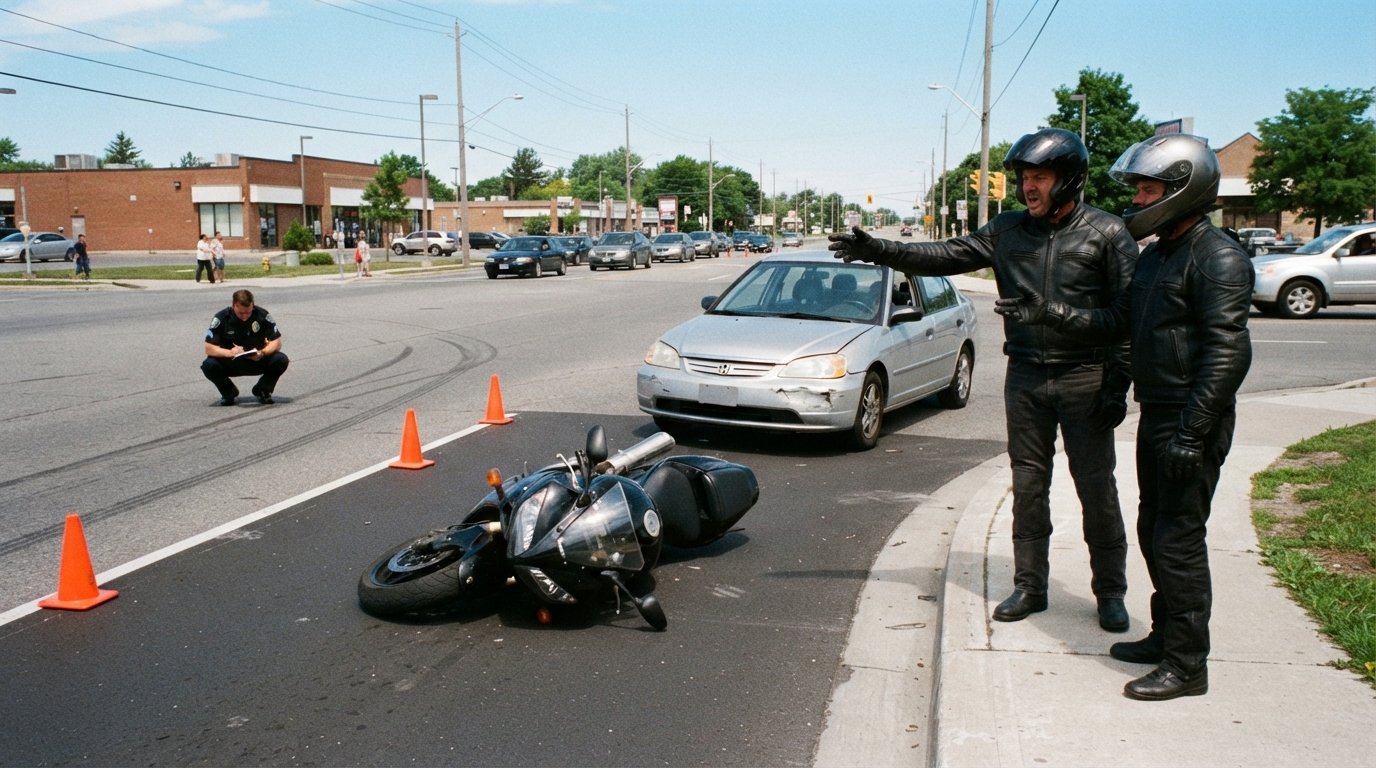
Motorcycle Accident Liability When the Other Driver Caused It
Another driver caused your motorcycle crash, but proving liability still takes work. See how fault, evidence, and insurance rules affect your recovery.

By Marcus Hale
A motorcycle crash happens in seconds, but the fight over who pays for it can drag on for months. When another driver causes the collision, the law generally puts financial responsibility on that driver. Proving it, however, is a different challenge. Insurance adjusters know that riders are often blamed for their own crashes, and they use that bias to shrink or deny claims. Understanding how liability works after a motorcycle accident when the other driver caused it gives you a real advantage, whether you handle the claim yourself or bring in a lawyer to negotiate on your behalf.
This guide walks through how fault is established, what evidence matters most, how comparative negligence rules can reduce your recovery, and why motorcyclists face hurdles that drivers of cars and trucks usually do not. It also explains where a free case review fits into the process, and what to expect from the first conversation with an attorney. The information here is educational and general. Liability rules, insurance requirements, and filing deadlines vary by state, so treat this as a starting map rather than a final answer.
How Liability Is Established After a Motorcycle Crash
Liability in a motorcycle accident rests on a simple legal idea: the person whose negligence caused the harm should pay for it. Negligence means a driver failed to act with reasonable care. Running a red light, drifting into a rider's lane, following too closely, or turning left in front of oncoming traffic are all classic examples. When that failure causes a collision, the at-fault driver's insurance is normally on the hook for the rider's medical bills, lost wages, property damage, and pain and suffering.
The complication is that establishing fault is rarely as simple as pointing at the other car. Investigators look at skid marks, traffic camera footage, witness statements, phone records, and vehicle damage patterns. A police report carries weight, but it is not the final word. Adjusters, and sometimes juries, weigh all of this evidence together. In many states, more than one person can share fault, and that split directly affects how much money changes hands. If a rider is found 20 percent at fault, most states reduce the payout by 20 percent rather than eliminating it entirely, though a handful of strict states bar recovery if the rider shares any fault at all.
Motorcyclists also face a documented bias problem. Studies of driver perception have found that other motorists often fail to see motorcycles in traffic, and juries sometimes assume riders are reckless even when the evidence says otherwise. That is why evidence gathering matters more in a bike crash than in a typical fender bender. The sooner photos, witness names, and medical records are collected, the harder it becomes for an insurer to rewrite the story later.
The Evidence That Decides Who Was at Fault
Cases are won or lost on documentation. A rider who calls the police, photographs the scene, and gets checked by a doctor within a day or two is in a far stronger position than one who waits a week to report anything. Insurers treat gaps in the record as opportunities to argue the injuries were not serious or were not related to the crash.
The most persuasive evidence in a motorcycle liability dispute usually includes the following:
- Police accident report, including the officer's fault determination and any citations issued
- Photos and video of the scene, vehicle positions, road conditions, and visible injuries
- Contact information for witnesses who saw the other driver's mistake
- Medical records that connect the injuries to the crash and document treatment from day one
- Proof of lost income, such as pay stubs or an employer letter
Each piece fills a gap the others cannot. A police report names the parties and records the officer's observations, but it may not capture how the crash affected the rider's ability to work. Photos freeze the scene before vehicles are moved, which matters when the other driver later claims the rider came out of nowhere. Witness statements are powerful because they come from neutral observers, though witnesses can be hard to track down after the fact, which is why collecting contact details at the scene is so important.
Some cases also involve electronic data. Commercial trucks may have event data recorders, and some newer cars store crash data that shows speed, braking, and steering in the seconds before impact. Surveillance cameras from nearby businesses can be decisive, but footage is often overwritten within days or weeks. Sending a written preservation request early is a practical step that riders and their attorneys use to keep that evidence from disappearing.
Comparative Negligence and Why It Matters to Your Payout
Most states use some form of comparative negligence, meaning fault can be divided between the parties. Under a pure comparative system, a rider who is 30 percent at fault can still recover 70 percent of the damages. Under a modified system, recovery is barred once the rider's share of fault crosses a threshold, often 50 or 51 percent. A few states still follow contributory negligence, an older rule that blocks recovery entirely if the rider bears any fault. Because the rules differ so much, the same crash can produce very different outcomes depending on where it happened.
Insurers rely on this complexity. An adjuster may argue the rider was speeding, was not wearing a helmet, or should have swerved, all to push the fault percentage up and the settlement down. Helmet use is a frequent battleground. In many states, failing to wear a helmet does not prove the rider caused the crash, though it can affect damages in some jurisdictions. Speed allegations are similar: an insurer may claim the bike was traveling too fast without solid proof, hoping the rider accepts a reduced offer rather than fight.
Disputing a fault percentage starts with the same evidence that establishes liability in the first place. An accident reconstruction expert can analyze skid marks and damage to estimate speeds. Medical records can rebut claims that injuries were pre-existing. A demand letter that lays out the facts in order, backed by documentation, often moves an insurer more than a phone call ever will. When negotiations stall, filing a lawsuit can shift the pressure, though most motorcycle injury claims settle before trial.
Insurance Tactics That Reduce Motorcycle Claims
Insurance companies are businesses, and their goal is to close claims for as little as possible. That does not make them villains, but it does mean riders should expect certain tactics and prepare for them. One common move is the quick lowball offer, made before the full extent of the injuries is known. Accepting it means signing away the right to seek more money later, even if surgery or long-term therapy turns out to be necessary.
Another tactic is the recorded statement. Adjusters often ask for one early, framing it as a routine step. Answers given before the rider has reviewed the police report or finished treatment can be used later to argue the injuries were minor or the rider admitted fault. Riders generally are not obligated to give a recorded statement to the other driver's insurer, and declining until they have spoken with a lawyer is a reasonable choice. Similarly, blanket medical authorizations give an insurer access to the rider's entire medical history, including records unrelated to the crash. A limited release covering only relevant treatment is usually enough.
Delay is a tactic too. Insurers may slow-walk communication, hoping the rider grows frustrated or misses a deadline. Every state sets a statute of limitations for personal injury claims, often two or three years but sometimes shorter, and claims against government entities can require notice within months. Missing that window can end the case no matter how strong the evidence is. Tracking deadlines and following up in writing keeps the claim moving and creates a record if the insurer acts in bad faith.
When the Other Driver Is Uninsured or Leaves the Scene
Not every at-fault driver has insurance, and some do not stick around. Hit-and-run crashes leave riders with injuries, damaged bikes, and no obvious defendant. In those situations, uninsured and underinsured motorist coverage becomes the primary path to compensation. This coverage is part of many auto policies, and in some states it is required. It applies when the at-fault driver cannot be identified or has no insurance, and it can also fill the gap when the other driver's policy limits are too low to cover the rider's losses.
Filing an uninsured motorist claim is not the same as suing the other driver. The claim is against the rider's own insurer, but the insurer still investigates and may dispute fault or damages. Treat it like any other claim: preserve evidence, document injuries, and avoid giving a recorded statement without preparation. If the rider was not carrying this coverage, a personal injury attorney can review whether other options exist, such as a claim against a bar that overserved a drunk driver or a claim involving a defective road condition.
When the at-fault driver flees, prompt reporting matters even more. Police reports, nearby camera footage, and witness accounts become the only way to reconstruct what happened. Riders should report the crash immediately, seek medical care, and notify their own insurer, since most policies require timely notice. Waiting can give the insurer grounds to deny the uninsured motorist claim later.
Steps to Take After a Crash Caused by Another Driver
What a rider does in the first days after a crash shapes everything that follows. The priorities are safety, documentation, and medical care, in that order. Once those are handled, the legal and insurance work begins.
- Move to safety and call 911. Request police response and an ambulance if anyone is hurt, even if injuries seem minor at first.
- Collect information at the scene. Exchange names, insurance details, and contact information with the other driver, and get names and phone numbers from witnesses.
- Photograph everything. Capture vehicle positions, damage, road conditions, traffic signals, and any visible injuries before vehicles are moved.
- See a doctor promptly. Adrenaline can mask pain, and some injuries, including concussions and internal bleeding, worsen over hours. Early records also link the injuries to the crash.
- Notify your own insurer and keep the conversation factual. Report the crash, but avoid speculating about fault or giving a recorded statement to the other driver's insurer.
- Preserve evidence and track deadlines. Save gear, receipts, and messages, and note the statute of limitations for your state.
Following these steps does not require a lawyer, but it makes a lawyer's job easier if the claim turns complicated. Many riders find that the other driver's insurer denies fault, disputes the severity of injuries, or makes an offer that does not cover even the medical bills. At that point, a free case review can clarify whether hiring an attorney makes financial sense. For riders who want to explore that option, TheLawyerDirectory is a practical starting point to find lawyers by city and request a quote, with no obligation to hire anyone.
Working With an Attorney on a Contested Liability Claim
Motorcycle injury attorneys typically work on contingency, meaning they are paid a percentage of the recovery rather than upfront. That structure matters because it aligns the attorney's interests with the rider's: the lawyer only gets paid if money comes in. It also means a rider with a strong liability case but limited funds can still pursue it. The first consultation is usually free, and it is a chance to ask direct questions about experience with motorcycle crashes, familiarity with local courts, and how the attorney handles cases where fault is disputed.
Attorneys add value in several concrete ways. They send preservation letters to keep video and electronic data from disappearing. They hire accident reconstruction experts when speed or positioning is contested. They calculate damages that go beyond medical bills, including future care, lost earning capacity, and pain and suffering, figures that insurers routinely undervalue when a rider negotiates alone. They also handle the paperwork and deadlines that can sink an otherwise valid claim.
It is important to understand what a legal connection service is and is not. AutoInjuryAccident.com is a consumer matching site, not a law firm or lawyer referral service, and it does not provide legal advice. Submitting a form does not create an attorney-client relationship and does not obligate anyone to hire a lawyer. It simply opens a conversation with participating attorneys who can review the facts. Whether to hire one, settle, or file suit remains the rider's decision.
Liability after a motorcycle accident caused by another driver comes down to evidence, persistence, and knowing the rules that apply in your state. The at-fault driver's insurer has a financial incentive to minimize the claim, and riders face assumptions that drivers of cars never encounter. Documenting the crash thoroughly, protecting your medical care, and getting a professional review of the claim before signing anything can make the difference between a fair recovery and a settlement that leaves bills unpaid. Acting early keeps options open, and a no-cost, confidential case review is a low-risk way to find out where you stand.