
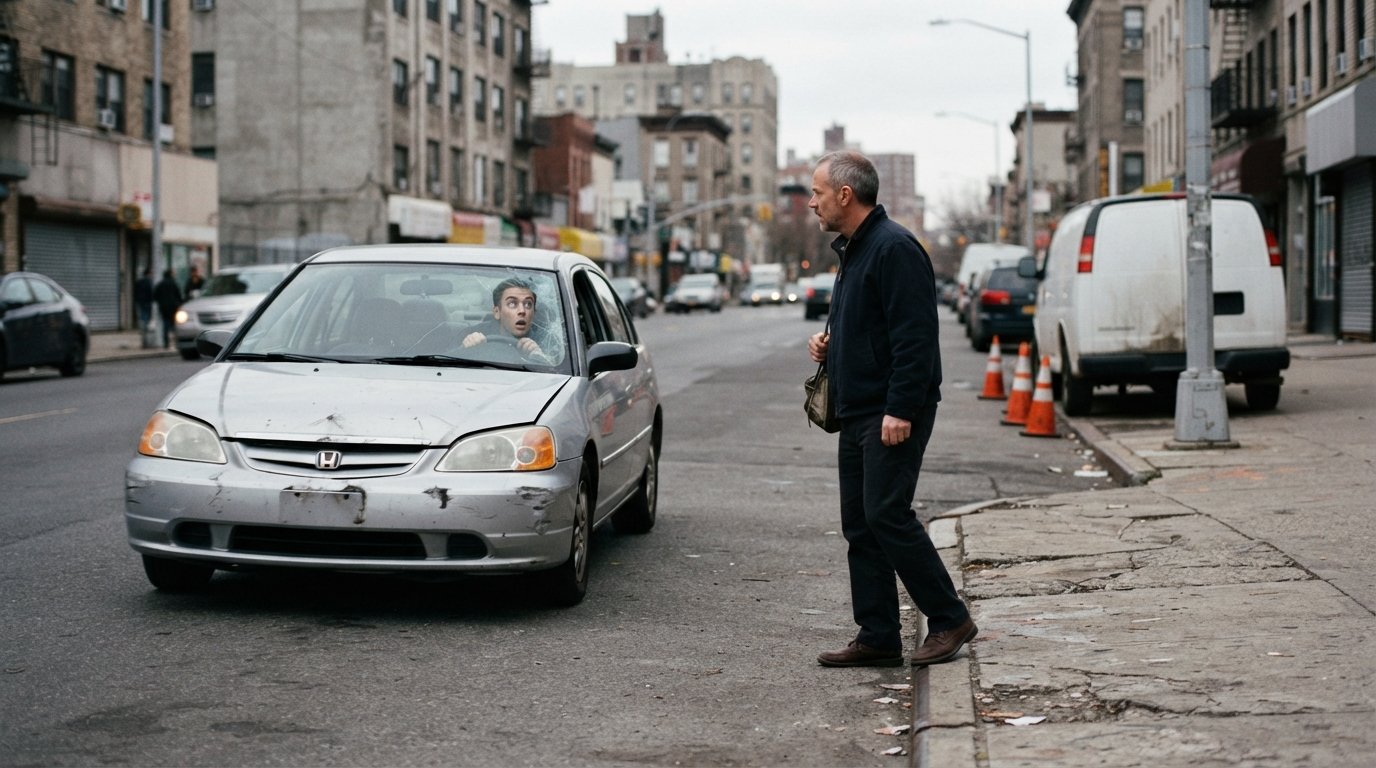
Pedestrian Accident Claim When There Is No Crosswalk
Injured crossing without a crosswalk? A pedestrian accident claim when there is no crosswalk can still recover. Call 8555452917 for a free review.

By Daniel Ortiz
A pedestrian struck by a vehicle while crossing mid-block faces a complicated legal reality. In most states, the absence of a marked crosswalk does not automatically destroy the injured person's right to compensation, but it does change the way fault is analyzed, the evidence that matters, and the arguments an insurer will raise. Understanding how a pedestrian accident claim when there is no crosswalk actually works can mean the difference between a denied demand letter and a fair recovery.
Every state approaches this scenario differently. Some jurisdictions require drivers to yield to pedestrians in unmarked crosswalks at intersections, while others treat mid-block crossings as a violation of pedestrian duty. Because fault rules, insurance requirements, and filing deadlines vary by state, anyone injured in this situation should treat general information as a starting point, not a substitute for a case-specific review.
The Legal Status of an Unmarked Crosswalk
Many people assume that if no white lines are painted on the pavement, no crosswalk exists. Legally, that assumption is often wrong. In a large number of states, an unmarked crosswalk is created by law at every intersection where pedestrian paths connect, even without paint or signage. If a pedestrian is hit while crossing at an intersection inside that imaginary corridor, the driver may still owe a legal duty to yield.
The mid-block scenario is different. When someone crosses between intersections, outside any intersection zone, the law in most states places a greater duty on the pedestrian to yield to traffic. Some states make mid-block crossing a traffic infraction, which means the pedestrian may share fault. However, sharing fault is not the same as losing the claim entirely.
This is where comparative or contributory negligence rules come into play. In a pure comparative negligence state, an injured pedestrian can still recover damages even if they were mostly at fault, though the award is reduced by their percentage of responsibility. In a contributory negligence state, being even slightly at fault can bar recovery unless an exception applies. States also vary on what counts as an intersection, how far a crosswalk extends, and whether local ordinances add requirements. Because of this patchwork, the same facts can produce very different outcomes depending on where the crash happened.
How Fault Is Determined When No Crosswalk Is Present
Insurance adjusters evaluate a no-crosswalk pedestrian claim by asking a simple question: who had the right of way at the moment of impact? That question is answered with evidence, not assumptions. The pedestrian's position, the driver's speed, visibility conditions, and the layout of the road all feed into the analysis.
Key factors that typically influence fault in these cases include:
- The exact location of the impact (intersection, mid-block, driveway, parking lot exit)
- Whether the driver had a reasonable opportunity to see the pedestrian
- Speed, distraction, impairment, or fatigue on the driver's side
- Weather, lighting, and obstructions such as parked cars or signage
- Any local ordinance or state statute governing pedestrian crossing duties
Notice how the list does not include whether the pedestrian looked both ways. That detail matters, but it is only one piece. A driver who was speeding, texting, or impaired may be found mostly at fault even if the pedestrian crossed outside a crosswalk. Conversely, a pedestrian who darted into traffic from between parked cars at night may be assigned a high percentage of fault.
Comparative negligence is the framework courts and insurers use to divide responsibility. If you want a deeper explanation of how percentages are assigned and how they reduce a payout, our guide on comparative negligence in a car accident claim walks through the same logic that applies to pedestrian cases.
Evidence That Strengthens a No-Crosswalk Pedestrian Claim
Because fault is contested in these cases, evidence is everything. A claim built on memory alone is weak. A claim built on video, physical evidence, and witness statements is far harder for an insurer to dismiss. The faster evidence is preserved, the stronger the position.
Useful evidence in a pedestrian accident claim when there is no crosswalk includes surveillance footage from nearby businesses, dashcam video, traffic camera recordings, photos of the scene at the same time of day, skid marks, vehicle damage, and the pedestrian's clothing and shoes. Medical records that document the mechanism of injury also help establish how the impact occurred.
Witnesses matter too. Independent witnesses who saw the driver's speed or distraction can outweigh the driver's own account. If the driver left the scene, that fact alone can shift fault significantly in many states. In hit-and-run situations, an uninsured motorist claim or a claim against the driver once identified may become the path forward.
An attorney can send preservation letters to businesses and municipalities before footage is overwritten, which is often a matter of days. This is one of the most practical reasons to involve a lawyer early, even when the facts seem unclear.
Insurance Company Tactics in No-Crosswalk Cases
Insurers know that jaywalking allegations are powerful. Expect the adjuster to argue that the pedestrian broke the law, that the driver had no time to react, or that the pedestrian was impaired or distracted. These arguments are sometimes valid and sometimes exaggerated. The job of a claim is to separate the two with evidence.
Common tactics include recorded statements taken before the injured person understands the fault rules, quick lowball offers framed as a favor, requests for blanket medical authorizations, and delays that push against the statute of limitations. A recorded statement given in the days after a crash, before surgery or a full diagnosis, can lock in a version of events that hurts the claim later.
Another tactic is to argue that the pedestrian was not in a crosswalk and therefore owed a duty to yield, ignoring any driver negligence. In states with comparative negligence, this argument does not end the claim, but it can reduce the offer. A well-documented demand that addresses fault head-on is more effective than one that simply asserts the driver was wrong.
Deadlines also vary by state. Some states give pedestrians two years to file, others give three, and a few give less. Missing the deadline usually means losing the claim entirely, regardless of how strong the facts were.
Steps to Take After a Pedestrian Accident Without a Crosswalk
The actions taken in the first days and weeks shape the entire claim. The following sequence gives the claim its best chance while protecting the injured person's health and legal position.
- Call 911 and get medical attention, even if injuries seem minor at first.
- Report the crash to police so an official report documents the scene and the parties.
- Collect contact information from the driver, witnesses, and any nearby businesses.
- Photograph the scene, the vehicle, injuries, and the surrounding area, including signage and lighting.
- Avoid posting about the accident on social media and decline recorded statements from insurers.
- Contact a personal injury attorney for a free case review before speaking with the insurer.
Each step builds the record. The police report, medical records, and photographs become the backbone of the claim. Social media posts, by contrast, are routinely used by insurers to argue that the pedestrian was not as injured as claimed or was somewhere else at the time.
Once an attorney is involved, they can handle communication with the insurer, gather evidence, and evaluate fault under the applicable state law. This is typically done on a contingency fee basis, meaning no upfront cost to the injured person.
What Compensation May Be Available
A pedestrian hit by a car can suffer injuries far more severe than a typical vehicle occupant: traumatic brain injury, spinal cord damage, fractures, internal bleeding, and permanent disability. The damages available in a claim are designed to address both economic and non-economic losses.
Economic damages include medical bills, future medical care, lost wages, lost earning capacity, and out-of-pocket costs such as transportation and home modifications. Non-economic damages include pain and suffering, emotional distress, loss of enjoyment of life, and, in some cases, loss of consortium for a spouse.
In rare cases involving extreme recklessness, punitive damages may be available, though these are state-specific and not guaranteed. The final value of a claim depends on the severity of injuries, the strength of the fault evidence, the available insurance limits, and the state's negligence rules. No one can promise a specific outcome, and any estimate given before a full review is only a rough range.
When to Speak With an Attorney
Anyone injured while crossing without a crosswalk should speak with a personal injury attorney before accepting any settlement or giving a recorded statement. The reason is simple: the insurer's first offer is rarely the final value of the claim, and once a release is signed, the claim is over.
A free, confidential case review lets an injured person understand how their state's fault rules apply, what evidence still needs to be preserved, and what deadlines are running. There is no obligation to hire a lawyer after a review, and submitting a request does not create an attorney-client relationship. It simply opens the door to informed options.
For those who want to compare attorneys before choosing one, resources such as TheLawyerDirectory allow users to search for lawyers by city and practice area and request a quote, with no obligation to hire. That kind of directory can be useful when the injured person wants to see who handles pedestrian claims locally before deciding.
Time is not neutral in these cases. Evidence disappears, memories fade, and statutory deadlines approach. The sooner a claim is evaluated, the more room there is to build it properly.
A pedestrian accident claim when there is no crosswalk is not automatically a losing case, but it is a case that rewards preparation. The law in most states allows recovery even when the pedestrian shares some fault, provided the driver's negligence can be shown and the claim is handled correctly. Getting a clear picture of the state's rules, preserving the evidence, and avoiding early missteps with insurers are the practical steps that give an injured pedestrian the best chance at a fair outcome.