
Refusing a Breathalyzer: Implied Consent Consequences
Refusing a breathalyzer triggers implied consent penalties, including longer license suspension. Learn the consequences and how to get a free case review.

By Daniel Ortiz
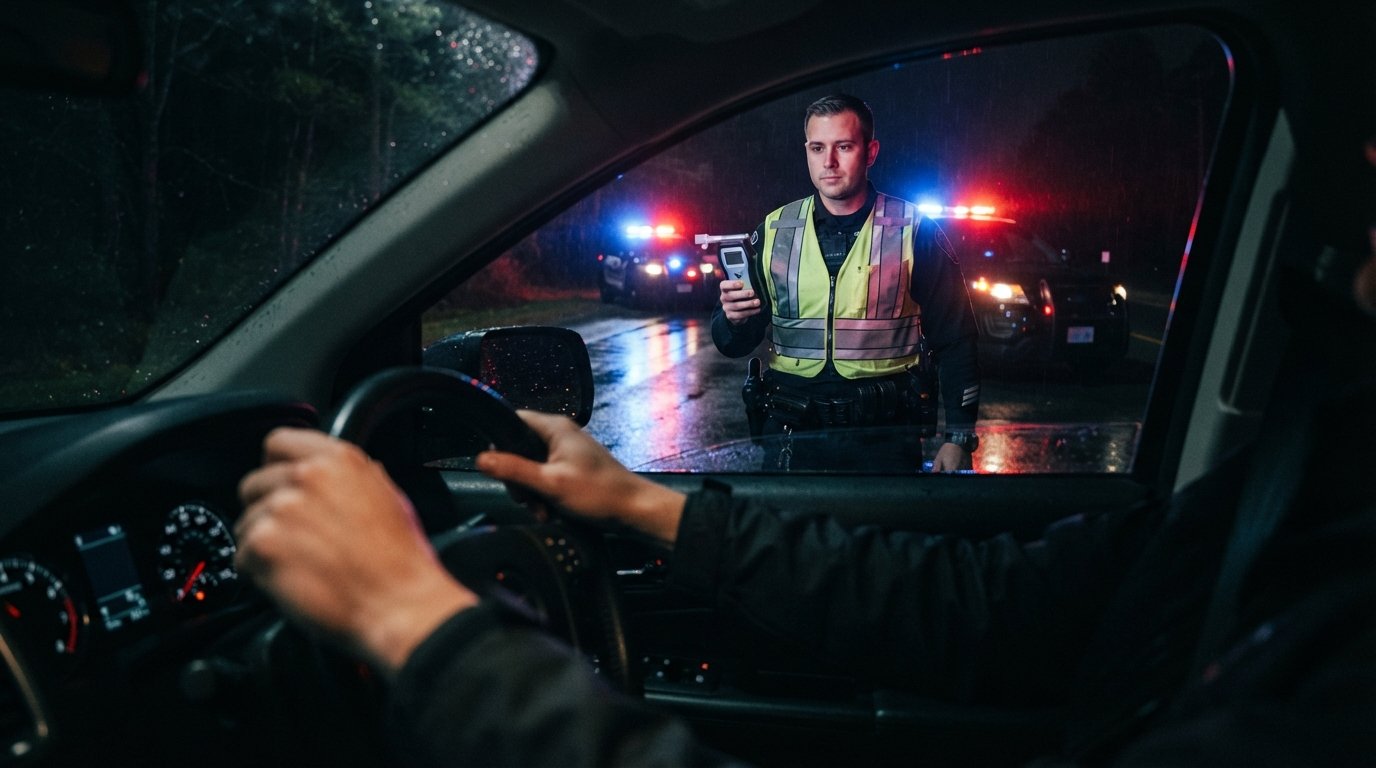
You see the flashing lights in your rearview mirror, and your heart sinks. The officer asks you to step out of the car, and then comes the request: blow into a handheld device. In that moment, a dozen questions race through your mind. What happens if I say no? Can I refuse? What are the consequences of refusing a breathalyzer test implied consent laws put in place? The answer is not as simple as yes or no, and the fallout can ripple through your driving privileges, your finances, and your criminal record for months or even years. Understanding implied consent is critical before you ever find yourself in that situation, because the decision you make at the roadside carries legal weight that most drivers never anticipate.
What Is Implied Consent and Why Does It Matter?
Every state in the country has an implied consent law. The concept is straightforward: by obtaining a driver's license and operating a vehicle on public roads, you automatically agree to submit to chemical testing (breath, blood, or urine) if an officer has reasonable grounds to believe you are driving under the influence. You never signed a separate document, but the act of driving itself constitutes consent. This legal fiction exists because impaired driving kills thousands of people annually, and states want a reliable mechanism to gather evidence quickly while a person's blood alcohol concentration is still measurable.
When an officer requests a breath test, they are invoking that implied consent. A refusal is not a criminal charge in the same way a DUI is, but it triggers an administrative penalty that operates almost independently of the criminal case. That distinction matters: even if you are ultimately acquitted of DUI, the refusal itself can still result in a suspended license. The consequences of refusing a breathalyzer test implied consent framework can be harsh precisely because they are administrative, not criminal, which means fewer procedural protections apply.
It is also important to understand that implied consent typically applies only after a lawful arrest for DUI. During the initial traffic stop, before an arrest, an officer may ask you to perform field sobriety tests or a preliminary breath test (PBT). Many states treat the PBT differently from the evidentiary breath test taken at the station. Refusing a PBT might not carry the same implied consent penalties, but it can still be used as evidence of consciousness of guilt. The rules vary significantly by state, and this is one reason why speaking with a DUI defense attorney early is so valuable.
If you are facing DUI charges and are unsure where to turn, resources like AttorneyDirectory.Lawyer can help you locate attorneys in your area who handle these cases. Remember that AutoInjuryAccident.com is a consumer matching site, not a law firm or lawyer referral service, and it does not provide legal advice. Submitting a form does not create an attorney-client relationship, and you are never obligated to hire anyone.
Administrative Penalties: License Suspension and Beyond
The most immediate consequence of refusing a breathalyzer is the administrative license suspension. In most states, the suspension for a first refusal is longer than the suspension you would face for a first-time DUI conviction with a test result just over the limit. For example, some states impose a one-year suspension for a first refusal, while a first DUI conviction might carry a 90-day suspension. That longer suspension is designed to discourage refusals, and it applies even if you are never convicted of DUI.
The process typically unfolds through an administrative hearing rather than a criminal trial. After the refusal, the officer files a report with the state licensing agency. You receive notice that your license will be suspended unless you request a hearing within a short window, often 7 to 15 days. Miss that deadline, and the suspension takes effect automatically. At the hearing, the issues are narrow: whether the officer had reasonable grounds to believe you were impaired, whether you were properly advised of implied consent, and whether you actually refused. You do not get to argue the entire DUI case at this hearing.
Beyond the suspension itself, you may face additional administrative requirements to get your license back. These can include:
- Paying a reinstatement fee, which can range from $100 to over $500 depending on the state
- Completing a substance abuse evaluation or education program
- Obtaining high-risk SR-22 insurance for one to three years
- Installing an ignition interlock device on your vehicle
- Serving a waiting period before you become eligible for a restricted or full license
These requirements add up quickly. SR-22 insurance alone can double or triple your monthly premium. An ignition interlock device typically costs $70 to $150 per month for installation and monitoring. When you combine those costs with lost wages from a suspended license, the financial impact of a refusal can dwarf the fine for a DUI conviction. Many people who refuse a breathalyzer assume they are protecting themselves, but they often end up in a worse position financially and legally than if they had simply complied.
Criminal Court Implications of Refusing a Breathalyzer
While the administrative suspension is automatic, the criminal case is separate. Refusing a breath test does not prevent the prosecution from charging you with DUI. In fact, in many jurisdictions, the refusal itself can be introduced as evidence of guilt at trial. Prosecutors argue that an innocent person would have no reason to refuse, and juries often find that argument persuasive. This is one of the most overlooked consequences of refusing a breathalyzer test implied consent laws create: your refusal becomes part of the narrative against you.
Without a breath test result, the prosecution must rely on other evidence to prove impairment. That evidence can include the officer's observations (bloodshot eyes, slurred speech, odor of alcohol), field sobriety test performance, dashcam or bodycam footage, and any statements you made. In some states, if you refuse a breath test, the officer may seek a warrant to draw your blood. The Supreme Court has held that forced blood draws without a warrant are unconstitutional in many circumstances, but officers can and do obtain warrants quickly. If they get a warrant and you still refuse, you could face additional charges for obstructing or resisting.
Refusal can also affect plea bargaining. Prosecutors may be less willing to offer a reduced charge or diversion program when a refusal is on the record. They know the refusal makes their case harder to defend, and they may use that leverage to push for harsher terms. An experienced DUI attorney can sometimes negotiate a plea that avoids the worst outcomes, but the refusal gives the prosecutor more ammunition. This is why it is critical to consult with a lawyer before making any decisions about your case.
If you are facing DUI charges and need to understand your options, AutoInjuryAccident.com offers a free, confidential case review. You can request a no-cost review through their platform, and participating attorneys may contact you. There is no obligation to hire, and the service is designed to help you make informed decisions without pressure.
State-by-State Variations in Refusal Penalties
Implied consent laws are not uniform. The length of suspension, the availability of a restricted license, and the requirements for reinstatement vary widely. For instance, California imposes a one-year suspension for a first refusal, while some states impose 90 days to six months. A few states allow you to apply for a restricted license after serving a portion of the suspension, but others do not. Some states require an ignition interlock device for all refusal suspensions, while others only require it for repeat offenses.
It is also important to note that some states treat a refusal as a separate criminal offense. In those states, you could face criminal penalties (jail time, fines) for the refusal itself, on top of any DUI charges. This is more common in states with stricter DUI laws. Because these rules change frequently, relying on information from a friend in another state or a decade-old experience is risky. The best approach is to consult with a local attorney who knows the current statutes and how judges in your jurisdiction handle refusal cases.
For commercial drivers, the consequences are even more severe. Under federal regulations, a CDL holder who refuses a breath test can be disqualified from driving a commercial vehicle for at least one year, and potentially for life for a second offense. This can end a career. If you hold a CDL, the decision to refuse is even more consequential, and you should seek legal advice immediately.
Can You Refuse a Breath Test but Still Take a Blood Test?
Some drivers wonder if they can refuse the breathalyzer but agree to a blood draw, hoping to avoid the refusal penalty. The answer depends on the state. In many states, implied consent applies to all chemical tests, so refusing any test triggers the same penalty. In other states, you have a right to choose which test to take, but if you refuse the one offered, it counts as a refusal. Some states allow you to request a blood test instead of a breath test, but the officer is not always required to accommodate that request if it would delay the investigation unreasonably.
There is also a practical consideration: blood tests are generally more accurate and can be analyzed by a lab, while breath tests are more prone to calibration errors and operator mistakes. Some defense strategies focus on challenging the reliability of breath test results. If you refuse the breath test, you might be giving up the opportunity to challenge a potentially flawed result. On the other hand, a blood test can be more difficult to challenge because it is a direct measurement of alcohol in the bloodstream. The best choice depends on the facts of your case, which is why you should not make this decision without legal guidance.
It is also worth noting that you do not have a constitutional right to consult with an attorney before deciding whether to submit to a chemical test. The Supreme Court has ruled that the right to counsel does not attach at the breath test stage because it is not a critical stage of the prosecution. This means you cannot delay the test by asking to call a lawyer. Doing so may be treated as a refusal.
What Happens If You Are Under 21 or on Probation?
Drivers under 21 face zero-tolerance laws. Any measurable amount of alcohol in their system can lead to a DUI charge, and refusing a breath test can trigger the same implied consent penalties, often with longer suspensions. For a first refusal, a minor might lose their license for one year or until they turn 21, whichever is longer. The stakes are high because a suspended license can affect school, work, and social activities.
If you are on probation or parole for a prior offense, refusing a breath test can be a violation of your supervision terms. Many probation agreements include a condition that you submit to chemical testing upon request. A refusal could lead to a probation violation, which can result in jail time or revocation of probation. If you are on DUI probation, the consequences can be even more severe, including mandatory jail time.
For immigrants, a DUI conviction or even an arrest can have immigration consequences, including deportation or denial of naturalization. Refusing a breath test does not necessarily trigger immigration consequences on its own, but the underlying DUI arrest can. If you are not a U.S. citizen, you should consult with an immigration attorney as well as a criminal defense attorney.
Steps to Take After a Refusal
If you have already refused a breath test, you need to act quickly. The deadlines are short, and missing them can result in an automatic suspension. Here are the key steps:
- Request an administrative hearing immediately. You typically have 7 to 15 days from the date of refusal to request a hearing with the DMV or licensing agency. Do not wait.
- Write down everything you remember. Details about the traffic stop, the officer's statements, and the exact words used can be critical. Memory fades quickly.
- Contact a DUI defense attorney. An attorney can help you navigate both the administrative and criminal processes, and they can advise you on whether to fight the refusal or negotiate.
- Do not miss any court dates. Missing a court date can result in a bench warrant and additional charges.
- Consider a substance abuse evaluation. In some cases, completing an evaluation voluntarily can help mitigate penalties, but consult with your attorney first.
These steps are general and may not apply in every state. The most important thing is to get personalized legal advice as soon as possible. The consequences of refusing a breathalyzer test implied consent laws impose can be severe, but they are not insurmountable with the right help.
How AutoInjuryAccident.com Can Help
AutoInjuryAccident.com is a consumer matching site that connects people facing DUI charges or injured in accidents with participating attorneys. The site is not a law firm or a lawyer referral service, and it does not provide legal advice. However, it offers a free, confidential case review that can help you understand your options. The process is simple: you fill out a form, and participating attorneys may contact you. There is no obligation to hire, and your information is kept confidential.
The site's network covers all 50 states, so you can find attorneys who know the specific implied consent laws in your jurisdiction. Whether you are facing a first-time DUI, a refusal charge, or a more complex situation, having access to a knowledgeable attorney can make a significant difference. Remember that submitting a form does not create an attorney-client relationship, and you should always verify an attorney's credentials before hiring them.
If you are also dealing with injuries from a car accident, AutoInjuryAccident.com can help with that as well. The site connects people with attorneys who handle personal injury cases, including car crashes, truck wrecks, and motorcycle accidents. The same free, confidential case review applies. It is a resource designed to help people take the first step toward resolving their legal issues without pressure or cost.
The Bottom Line on Refusing a Breathalyzer
Refusing a breathalyzer test is a decision with lasting consequences. While it may seem like a way to avoid self-incrimination, implied consent laws mean that refusal often leads to longer license suspensions, higher insurance costs, and a harder fight in criminal court. The administrative penalties are separate from the criminal case, and they can apply even if you are acquitted. Every state handles refusals differently, and the rules are complex.
If you are facing a DUI charge or have already refused a test, the best course of action is to consult with a qualified DUI defense attorney in your state. They can explain the specific penalties you face, help you request a hearing, and develop a strategy for your case. Do not try to navigate this alone. The stakes are too high, and the deadlines are too short. A free, confidential case review through AutoInjuryAccident.com can connect you with an attorney who understands the consequences of refusing a breathalyzer test implied consent laws create, and who can help you protect your rights.