
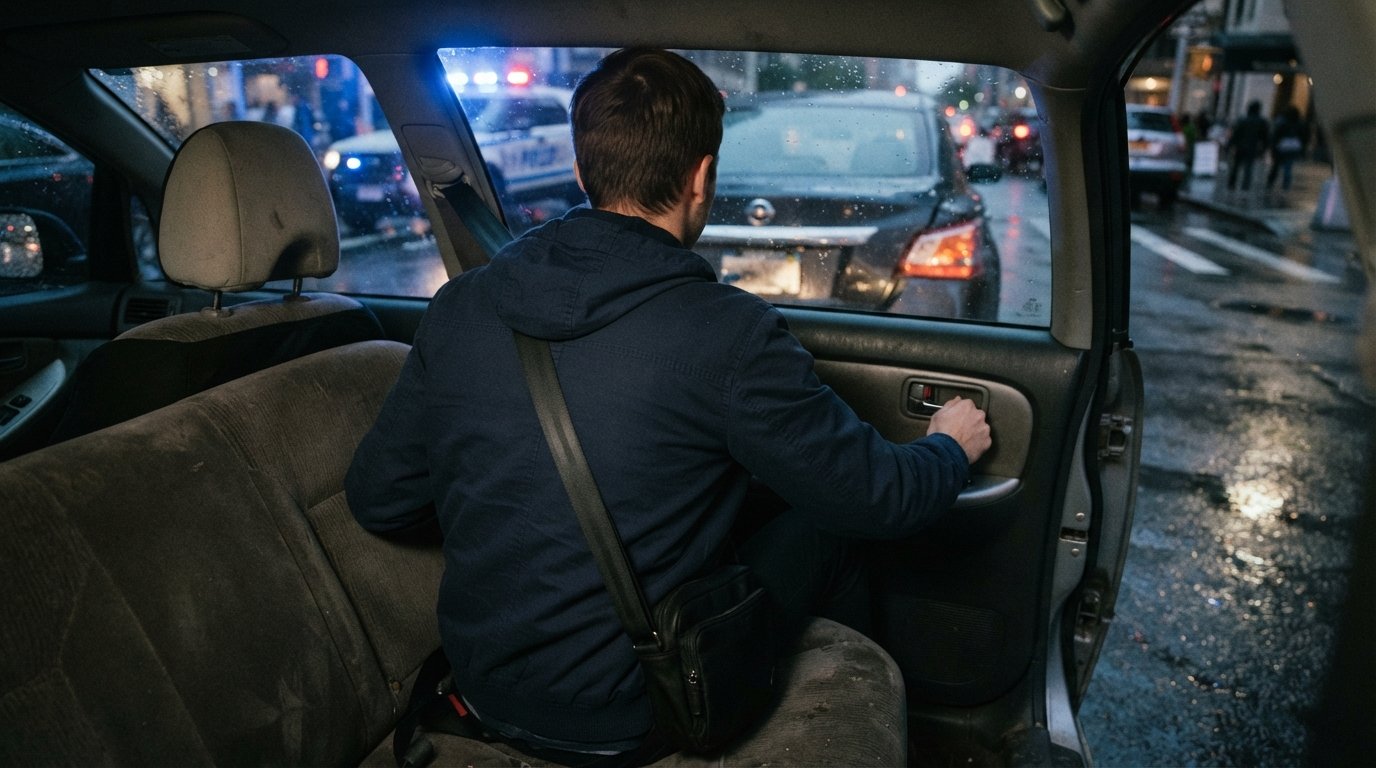
Rideshare Accident Injury Claim As a Passenger
Injured as a rideshare passenger? You may have multiple coverage paths. Call 8555452917 to request a free, confidential case review.

By Claire Griffin
You did everything right. You requested a ride, buckled your seatbelt, and trusted a stranger to get you home safely. Then the crash happened. In a split second, you went from passenger to injury victim, and now you are staring at medical bills, missed work, and a confusing tangle of insurance companies that all seem to be pointing fingers at each other.
If you were hurt in a crash while riding in an Uber, Lyft, or another rideshare vehicle, you are not without options. As a passenger, you are generally considered an innocent victim, which means you may have multiple paths to compensation that do not depend on proving you did anything wrong. The challenge is not usually whether you have a claim. The challenge is figuring out which insurance policy pays, how much rideshare coverage actually applies, and how to avoid saying something that accidentally hurts your case.
This guide walks through the practical steps of a rideshare accident injury claim when you were the passenger, including how liability works, what coverage may be available, and how to protect your right to recover damages.
Why Passenger Claims Are Different From Driver Claims
When you are the driver in a crash, your own conduct can become a central issue. The other side may argue you were speeding, distracted, or partially at fault. As a passenger, that dynamic changes dramatically. In most cases, you had no control over the vehicle and no ability to prevent the collision. That generally positions you as a claimant rather than a defendant, and it usually makes your claim more straightforward than a driver's claim.
That does not mean your claim is automatic. Insurance companies still look for reasons to reduce what they pay. They may question whether your injuries were pre-existing, whether you sought treatment quickly enough, or whether the crash was really as severe as you describe. But the core liability question, who caused the crash, is typically answered by the drivers involved, not by you.
One important wrinkle: some states follow comparative fault rules, meaning your recovery can be reduced if you are found partly responsible. As a passenger, your share of fault is usually zero or very low. Still, small details matter. If you grabbed the steering wheel, distracted the driver, or did something unusual, that could be raised later. For the vast majority of passengers, however, the focus stays on the drivers and their insurers.
Understanding Rideshare Insurance Coverage
Rideshare companies like Uber and Lyft do not insure every mile their drivers travel. Instead, coverage depends on what the driver was doing at the moment of the crash. This is where many passenger claims get complicated, because the available insurance can shift based on the driver's app status.
In general, there are three phases:
- App off: The driver is not working and their personal auto policy applies, which may exclude commercial use.
- App on, waiting for a request: The driver is available but has not accepted a ride. Rideshare companies typically provide limited liability coverage during this period.
- Passenger in the car or trip accepted: The driver is actively transporting a passenger. This is when the highest level of rideshare liability coverage usually applies.
Because you were a passenger, you were almost certainly in the third phase, which is the best position to be in. Rideshare companies commonly maintain substantial liability coverage during active trips, often well above state minimums. That said, the exact amount varies by company and by state, and the rideshare insurer may still dispute fault or the extent of your injuries.
There is also the other driver to consider. If the crash was caused by a third party, that driver's insurance may be the primary source of compensation. In that situation, your claim might proceed against the at-fault driver's policy, with the rideshare policy serving as an additional layer if needed. Sorting out which policy pays first is one of the main reasons passenger claims benefit from early legal guidance.
Who Is Liable in a Rideshare Crash?
Liability in a rideshare accident depends on who caused the crash. The most common scenarios include:
- The other driver was at fault. This is the simplest scenario. The other driver's liability insurance should cover your injuries, and the rideshare policy may provide additional coverage.
- Your rideshare driver was at fault. In this case, the rideshare company's liability policy typically applies because the driver was active on the platform.
- A third party was at fault. This could include a commercial truck, a government vehicle, or a driver who fled the scene. Uninsured motorist coverage may come into play here.
- Shared fault. Sometimes both drivers share responsibility. In that situation, multiple policies may contribute, and the claims process becomes more complex.
If you are unsure who was responsible, you are not alone. Many passengers never see the crash coming and have only a vague sense of what happened. Police reports, witness statements, and even the rideshare app's trip data can help establish fault. For a deeper look at how responsibility is sorted out between the platform and the driver, see this guide on rideshare accident liability for Uber or Lyft drivers.
Steps to Take After a Rideshare Crash as a Passenger
What you do in the hours and days after the crash can significantly affect your claim. The goal is simple: preserve evidence, document your injuries, and avoid statements that could be used against you later.
Here is a practical sequence that works in most situations:
- Call 911 and request a police report. Even if the crash seems minor, an official report creates a record of what happened and who was involved.
- Seek medical attention immediately. Some injuries, like whiplash or concussions, do not show obvious symptoms right away. Delaying treatment gives insurers a reason to argue your injuries are not serious.
- Document everything. Take photos of the vehicles, the scene, your visible injuries, and any damage. Save your rideshare receipt and trip details from the app.
- Collect information. Get the names, phone numbers, and insurance details of both drivers, plus contact information for any witnesses.
- Report the crash to the rideshare company. Uber and Lyft have in-app reporting tools. Keep a record of your report and any response you receive.
- Avoid discussing fault or giving recorded statements to insurance adjusters before you understand your rights.
One more step that is easy to overlook: keep a simple journal about your pain, limitations, and missed activities. This kind of documentation can be surprisingly persuasive when an insurer questions how the crash affected your daily life.
Common Injuries in Rideshare Accidents
Passengers in rideshare vehicles are subject to the same forces as anyone else in a crash, but there are a few injury patterns that show up frequently. Because passengers often sit in the back seat, they may be more vulnerable to certain types of trauma.
Frequent injuries include:
- Whiplash and neck strain
- Back injuries, including herniated discs
- Head injuries and concussions
- Shoulder and knee injuries from bracing for impact
- Fractures and soft tissue damage
Some of these injuries are obvious right away. Others, like concussions or disc injuries, may take days to fully surface. That delay is one reason insurers often try to minimize passenger claims. They know that a person who feels fine at the scene may still be dealing with serious symptoms weeks later.
If you are experiencing headaches, dizziness, numbness, or persistent pain after a crash, do not assume it will pass. Get evaluated by a medical professional and follow their recommendations. Your medical records will become a key part of your injury claim.
What Damages Can a Passenger Recover?
As an injured passenger, you may be able to recover a range of damages, depending on the severity of your injuries and the insurance coverage available. These typically fall into two broad categories: economic and non-economic damages.
Economic damages cover measurable financial losses, such as:
- Medical bills, including emergency care, surgery, and rehabilitation
- Lost wages from missed work
- Future medical expenses if ongoing care is needed
- Out-of-pocket costs related to the injury
Non-economic damages address the human impact of the injury, including pain and suffering, emotional distress, and loss of enjoyment of life. In some cases, punitive damages may be available if the at-fault driver's conduct was especially reckless, though this is less common.
Because rideshare policies often provide higher liability limits than a typical personal auto policy, passengers may have more room to recover full damages than they would in a crash with a single private driver. That said, no outcome is guaranteed, and every claim depends on the facts, the available coverage, and the quality of the evidence.
Dealing With Insurance Companies
Insurance adjusters are trained to resolve claims quickly and at the lowest possible cost. That does not make them villains, but it does mean you should be cautious about how you communicate with them.
A few practical rules can help you avoid common mistakes:
- Do not give a recorded statement without understanding how it will be used.
- Do not sign a release or accept a settlement before you know the full extent of your injuries.
- Do not post details about the crash or your recovery on social media.
- Keep copies of every document, message, and medical record related to the crash.
If an adjuster offers a quick settlement, remember that early offers often do not account for future medical needs or lost earning capacity. Once you accept a settlement, you generally cannot go back for more. That is why it often makes sense to get a professional review before signing anything.
If you want to understand how a free case review works and what to expect, you can start by connecting with a network of attorneys who handle rideshare and auto injury claims. Submitting a request does not create an attorney-client relationship and does not obligate you to hire anyone, but it can give you a clearer picture of your options.
When to Get Legal Help for Your Passenger Claim
Not every passenger claim requires an attorney. If your injuries are minor, the insurance company accepts fault quickly, and you are confident you can negotiate a fair settlement, you may be able to handle it on your own.
But several situations strongly favor getting legal guidance:
- Your injuries are serious, requiring surgery, long-term care, or extended time off work.
- The insurance company disputes fault or blames you, even partially.
- Multiple drivers or policies are involved, making coverage unclear.
- The rideshare company or its insurer is slow to respond or denies coverage.
- You are unsure whether a settlement offer is fair.
An experienced attorney can gather evidence, communicate with insurers on your behalf, and help you evaluate whether a settlement offer reflects the true value of your claim. If you are looking for legal representation in your area, resources like TheLawyerDirectory can help you find attorneys who handle personal injury and rideshare cases. TheLawyerDirectory is a U.S. lawyer directory and advertising site, not a law firm or lawyer referral service, and there is no obligation to hire anyone you contact.
Timing also matters. Every state has a statute of limitations for personal injury claims. If you wait too long, you may lose the right to recover anything at all. Deadlines vary by state, so it is wise to confirm the rules that apply to your situation as soon as possible.
How AutoInjuryAccident.com Can Help
AutoInjuryAccident.com is a consumer matching site that helps people injured in car crashes, truck wrecks, and rideshare accidents request a free, confidential case review from participating attorneys. The site is not a law firm and does not provide legal advice. Instead, it connects you with attorneys who advertise on the platform, giving you a low-pressure way to learn about your rights.
The process is simple. You share basic details about the crash and your injuries, and participating attorneys may reach out to discuss your situation. There is no cost to submit a request, no obligation to hire anyone, and the information you provide stays confidential. If you are not ready to commit to a lawyer, that is completely fine. The goal is to give you enough information to make a confident decision.
Because fault rules, insurance requirements, and filing deadlines vary from state to state, a case review can help you understand what applies where you live. Whether you ultimately hire an attorney or handle the claim yourself, knowing your options is the first step toward protecting your recovery.
The bottom line: as a rideshare passenger, you have rights, and you are rarely at fault. The insurance process can be frustrating, but you do not have to navigate it alone. Start by documenting your crash, getting medical care, and learning what coverage may be available. From there, you can decide whether to pursue your claim on your own or with professional help, and you can move forward with a clearer sense of what your case is worth.