
T Bone Car Accident: Who Is at Fault at an Intersection?
Injured in a side-impact crash? Learn how fault is determined at intersections. Call (855)-545-2917 for a free case review.

By Marcus Hale
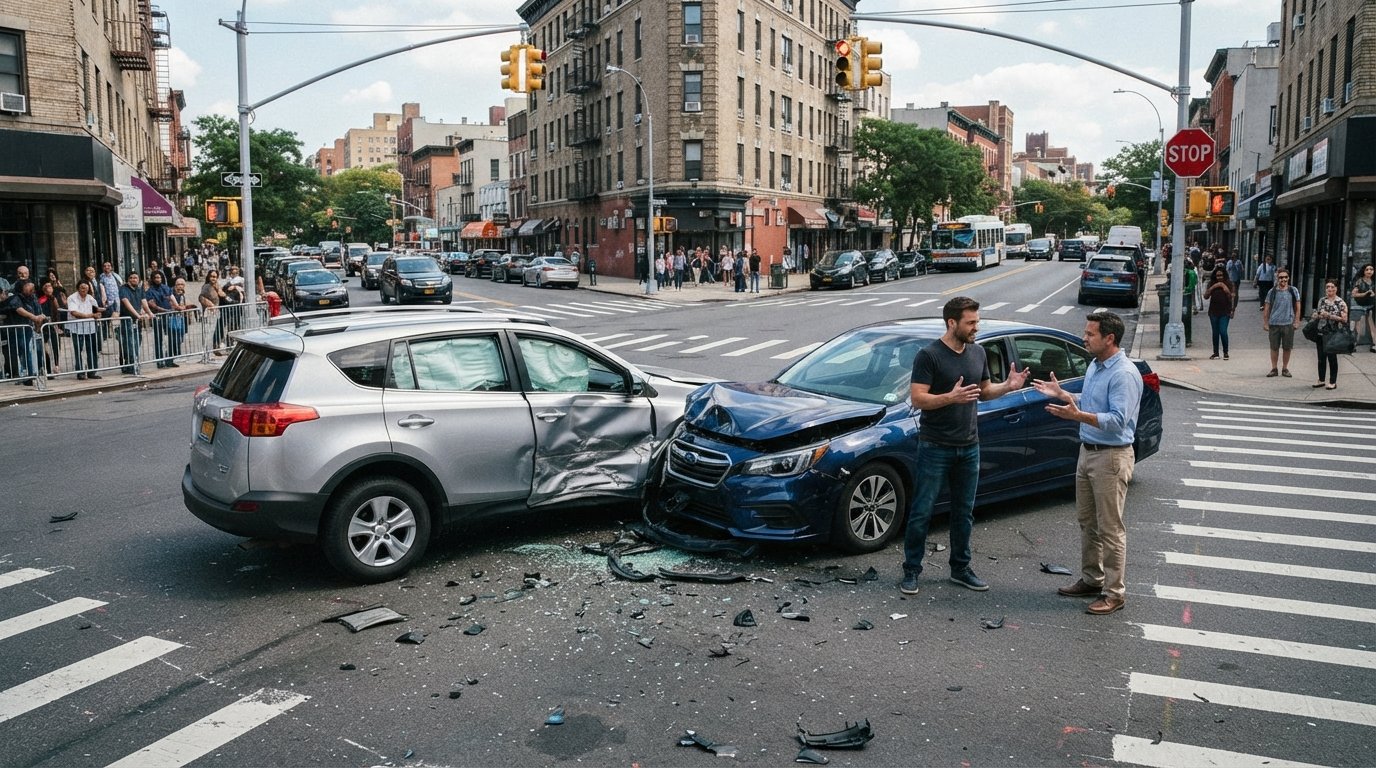
A t bone car accident at an intersection often leaves both drivers pointing fingers, each convinced the other ran the light or failed to yield. In the chaos of crumpled doors, airbag dust, and conflicting stories, figuring out who is actually at fault can feel impossible. Insurance adjusters will not simply take your word for it, and the other driver's insurer has every incentive to shift blame onto you. Understanding how fault is determined in a side-impact crash is the first step toward protecting your injury claim and avoiding a surprise bill for damages you did not cause.
How Fault Is Determined in a T Bone Intersection Crash
At its core, a t bone collision (also called a side-impact or broadside crash) happens when the front of one vehicle strikes the side of another. Intersections are the most common setting because two vehicles are crossing paths, often at speed, with limited time to react. Fault usually hinges on right-of-way rules: who had the green light, who faced a stop sign, who was turning left, and who entered the intersection when it was unsafe to do so.
The driver who violated a traffic control device or right-of-way law is typically presumed at fault. If one car ran a red light and struck the side of a vehicle that had a green light, the red-light runner is the obvious culprit. But real crashes are rarely that clean. Both drivers may claim they had the green, or one may say the other waved them through. That is when the investigation matters more than the argument.
Insurance companies and courts look at a combination of evidence to reconstruct what happened. The goal is to establish which driver breached a duty of care and whether that breach caused the collision. In disputed cases, the paper trail, physical evidence, and independent witnesses carry far more weight than either driver's recollection.
Common Fault Disputes: Running Lights and Stop Signs
The most frequent fight in a t bone case is over traffic signals. One driver insists the light was green; the other insists it was red. Without a dash camera or a neutral witness, this becomes a credibility contest that insurers resolve by looking for corroboration. Police accident reports often note whether a signal was functioning, whether skid marks suggest late braking, and whether either driver admitted fault at the scene.
Stop sign collisions follow a similar pattern. A driver who rolls through a stop sign and gets broadsided will usually bear the majority of fault. But the other driver may share blame if they were speeding, distracted, or had time to avoid the crash and failed to do so. Intersection crashes frequently involve some degree of shared responsibility, which is why the fault question is rarely a simple yes or no.
Left-turn accidents are another classic t bone scenario. A driver turning left across oncoming traffic must yield to vehicles going straight. If the left-turner misjudges the gap and gets hit on the passenger side, fault generally lands on the turning driver. However, if the straight-driving vehicle was speeding or ran a light, the analysis changes. These nuances are why a police report and witness statements are so valuable.
Here are the most common intersection fault disputes and what typically decides them:
- Red light versus green light: Traffic camera footage, dash cams, and independent witnesses usually settle it.
- Stop sign violations: Police observations of vehicle position and damage patterns help confirm who failed to stop.
- Left-turn yield failures: The turning driver is usually at fault unless the other driver was speeding or ran a signal.
- Unsafe entry into the intersection: A driver who blocks the box or enters on a yellow may share fault.
- Distraction or impairment: Phone records, sobriety tests, and officer notes can shift or confirm blame.
Notice that each dispute comes down to evidence, not emotion. The driver who can produce documentation, neutral witnesses, or expert reconstruction tends to win the fault argument, even when the other side tells a convincing story.
The Evidence That Decides Disputed Fault Cases
When fault is contested, the strongest cases are built on a stack of corroborating evidence. The police accident report is often the starting point. Officers document vehicle positions, damage, statements, citations, and their own observations of the scene. A citation for running a red light or failing to yield is powerful evidence of fault, though it is not automatically conclusive in a civil claim.
Witness statements matter enormously. An independent witness who saw the crash from a sidewalk or another vehicle can break a stalemate between two drivers. Vehicle damage patterns also tell a story: the location and depth of the impact can help reconstruct speed, angle, and who struck whom. Skid marks, debris fields, and traffic signal timing data add another layer of proof.
Increasingly, digital evidence plays a decisive role. Dash camera footage, surveillance video from nearby businesses, and even event data recorders in modern vehicles can show exactly what happened in the seconds before impact. If you were injured in a disputed intersection crash, preserving this evidence quickly is critical, because footage can be overwritten or lost within days.
Medical records also support the injury side of the claim, connecting the crash to your treatment and damages. Together, these pieces form the foundation for negotiations with the at-fault driver's insurer or, if necessary, a lawsuit.
Comparative Fault Rules Vary by State
Even when fault seems clear, the amount you can recover may be reduced by your own share of responsibility. Most states apply some form of comparative fault, meaning your compensation is reduced in proportion to your percentage of blame. If you are found 20 percent at fault for a t bone crash, your recovery may be cut by 20 percent.
The rules differ significantly from state to state. Some states follow pure comparative fault, allowing recovery even if you were mostly at fault, though your award is reduced accordingly. Others follow modified comparative fault, which bars recovery if your fault exceeds a certain threshold (often 50 or 51 percent). A handful of states still use contributory negligence, which can bar recovery entirely if you were even slightly at fault.
This is why the fault dispute matters so much. Being labeled even partially responsible can shrink your settlement or eliminate it altogether. Insurance adjusters know these rules and may try to assign you a percentage of fault to reduce what they pay. An experienced eye on your side can push back against unfair blame and document why the other driver was primarily responsible.
Why T Bone Injury Claims Often Need Attorney Involvement
Side-impact crashes are uniquely dangerous. The struck vehicle's occupant sits close to the point of impact, with only a door and a window between them and the other car. Serious injuries to the chest, abdomen, head, and spine are common, and recovery can take months or longer. When fault is disputed on top of serious injuries, the claim becomes complex fast.
An attorney can investigate the crash, secure witness statements and video evidence, work with accident reconstruction experts, and negotiate with insurers who may try to lowball or deny the claim. In disputed-fault scenarios, having a professional document the evidence and apply the correct state law can make the difference between a fair recovery and a denied claim.
If you are weighing your options, a free case review can help you understand where you stand. Platforms like LawyerOffer connect injured people with attorneys and provide educational resources, and services such as AutoInjuryAccident.com offer confidential case reviews with no obligation. Submitting a request does not create an attorney-client relationship and does not require you to hire anyone, but it can give you clarity on fault, deadlines, and next steps.
Rideshare crashes at intersections add another layer of complexity, since the question of who is liable can involve the driver, the platform, and their insurers. If your crash involved a rideshare vehicle, our guide on rideshare accident liability for Uber or Lyft drivers explains how fault and insurance coverage are sorted out in those cases.
Steps to Take After a T Bone Crash at an Intersection
What you do in the hours and days after the crash can shape the fault investigation. Start by calling 911 and requesting police and medical help, even if you feel fine. Adrenaline can mask injuries, and a police report creates an official record of the scene. Exchange insurance and contact information with the other driver, but avoid admitting fault or arguing about who caused the crash.
Document everything you can. Take photos of vehicle damage, the intersection, traffic signals, skid marks, and your injuries. Collect contact information from witnesses before they leave. Seek medical attention promptly and follow your treatment plan, since gaps in care can be used against you later.
Then, consider these practical steps to protect your claim:
- Report the crash to your own insurer promptly, but stick to the facts and avoid speculation about fault.
- Keep a folder with the police report number, medical records, photos, and witness contacts.
- Do not give a recorded statement to the other driver's insurer without understanding your rights.
- Preserve digital evidence, including dash cam or phone footage, before it is overwritten.
- Request a free case review if fault is disputed or your injuries are serious.
Following these steps keeps the evidence intact and gives you a stronger position when fault is debated. It also prevents early missteps, like a casual apology at the scene, from being used to assign you blame later.
Fault in a t bone car accident at an intersection is rarely as obvious as it first appears. Traffic signals, witness accounts, damage patterns, and state fault rules all interact, and the other driver's insurer will be looking for ways to shift responsibility. Knowing how fault is determined, preserving the right evidence, and getting a clear-eyed review of your situation can help you avoid a surprise bill and pursue the recovery you deserve.