
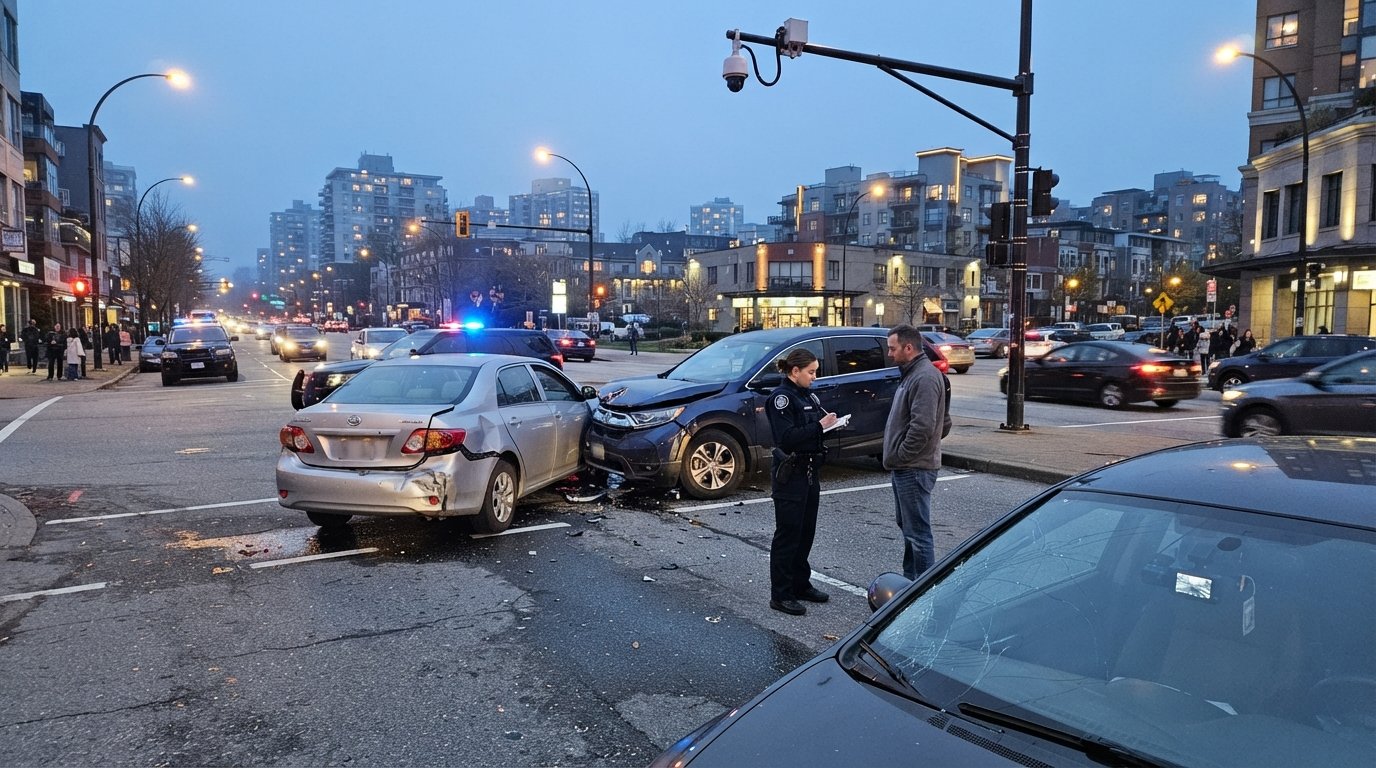
Traffic Camera and Dashcam Footage in Accident Claims
Traffic camera and dashcam footage in accident claims can decide fault fast. Call 8555452917 to request a free case review before recordings are overwritten.

By Claire Griffin
A split-second before impact, a camera was recording. It might have been mounted on a traffic light, attached to a windshield, or built into a nearby building's security system. In the aftermath of a crash, that footage can become one of the most persuasive pieces of evidence in your case. Traffic camera and dashcam footage in accident claims frequently decides who pays, how much they pay, and how quickly a dispute resolves. Yet many injured people never think to look for it until the recording has already been overwritten. Understanding how this evidence works, how to preserve it, and how it fits into the claims process can protect your recovery.
Why Video Evidence Carries So Much Weight
Insurance adjusters and juries both respond to video in ways that written statements rarely match. A police report summarizes what officers observed after the fact. Witness recollections fade and shift. Video, by contrast, captures speed, position, timing, and impact in a format anyone can replay. When liability is contested, footage often ends the argument before it starts.
For that reason, traffic camera and dashcam footage in accident claims has become a central battleground. Attorneys on both sides request it early, and insurers know that a clear recording can force a settlement or expose a fraudulent claim. If you are the injured party, footage that supports your version of events can shorten the claims timeline and reduce the pressure to accept a low offer.
There is also a defensive value. Sometimes the footage does not fully favor you, but it still defeats an exaggerated accusation, such as a claim that you were speeding or distracted. Knowing what the recording actually shows lets your attorney frame the case realistically instead of reacting to surprises later.
Types of Footage That May Capture Your Crash
Most people assume dashcams are the only source of video. In reality, several systems may have recorded the same event from different angles. The more sources you identify, the stronger the evidentiary picture becomes.
- Private dashcams: Windshield-mounted cameras in your vehicle or the other driver's vehicle, sometimes with audio and rear-facing views.
- Municipal traffic cameras: Red-light cameras, intersection cameras, and highway monitoring systems operated by city or state agencies.
- Business and building surveillance: Parking lot cameras, gas station systems, and storefront security feeds that cover adjacent roads.
- Transit and commercial vehicle cameras: Buses, rideshare vehicles, delivery vans, and trucking fleets often run continuous recording systems.
- Bystander phone video: Passengers, pedestrians, or other motorists who recorded the scene or the aftermath.
Each source has different retention rules. A private dashcam may loop over old files within hours, while a municipal system might hold footage for days or weeks. Commercial fleets frequently maintain recordings for a defined period under company policy. Because those windows are short, the speed of your request matters as much as the request itself.
It also helps to think about who controls each recording. You control your own dashcam, but you do not control a traffic camera or a store's security system. That difference shapes your strategy: some footage you can simply save, while other footage requires a formal preservation demand.
How to Preserve Footage Before It Disappears
Preservation is the single most time-sensitive task after a crash. Many systems overwrite automatically, and some government agencies purge recordings on a fixed schedule. Once the file is gone, it is usually gone for good.
If you have your own dashcam, stop driving the vehicle if possible, remove or lock the memory card, and back up the files to two separate locations. Do not delete clips that seem unimportant, and do not edit or trim the original file. A complete, unaltered recording is far more credible than a clipped highlight. Note the date, time, and camera settings, since timestamp accuracy sometimes becomes an issue in disputes.
For footage you do not control, act through a written request or, better, through an attorney who can send a formal preservation letter. That letter puts the camera owner and any insurer on notice that evidence must be retained. In some situations, a court order may be needed to compel production if a party refuses or delays.
- Identify every possible camera near the crash scene, including traffic signals, businesses, and transit vehicles.
- Send written preservation requests to each camera owner as soon as possible.
- Back up your own dashcam files and keep the original memory card untouched.
- Document the chain of custody, meaning who handled the footage and when.
- Follow up in writing if a requested recording has not been produced.
Chain of custody deserves special attention. If footage passes through several hands without documentation, an opposing party may argue it was altered. Keeping a simple log of who copied the file, when, and how can neutralize that argument before it gains traction.
Traffic Cameras Versus Dashcams: Key Differences
The two categories of footage behave differently in practice, and understanding those differences helps you set realistic expectations.
Traffic cameras are typically owned by a government entity. Access usually requires a public records request, a subpoena, or cooperation from law enforcement. Some jurisdictions release footage readily; others cite privacy or policy restrictions. Red-light cameras may also be operated by private vendors under contract, which adds another layer to the request process. Timing is critical because retention periods are often measured in days.
Dashcams, by contrast, are privately owned. If the camera belongs to you, access is immediate. If it belongs to the other driver, you generally need that person's cooperation, their insurer's cooperation, or a legal mechanism to obtain it. A driver who knows the footage is unfavorable has little incentive to hand it over voluntarily, which is one reason early attorney involvement can matter.
Audio is another distinction. Many dashcams record sound, which can capture admissions, arguments, or statements at the scene. Traffic cameras usually record video only. Audio can be powerful, but it can also cut both ways if your own words are unhelpful, so review footage carefully before deciding how to use it.
Using Footage to Strengthen Your Claim
Once footage is preserved, the next question is how it fits into the broader claim. Video rarely stands alone. It works best when combined with the police report, medical records, witness statements, and vehicle damage evidence. Together, those pieces tell a consistent story.
Footage can establish several key elements:
- Fault: Who ran the light, failed to yield, or crossed the center line.
- Impact severity: How hard the vehicles struck, which supports injury claims.
- Timing: Whether the other driver had time to react or brake.
- Credibility: Whether a party's account matches what the camera shows.
When an insurer disputes liability, a clear recording often changes the conversation quickly. Adjusters who initially deny fault may revise their position once they see the video, because defending a denial in court against obvious footage is expensive and risky. That dynamic can improve your negotiating position even before a lawsuit is filed.
Footage can also support claims beyond liability. If the recording shows a violent impact, it may help counter an argument that your injuries were minor or pre-existing. If it shows the other driver distracted or impaired, it may support additional theories of negligence. Your attorney can assess which uses are strongest for your specific facts.
When Footage Hurts Instead of Helps
Not every recording favors the person who requests it. Sometimes footage shows partial fault on your side, such as a rolling stop or a delayed reaction. In shared-fault states, that can reduce your recovery proportionally, and in a few strict jurisdictions, any fault at all can bar recovery.
This is why reviewing footage with a lawyer before disclosing it is important. You generally have no obligation to volunteer evidence to the other side, but you also cannot destroy or hide it once litigation begins. The goal is not to conceal unfavorable facts but to present them in accurate context alongside the full picture, including the other driver's conduct.
Even damaging footage can have value. It may confirm the sequence of events, rule out a more serious allegation, or demonstrate that you tried to avoid the crash. An experienced attorney can often find ways to frame imperfect video honestly while still protecting your interests.
Common Mistakes That Destroy Video Evidence
Evidence loss is usually the result of ordinary mistakes rather than bad faith. Recognizing the most common ones can save your case.
Overwriting is the biggest risk. Dashcams loop continuously, so the clip you need may vanish after a few hours of driving. Waiting weeks to request traffic camera footage often means it no longer exists. Failing to send a written preservation request leaves no record that anyone was on notice. Editing or trimming a clip damages its credibility. Relying on a verbal promise that someone will save the video is risky, since memories and priorities change.
Another frequent error is assuming the police will collect all relevant footage. Officers document the scene, but they do not always pull nearby surveillance video, and their reports may not mention cameras at all. You or your attorney should independently identify and pursue every possible source.
How an Attorney Helps Secure and Use Footage
An attorney brings tools that individuals usually lack: formal preservation letters, subpoena power, and experience negotiating with insurers and government agencies. Timing is often the difference between recovering footage and losing it, and legal representation tends to accelerate the process.
If you are weighing whether to hire counsel, a no-cost case review can clarify your options without obligation. Services such as AttorneyDirectory.Lawyer let you explore attorney profiles and request quotes, which can be useful when you want to compare experience before committing. Platforms like AutoInjuryAccident.com connect injured people with participating attorneys who advertise on the site, though it is not a law firm or lawyer referral service, and submitting a form does not create an attorney-client relationship or require you to hire anyone.
Once retained, your attorney can request footage from multiple sources, authenticate it for use in negotiations or court, and integrate it with medical and accident reconstruction evidence. That combination is usually more persuasive than any single piece of proof.
Keep in mind that fault rules, insurance requirements, and filing deadlines vary by state. A deadline that applies in one jurisdiction may not apply in another, and missing it can end a claim regardless of how strong the video evidence is. An attorney familiar with your state's rules can protect you from that outcome.
Frequently Asked Questions About Crash Footage
Can I get traffic camera footage on my own?
Sometimes. Many agencies accept public records requests, but processing can take weeks, and retention periods may be shorter than that. A preservation request sent immediately improves the odds of success.
What if the other driver refuses to share dashcam video?
You cannot force a private party to hand over footage without a legal mechanism. An attorney can send a preservation demand and, if necessary, seek a court order. Insurers often produce footage once litigation is underway.
How long is dashcam footage typically kept?
It depends on the memory card size and settings. Many systems overwrite within hours or days of continuous recording. Some fleets retain footage longer under company policy, but you should never assume a long window.
Does footage guarantee a settlement?
No. Video is strong evidence, but outcomes depend on many factors, including injuries, state law, and insurance limits. No one can promise a specific result, and you should be cautious of anyone who does.
If a camera recorded your crash, the clock is already running. Save what you control, request what you do not, and get guidance early. Traffic camera and dashcam footage in accident claims can be the difference between a disputed case and a resolved one, but only if the evidence still exists when someone asks for it.