
Trucking Insurance Minimums and Injury Claims: Key Facts
Understand commercial trucking insurance minimums and injury claims. Get a free, confidential case review at 8555452917 to protect your rights.

By Elena Vasquez
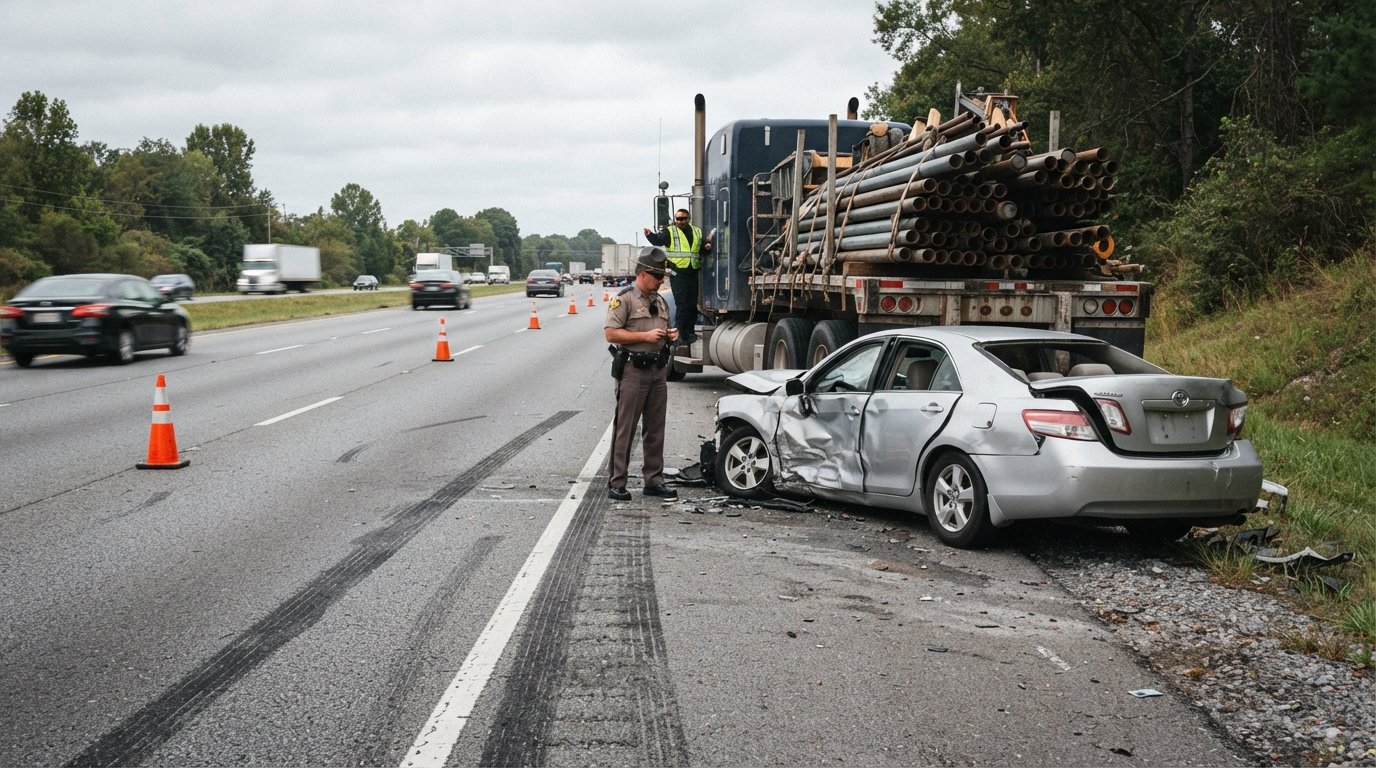
A fully loaded tractor-trailer can weigh 80,000 pounds. A passenger car often weighs less than 4,000. When those two collide, the physics alone explain why truck accident injuries tend to be catastrophic: spinal cord damage, traumatic brain injury, amputations, and wrongful death. What many injured people do not realize is that the money available to pay for that harm is tied directly to federal and state commercial trucking insurance minimums. Those minimums set the floor for coverage, and they shape nearly every strategic decision in a serious injury claim. Understanding how they work can mean the difference between a claim that covers your losses and one that leaves you absorbing bills for decades.
Federal Commercial Trucking Insurance Minimums Explained
The Federal Motor Carrier Safety Administration (FMCSA) sets minimum liability insurance requirements for most large commercial trucks and buses operating in interstate commerce. Under the current rules, the standard minimum level of financial responsibility for general freight carriers is $750,000 per incident. For carriers hauling certain hazardous materials, the requirement jumps to $1 million or even $5 million, depending on the cargo. Passenger-carrying commercial vehicles face their own tiered thresholds.
These figures are minimums, not recommendations. A motor carrier can carry more coverage, and many responsible fleets do. But the federal floor exists so that a commercial truck is never on the road with no ability to pay for the harm it causes. The rules come from the Motor Carrier Act and are enforced through registration and operating authority requirements. If a carrier cannot show proof of the required insurance, it generally cannot legally operate across state lines.
It is important to understand what these minimums do not cover. Federal minimums apply to liability, meaning they pay injured victims and damaged property. They do not guarantee compensation for the trucking company's own driver, and they do not automatically cover every loss an injury victim suffers. They also do not apply to every truck on the road. Intrastate carriers, some agricultural operations, and certain small vehicles may fall under state rules instead. That is why the first step in any truck injury claim is identifying which insurance rules actually apply.
State Minimums and Why They Matter for Truck Claims
Every state also sets its own minimum liability insurance requirements, and those state rules can apply to commercial vehicles operating only within that state. State minimums for commercial trucks vary widely. Some states align with the federal $750,000 threshold for heavier vehicles, while others impose lower or higher limits depending on vehicle weight, use, and cargo. A delivery truck that never crosses a state line might be governed by a state minimum far below the federal standard.
For injury victims, this patchwork matters because the available insurance is often the practical ceiling on recovery. If a negligent trucking company carries only the minimum, and the minimum is $750,000, then the at-fault driver's liability policy may not be enough to cover a catastrophic injury with lifetime medical needs. In those situations, an experienced attorney looks beyond the primary policy to find additional sources of compensation. Those can include the trucking company's umbrella or excess policies, the cargo owner's insurance, the shipper's liability coverage, and the injured person's own uninsured or underinsured motorist (UM/UIM) coverage.
This is one reason truck accident cases are rarely simple. A passenger car crash might involve two drivers and two insurers. A commercial truck crash can involve a driver, a motor carrier, a broker, a shipper, a maintenance contractor, and multiple layers of insurance. Each layer has its own limits, its own exclusions, and its own adjusters. Mapping those layers early is one of the most valuable things a lawyer can do for an injured client.
How Insurance Minimums Affect Injury Claim Value
Injury claim value is not determined by the severity of the injury alone. It is determined by the damages that can be proven and the money available to pay them. Insurance minimums sit on the payment side of that equation. Even a completely valid claim for $2 million in medical bills, lost wages, and pain and suffering may only recover the policy limits if the at-fault carrier bought the minimum and has no other assets or coverage.
This reality drives several key strategies in truck injury litigation. Attorneys investigate whether the carrier had a legal duty to carry more than the minimum. They examine whether the truck was properly classified, whether hazardous materials rules applied, and whether the carrier misrepresented its operations to regulators. They also look for direct negligence by the trucking company, such as hiring an unqualified driver, skipping maintenance, or pressuring drivers to violate hours-of-service rules. A direct negligence claim can sometimes reach company assets and excess coverage that a simple respondeat superior claim cannot.
For injured people, the practical takeaway is that the at-fault driver's minimum policy is a starting point, not the final word. A thorough investigation often uncovers additional coverage. But that investigation has to happen quickly, before evidence disappears and before insurers close ranks.
Steps to Take After a Commercial Truck Accident
The days and weeks after a serious truck crash are chaotic. Medical treatment, insurance calls, and paperwork pile up fast. A clear sequence of steps helps protect both your health and your legal rights. The following framework is not legal advice, but it reflects the general order in which a strong claim is built.
- Get medical care immediately. Even if you feel fine, adrenaline can mask serious injuries. Immediate treatment creates a medical record that links your injuries to the crash.
- Report the crash and preserve evidence. Call 911, request a police report, and photograph the scene, vehicles, and any visible injuries. Note the truck's DOT number and the carrier's name.
- Do not give recorded statements to the trucking company's insurer. Adjusters may call within hours. You are generally not required to give a recorded statement to the other side's insurer, and early statements can be used against you.
- Collect documentation. Keep every medical bill, pay stub, repair estimate, and receipt. Write down how the injury affects your daily life.
- Consult a truck accident attorney before signing anything. A free case review can identify all available insurance policies and deadlines that apply to your claim.
Each of these steps serves a purpose. Medical records prove the injury. Scene evidence proves what happened. Documentation proves the financial loss. And legal review ties it all together by identifying every source of compensation, including policies the trucking company may never volunteer. Missing a step, especially the early evidence preservation, can permanently weaken an otherwise strong case.
The Role of a Lawyer in Trucking Insurance Claims
Trucking insurers employ teams of adjusters, investigators, and defense attorneys whose job is to limit what the company pays. They arrive at the scene quickly, sometimes before the injured person has even left the hospital. An injured victim navigating that system alone is at a serious disadvantage. A lawyer levels the field by investigating the crash, preserving evidence, communicating with insurers on the client's behalf, and building a documented damages claim.
Attorneys also understand the coverage questions that determine case value. They know how to request the trucking company's insurance declarations page, how to identify excess and umbrella policies, and how to pursue claims against multiple defendants when more than one party is responsible. When a claim cannot be resolved fairly through negotiation, a lawyer can file suit and take the case through litigation.
For people who are unsure where to start, a service like LawyerOffer provides plain-language legal information and can connect injured individuals with attorneys who handle truck accident and insurance claims. Resources of that kind are especially useful in the early days after a crash, when the priority is treatment and the legal system feels overwhelming. The key is to act before deadlines pass and evidence fades.
Common Mistakes That Reduce Truck Accident Recovery
Most reduced recoveries trace back to a handful of avoidable mistakes. Recognizing them early helps injured people protect their claims.
- Accepting a quick settlement. Early offers rarely reflect the full cost of a serious injury, especially future medical care and lost earning capacity.
- Missing filing deadlines. Statutes of limitation for personal injury vary by state, and some truck claims involve shorter notice requirements.
- Failing to identify all policies. Settling with the driver's insurer alone can forfeit claims against the carrier, brokers, or the victim's own UM/UIM coverage.
- Posting about the crash on social media. Insurers monitor public posts and may use them to argue the injury is less serious than claimed.
- Waiting too long to seek legal help. Evidence, witnesses, and electronic logging data become harder to obtain with each passing week.
None of these mistakes are unusual. They happen because injured people are focused on recovery, not on insurance strategy. That is exactly why early legal guidance matters. An attorney can handle the procedural and investigative work while the client focuses on healing.
How to Get a Free Confidential Case Review
Submitting a request for a case review is a simple, no-obligation step. It does not create an attorney-client relationship, and it does not require anyone to hire a lawyer. It simply opens a conversation with a legal professional who can explain the options. For truck accident victims, that conversation often reveals coverage sources and deadlines they did not know existed.
AutoInjuryAccident.com is a consumer matching site, not a law firm or lawyer referral service. It helps people injured in car crashes, truck wrecks, and related accidents, as well as those facing DUI or DWI charges, request a free, confidential case review from participating attorneys who advertise on the site. Coverage is nationwide, though fault rules, insurance requirements, and deadlines vary by state. The service does not provide legal advice, and submitting a form does not create an attorney-client relationship or obligate anyone to hire a lawyer.
Understanding commercial trucking insurance minimums and injury claims gives injured people a realistic picture of what compensation may be available and why a thorough investigation matters. The minimums set the floor. A diligent attorney can often find the ceiling. Acting early, documenting everything, and getting a free case review are the most reliable ways to protect your rights after a serious truck crash.