
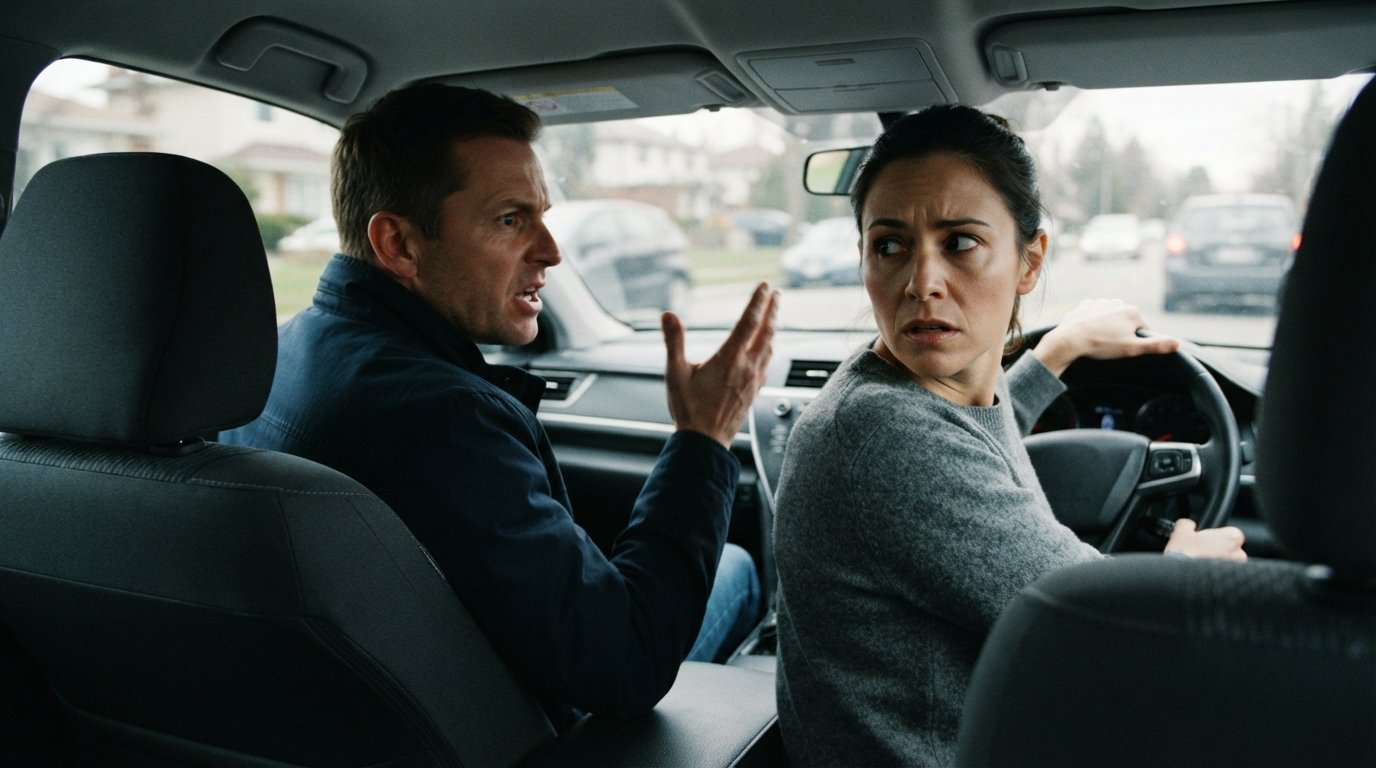
Can a Passenger Be Partly at Fault for Distracting the Driver?
Passenger distraction can reduce your recovery under comparative fault rules. Call (855)-545-2917 for a free case review and protect your claim.

By Hannah Briggs
A passenger who grabs the wheel, argues loudly, or physically interferes with a driver can absolutely be found partly at fault for a crash. That single fact surprises many injured people, because passengers are often viewed as innocent bystanders who had no control over the vehicle. In reality, courts and insurance companies look at what each person did before impact, and distracting conduct can shift a portion of legal responsibility onto the passenger. That shift matters because it can reduce the money a passenger recovers, complicate an insurance claim, and even invite a counterclaim from the driver or the driver's insurer. Understanding how comparative fault rules apply to passenger behavior is the first step toward protecting your rights, whether you were the passenger or the driver in a crash.
How Negligence Rules Apply to Passenger Conduct
Negligence law asks a simple question: did a person fail to act with reasonable care, and did that failure cause harm? Drivers owe a duty to operate the vehicle safely, but passengers are not automatically exempt from the same standard. A passenger owes a duty to avoid conduct that foreseeably interferes with the driver's ability to control the car. When a passenger breaches that duty and the breach contributes to a collision, the passenger can be assigned a percentage of fault under a legal doctrine known as comparative negligence.
Most states use some form of comparative fault. In a pure comparative fault state, a passenger can recover damages even if they are 90 percent at fault, though the recovery is reduced by that percentage. In a modified comparative fault state, the passenger can only recover if their fault stays below a certain threshold, typically 50 or 51 percent. A handful of states still follow contributory negligence, which can bar recovery entirely if the passenger is found to have contributed to the crash at all. Because these rules vary widely by jurisdiction, the same passenger conduct might lead to very different outcomes depending on where the accident happened.
Insurance adjusters apply these same principles before a lawsuit is ever filed. When a passenger files a claim against the at-fault driver's policy, the adjuster will investigate whether the passenger did anything that increased the risk of the crash. Even a modest allegation of distraction can become a bargaining chip used to lower a settlement offer. That is why the language a passenger uses in a recorded statement can matter as much as the physical evidence at the scene.
Situations That Can Put a Passenger at Fault
Not every annoying passenger habit rises to the level of legal fault. The key question is whether the conduct actually interfered with the driver's ability to safely operate the vehicle. Courts tend to focus on conduct that is physical, sudden, or persistent enough to divert the driver's attention at a critical moment. A passenger who simply talks during a drive is generally not at fault. A passenger who lunges for the steering wheel on a highway is a different story entirely.
Common scenarios where fault may be assigned to a passenger include:
- Grabbing or bumping the steering wheel, even playfully or in a moment of panic
- Physically interfering with the driver's arms, legs, or view of the road
- Engaging in a heated argument that escalates into yelling, pushing, or throwing objects
- Playing loud music, waving objects, or blocking mirrors in a way that genuinely impairs visibility
- Urging the driver to speed, run a light, or take a risky maneuver
- Providing alcohol or drugs to a driver the passenger knows is impaired
- Leaning out of a window or moving around the cabin in a way that shifts the vehicle's balance
Each of these examples shares a common thread: the passenger's conduct created a foreseeable risk that the driver would lose focus or control. A passenger who distracts a driver during a lane change, at an intersection, or in heavy traffic is more likely to be blamed than one who distracts a driver on an empty road with no other vehicles nearby. Timing and context matter as much as the conduct itself.
Grabbing the Wheel and Physical Interference
Physical interference is the clearest path to passenger fault. If a passenger grabs the wheel and the car swerves into another lane, the passenger's conduct is a direct cause of the collision. The driver may also bear some responsibility for failing to regain control quickly, but the passenger will almost certainly be assigned a meaningful percentage of fault. The same logic applies when a passenger pushes the driver, covers the driver's eyes, or reaches across the console and knocks the driver's hand away from the gear shift.
These cases often involve disputes about intent. A passenger might claim they were trying to prevent a crash, while the driver claims the passenger caused one. In that situation, physical evidence such as vehicle damage patterns, witness statements, and even in-vehicle data can help determine what actually happened. Passengers in these disputes should avoid speculating or admitting fault in conversations with insurers until they understand the full picture.
Arguments, Loud Music, and Emotional Distraction
Emotional distraction is harder to prove than physical interference, but it still matters. A passenger who starts a screaming argument during rush hour traffic is creating a foreseeable distraction. If the driver then runs a red light or rear-ends another car, the passenger may be assigned a share of fault for escalating the situation. Courts look at whether the argument was a normal disagreement or a sustained, aggressive confrontation that any reasonable person would recognize as dangerous.
Loud music and other sensory distractions fall on a spectrum. A passenger who turns up the radio is unlikely to be found at fault unless the volume was so extreme that it prevented the driver from hearing sirens, horns, or other warning signals. A passenger who repeatedly flashes a phone light in the driver's face or waves an object near the windshield is in a different category, because that conduct directly interferes with the driver's ability to see.
Can a Distracting Passenger Still Recover Damages?
Yes, a passenger who was partly at fault can often still recover damages, but the amount will usually be reduced by their percentage of fault. Suppose a jury finds that a passenger was 20 percent responsible for a crash because they grabbed the wheel during an argument, and the total damages are $100,000. Under a pure comparative fault rule, the passenger would recover $80,000. Under a modified rule with a 50 percent bar, the passenger would still recover because their fault was below the threshold. Under a contributory negligence rule, the passenger might recover nothing at all.
This is why the passenger's conduct is examined so closely during settlement negotiations. An insurer defending the at-fault driver will point to any distracting behavior as a reason to reduce the offer. The passenger's own attorney will work to minimize the assigned fault by showing that the driver's negligence was the dominant cause of the crash. Evidence such as phone records, witness testimony, and dash camera footage can help clarify who did what in the moments before impact.
Passengers should also remember that they may have claims against more than one party. If the driver of the car they were riding in was negligent, the passenger may have a claim against that driver's insurance. If another driver caused the crash, the passenger may have a claim against that driver as well. In some situations, both drivers share fault, and the passenger's recovery is distributed among the available policies. Understanding which policies apply requires a careful review of the facts, and that review is best done with legal guidance rather than guesswork.
If you were hurt as a passenger and want to understand how fault might affect your claim, a free case review can help clarify your options. For a no-cost, confidential assessment of your situation, you can request a free personal injury case review and speak with an attorney who handles passenger injury claims in your state.
Why Recorded Statements to Insurers Should Be Handled Carefully
Insurance adjusters are trained to ask questions that sound friendly but are designed to gather information that can be used to reduce or deny a claim. A passenger who gives a recorded statement without preparation may inadvertently admit to distracting the driver, even if the distraction was minor or unrelated to the crash. For example, an adjuster might ask, "Were you and the driver talking before the accident?" A simple yes can later be framed as evidence that the passenger contributed to the crash.
Recorded statements are also problematic because they are taken early, before the passenger has had a chance to review the police report, vehicle damage, or witness accounts. Memories fade, and early statements can conflict with later evidence. Once a statement is recorded, it is difficult to change, and insurers may use inconsistencies to attack the passenger's credibility. It is generally wise to decline a recorded statement until you have spoken with an attorney, or to provide only the basic facts and refer further questions to counsel.
There are practical steps a passenger can take to protect their claim after a crash:
- Seek medical attention first and keep records of all treatment.
- Document the scene, including vehicle positions, damage, and road conditions.
- Collect contact information from witnesses and other involved parties.
- Avoid discussing fault with anyone at the scene or on social media.
- Consult with an attorney before giving a recorded statement to any insurer.
These steps help preserve the evidence needed to show what actually happened and to counter any suggestion that the passenger was responsible. They also help ensure that the passenger's medical and financial losses are documented properly, which matters when calculating damages.
Intersection crashes are a common setting for passenger distraction disputes, because drivers must process multiple signals and cross-traffic movements at once. In a T-bone car accident fault analysis, the focus often turns to which driver had the right of way, but passenger conduct can complicate that picture. A passenger who shouted at the driver to "go" at a yellow light, for instance, may be assigned some fault if the driver then entered the intersection and was struck. That is why a full reconstruction of events, not just a quick glance at the traffic signal, is often necessary.
The Driver's Role and Shared Responsibility
Even when a passenger distracts the driver, the driver usually remains primarily responsible for maintaining control of the vehicle. Drivers are expected to manage foreseeable distractions, including noisy passengers, and to pull over if a distraction becomes unmanageable. A driver who claims a passenger caused a crash by talking too much will have a hard time shifting blame unless the passenger's conduct was extreme. Courts generally expect drivers to keep their eyes on the road and their hands on the wheel regardless of what is happening in the cabin.
That said, shared responsibility is common. A driver who was already speeding, texting, or impaired will bear a larger share of fault, and the passenger's distraction may become a secondary factor rather than the main cause. In cases where both the driver and the passenger behaved negligently, the jury or adjuster will assign percentages based on the relative contribution of each person's conduct. The passenger's recovery is then reduced by their own percentage, and the driver's insurer pays the remainder.
Passengers who were injured in a crash where the driver was impaired face a particularly complex situation. If the passenger knew the driver had been drinking and chose to ride anyway, the defense may argue that the passenger assumed the risk of the ride. Assumption of risk is a separate legal doctrine from comparative fault, but it can have a similar effect on recovery. An attorney can explain how these doctrines interact in your state and whether your knowledge of the driver's condition is likely to affect your claim.
Practical Steps After a Crash Involving Passenger Distraction
If you were involved in a crash where passenger distraction is being alleged, the steps you take in the days and weeks afterward can shape the outcome. Start by getting medical care and following your treatment plan, because documentation of your injuries is the foundation of any claim. Then gather evidence: photos of the vehicles, the road, and any visible injuries; contact details for witnesses; and a copy of the police report. If there is dash camera footage or nearby surveillance video, ask about preserving it before it is overwritten.
Be cautious with social media. Posts about the crash, even casual ones, can be used to argue that you were not as injured as you claim or that you were doing something distracting at the time. Insurers routinely review public profiles, and a single photo or comment can undermine an otherwise strong claim. Keep your account settings private and avoid discussing the accident online until your case is resolved.
Finally, consider a professional case review before speaking with insurers or accepting an early settlement offer. A confidential review can help you understand how fault rules apply in your state, what evidence matters, and what steps to take next. Submitting a request does not create an attorney-client relationship and does not obligate you to hire anyone, but it can give you the information you need to make a sound decision.
Passenger distraction is a real factor in many crashes, and it can reduce a passenger's recovery even when the driver was mostly to blame. The best way to protect your interests is to understand the rules, document the facts carefully, and get guidance before making statements that could be used against you. Whether you were the passenger or the driver, knowing how fault is assigned helps you approach the claims process with clarity instead of uncertainty.