
Drowsy Driver Crash? Get an Auto Accident Lawyer
Struggling to prove a drowsy driver caused your crash? An auto accident lawyer can help. Call (855)-545-2917 for a free, confidential case review.

By Elena Vasquez
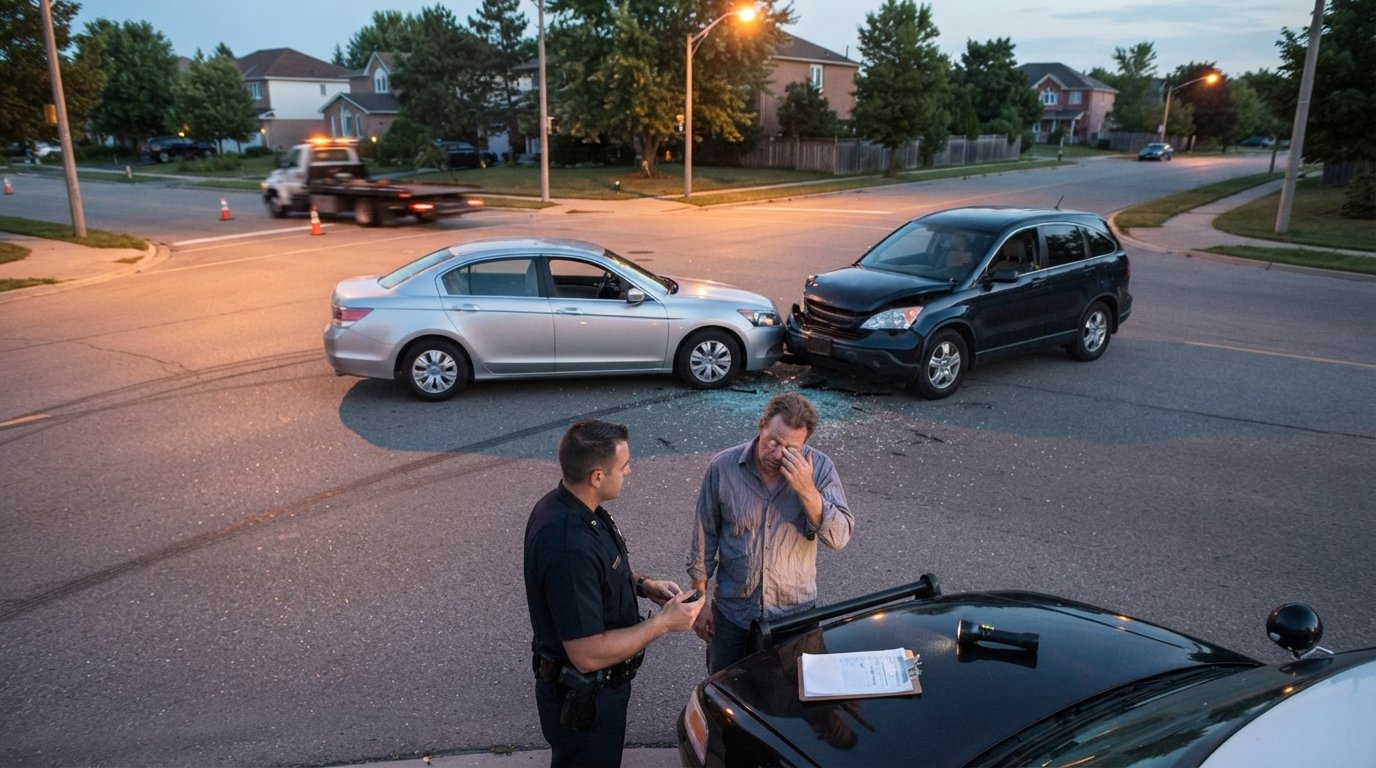
You noticed the other driver drifting across the lane for a mile before the crash. There were no brake lights, no evasive swerve, just a steady drift into your path. In the seconds after impact, you may have seen the driver rub their eyes or seem disoriented. These details matter because they point to a common but often overlooked cause of serious collisions: driver fatigue. If you were hurt by someone who fell asleep or was too tired to drive safely, an auto accident lawyer for a crash caused by a drowsy driver can help you investigate what really happened and pursue the compensation you deserve.
Drowsy driving crashes are not always easy to prove. Unlike a drunk driving case, there is no breathalyzer for fatigue. There is no legal limit for hours slept. That is why these claims often require careful evidence gathering, expert analysis, and a legal team that understands how to connect the dots between a driver's schedule and the moments before impact. This article explains how drowsiness can be established as negligence, what records may reveal a fatigued driver's habits, and how an attorney can build a stronger case on your behalf.
Why Drowsy Driving Is Hard to Prove Without Specific Evidence
Fatigue is invisible. After a crash, a tired driver may simply say they were distracted or that you stopped suddenly. Without witnesses or physical evidence, their explanation can seem plausible. Unlike impairment from alcohol or drugs, drowsiness leaves no chemical trace in the blood. Law enforcement officers at the scene may not have a standardized test to detect it. As a result, drowsy driving is often underreported in crash data, even though it is believed to contribute to thousands of collisions each year.
To succeed in a drowsy driving claim, you need evidence that goes beyond a hunch. You need to show that the other driver was negligent, meaning they failed to exercise the care a reasonable person would use. Fatigue becomes negligence when a driver knew or should have known they were too tired to drive safely but got behind the wheel anyway. Proving that requires documentation, witness accounts, and sometimes expert reconstruction. An experienced attorney knows where to look and how to piece together the timeline of the other driver's day.
Consider a typical scenario: a driver works an overnight shift, then picks up a rideshare fare on the way home. They have been awake for 20 hours. They nod off at a red light and rear-end your vehicle when the light turns green. Without phone records, shift logs, or testimony about their work schedule, the crash looks like a simple rear-end collision. But with the right evidence, it becomes a case of driver fatigue that could justify additional damages, including punitive damages in some states.
Records That May Reveal Hours Driven, Shift Logs, or Rest Stops
One of the most powerful tools in a drowsy driving case is the paper trail left by the at-fault driver's work and travel habits. Commercial drivers, in particular, are required to keep detailed records. Even non-commercial drivers leave digital footprints that can be obtained through subpoenas or discovery requests once a lawsuit is filed. Your attorney can request data from electronic logging devices, GPS systems, toll transponders, and even social media posts that show when the driver was active.
For commercial truck drivers, federal regulations limit driving hours and require rest breaks. These rules exist precisely because fatigue is dangerous. When a truck driver violates them, it can be strong evidence of negligence. But even for delivery drivers, rideshare drivers, and ordinary motorists, records can reveal a pattern of sleep deprivation. Here are some of the key records an attorney might pursue:
- Electronic logging device (ELD) data for commercial trucks, showing hours of service, driving time, and rest breaks.
- Shift schedules and timecards from the driver's employer, revealing long shifts or back-to-back workdays.
- GPS and navigation history that shows how long the driver had been on the road and whether they stopped for rest.
- Toll and fuel receipts that establish a timeline of continuous driving without adequate rest.
- Cell phone records indicating late-night activity or calls that suggest the driver was awake when they should have been resting.
These records can be combined to create a clear picture of a driver who was dangerously fatigued. For example, if a delivery driver's shift log shows they worked 14 hours straight and their GPS shows they never stopped for more than five minutes, that supports a claim that they were too tired to drive safely. An attorney can use this evidence to negotiate with insurance companies or present it to a jury if the case goes to trial.
It is important to act quickly. Many records, especially electronic data, can be overwritten or deleted after a short period. A prompt investigation is essential to preserve evidence. If you have been injured, contacting an auto accident lawyer for a crash caused by a drowsy driver soon after the collision can make a significant difference in what evidence is available.
How Trucking and Delivery Drivers Face Additional Federal Rules
Commercial truck drivers are subject to federal hours-of-service regulations enforced by the Federal Motor Carrier Safety Administration (FMCSA). These rules limit the number of consecutive hours a driver can be on duty and require specific rest periods. For example, property-carrying drivers may drive a maximum of 11 hours after 10 consecutive hours off duty. They must also take a 30-minute break after 8 cumulative hours of driving. These rules are designed to reduce fatigue-related crashes, but violations are not uncommon, especially when companies push drivers to meet tight deadlines.
When a truck driver causes a crash after violating hours-of-service rules, the trucking company may also be held liable. Employers have a duty to enforce rest rules and monitor their drivers. If they encouraged or allowed a driver to skip breaks or falsify logs, they can share responsibility for the crash. This is where an attorney's knowledge of federal regulations and corporate liability becomes crucial. An auto accident lawyer for a crash caused by a drowsy driver who understands trucking industry practices can uncover evidence of rule violations and hold both the driver and the company accountable.
Delivery drivers for companies like Amazon, FedEx, and UPS also face intense schedules, though the specific rules vary. Some are classified as independent contractors, which can complicate liability. But even without federal hours-of-service rules, these drivers and their employers can be liable for negligent scheduling or failing to provide adequate rest. An attorney can investigate the working conditions and pressure that led to the driver's fatigue.
If you were injured in a crash involving a fatigued truck driver, you may be entitled to compensation for medical bills, lost wages, pain and suffering, and more. For a deeper look at the unique challenges of these cases, see our guide on a semi truck accident lawyer for crash caused by truck driver fatigue. It explains how fatigue evidence is gathered and why commercial cases often require specialized legal help.
Why the Crash Pattern Itself Can Suggest a Sleeping Driver
Sometimes the physical evidence at the scene tells a story of its own. A drowsy driver who falls asleep at the wheel often fails to take any evasive action. There are no skid marks, no brake lights, and no attempt to swerve. The vehicle may drift into oncoming traffic or rear-end another car at full speed without slowing. These patterns are red flags for fatigue.
In contrast, a distracted driver might look up at the last second and slam on the brakes. An impaired driver might overcorrect or weave. But a sleeping driver is simply unconscious, and their vehicle becomes a projectile. Accident reconstruction experts can analyze the damage, the lack of skid marks, and the trajectory of the vehicles to support a drowsy driving claim. They can also use event data recorders (black boxes) to show that the driver did not brake before impact.
Witness statements are equally valuable. Other motorists may have seen the driver drifting between lanes, nodding off, or driving erratically before the crash. Passenger testimony can also be powerful, especially if a passenger noticed the driver yawning repeatedly or struggling to stay awake. An attorney can interview witnesses and obtain statements to build a compelling case.
If you were injured in a crash where the other driver never braked, drifted across the center line, or rear-ended you at full speed, it may be worth investigating whether fatigue was a factor. An auto accident lawyer for a crash caused by a drowsy driver can review the evidence and help you determine if a claim is viable.
When Expert Reconstruction Supports a Drowsy Driving Claim
Expert accident reconstruction can be the key to proving drowsiness in a disputed case. These experts use physics, vehicle damage analysis, and scene evidence to recreate the collision. They can determine speed, point of impact, and whether the at-fault driver took any action to avoid the crash. When their findings show a complete lack of reaction, it supports the conclusion that the driver was incapacitated, whether by sleep, fatigue, or another cause.
In some cases, a human factors expert may also be consulted. These specialists study how fatigue affects reaction time and decision-making. They can explain to a jury why a tired driver might not respond even if they were technically awake. This kind of testimony can be persuasive, especially when combined with records showing the driver had been awake for an unusually long time.
Expert evidence is not cheap, but it can be essential in complex cases. Many personal injury attorneys advance the costs of investigation and only get paid if they win. That means you can pursue a drowsy driving claim without worrying about upfront expenses. When you request a free case review, you can ask about how the attorney handles expert fees and litigation costs.
If you are considering legal action, it is wise to consult with an attorney who has experience with fatigue-related crashes. They can tell you whether expert reconstruction is likely to help and what steps to take to preserve evidence. For general information about legal resources and consumer guidance involving attorneys, you can also visit AttorneyLawsuit, which provides educational content on legal disputes and attorney-related matters.
Steps to Take After a Crash with a Potentially Drowsy Driver
What you do in the hours and days after a crash can affect your ability to prove drowsiness later. The most important step is to get medical attention immediately, even if you feel fine. Some injuries, like whiplash or concussions, may not show symptoms right away. A medical record also creates a link between the crash and your injuries, which is essential for any claim.
Next, document everything you can at the scene. Take photos of the vehicles, the road, and any skid marks (or lack thereof). Exchange information with the other driver, but avoid discussing fault. If there are witnesses, ask for their contact information. When the police arrive, tell them exactly what you observed, including any signs that the other driver was tired or asleep. Your statement can be valuable evidence.
After you leave the scene, keep a journal of your symptoms, treatments, and how the injuries affect your daily life. Save all medical bills, repair estimates, and correspondence with insurance companies. Do not give a recorded statement to the other driver's insurance adjuster without consulting an attorney first. Adjusters may try to twist your words or offer a quick settlement that is far less than your claim is worth.
Finally, consider scheduling a free, confidential case review with an attorney who handles drowsy driving crashes. Many law firms offer this service with no obligation. You can explain what happened and learn about your legal options. There is no risk, and you do not have to hire a lawyer unless you decide it is right for you.
How an Attorney Can Help You Recover Damages
An attorney's role in a drowsy driving case goes beyond gathering evidence. They can handle all communication with insurance companies, negotiate a fair settlement, and file a lawsuit if necessary. They can also help you understand the full scope of your damages, which may include medical expenses, future medical care, lost earning capacity, pain and suffering, and emotional distress. In cases involving extreme negligence, punitive damages may also be available.
Insurance companies often try to minimize payouts in fatigue cases because they know drowsiness can be hard to prove. They may argue that the driver was simply distracted or that the crash was your fault. An experienced attorney can counter these arguments with evidence and expert testimony. They can also identify all liable parties, including employers or contractors, which can increase the available insurance coverage.
If you are worried about the cost of legal representation, ask about contingency fees. Most personal injury lawyers work on a contingency basis, meaning you pay nothing upfront and only owe a fee if they recover money for you. This arrangement makes it possible for injured people to pursue justice regardless of their financial situation.
Remember that deadlines apply. Every state has a statute of limitations for personal injury claims, typically ranging from one to three years. If you miss the deadline, you may lose your right to compensation. Contacting an attorney early gives you the best chance to preserve evidence and build a strong case.
Drowsy driving is a form of negligence that can cause devastating injuries. If you believe a tired driver caused your crash, do not wait to seek legal advice. An auto accident lawyer for a crash caused by a drowsy driver can help you hold the responsible party accountable and fight for the compensation you need to move forward. Call (855)-545-2917 or visit AutoInjuryAccident.com to request a free, confidential case review from a participating attorney in your area.