
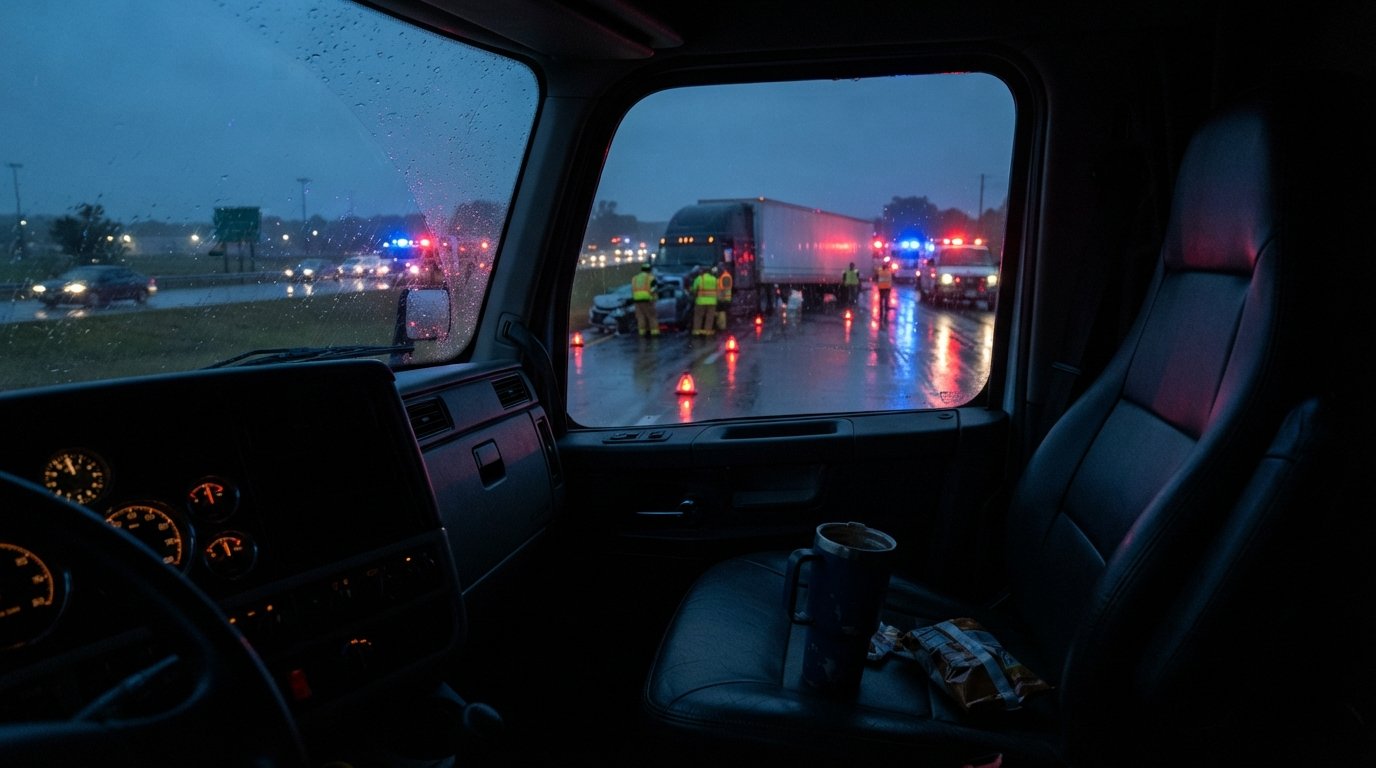
Semi Truck Accident Lawyer for Crash Caused by Truck Driver Fatigue
Injured by a drowsy trucker? A semi truck accident lawyer for a crash caused by truck driver fatigue can preserve ELD data and build your claim. Call (855)-545-2917 for a free case review.

By Claire Griffin
Drowsy driving is not a minor lapse in judgment. When the driver behind the wheel of an 80,000-pound commercial truck closes his eyes for even three seconds at highway speed, the result is often catastrophic. If you or someone you love was injured in a crash caused by a fatigued trucker, you need a semi truck accident lawyer for a crash caused by truck driver fatigue who understands how to uncover the truth about the driver's schedule, rest breaks, and employer pressure. The evidence that proves fatigue is perishable, and the trucking company's legal team will move quickly to control the narrative. This article explains how fatigue-related truck crashes are investigated, why they differ from ordinary car accident claims, and what a specialized attorney can do to protect your rights.
Federal Hours-of-Service Rules: The First Line of Proof
The Federal Motor Carrier Safety Administration (FMCSA) sets strict limits on how long commercial truck drivers may stay behind the wheel. These hours-of-service (HOS) regulations are designed to prevent exactly the kind of fatigue that leads to devastating crashes. For property-carrying drivers, the rules generally include a 14-hour driving window, an 11-hour driving limit after 10 consecutive hours off duty, and a requirement to take a 30-minute break after 8 cumulative hours of driving. Drivers may not exceed 60 hours on duty in 7 consecutive days or 70 hours in 8 consecutive days, and they must take a 34-hour restart period to reset their weekly clock.
When a crash occurs, the first question a semi truck accident lawyer for a crash caused by truck driver fatigue will ask is whether the driver was in compliance with these rules. Violations are powerful evidence of negligence. If the driver exceeded the 11-hour limit or skipped the required break, the carrier may be liable for failing to enforce compliance. But proving a violation requires access to records that the trucking company controls, and those records can disappear quickly.
An experienced attorney will also examine whether the driver was pressured to violate the rules. Some carriers push drivers to meet tight delivery schedules, promising bonuses or threatening termination for late arrivals. This kind of coercion is illegal, but it happens. Proving it requires a deep dive into company policies, dispatch logs, and communications between drivers and management.
Logbooks, Electronic Records, and ELD Data as Evidence
For decades, paper logbooks were the primary record of a driver's hours. They were easy to falsify, and unscrupulous drivers sometimes kept two sets: one for the inspector and one for themselves. The FMCSA mandated electronic logging devices (ELDs) to curb this problem. ELDs automatically record driving time, engine hours, vehicle movement, and location, making it much harder to hide HOS violations.
But ELDs are not foolproof. Drivers can still misrepresent their status by logging out, claiming they are off duty while continuing to drive, or using a personal vehicle for part of the trip. A skilled semi truck accident lawyer for a crash caused by truck driver fatigue will know how to request and analyze ELD data, including the metadata that shows when records were edited or deleted. This data can reveal patterns of fatigue, such as a driver who routinely logged off shortly before a crash or who had been on duty for far longer than the law allows.
In addition to ELD records, your attorney may seek other evidence of fatigue, including:
- Dispatch logs and delivery schedules that show unrealistic timelines
- Text messages and phone records that reveal the driver was awake and active during rest periods
- Dashcam or onboard camera footage showing the driver yawning, nodding off, or struggling to stay awake
- Witness statements describing the truck weaving, drifting, or failing to brake
- Medical records and post-crash drug or alcohol testing results
Each piece of evidence helps build a timeline of the driver's actions in the hours and days before the crash. The goal is to show that the driver was impaired by fatigue and that the carrier either knew or should have known about the risk.
Why Trucking Companies Move Fast to Control the Evidence
After a serious truck crash, the carrier's first call is often to its legal team and insurance company, not to the injured victims. Within hours, the company may send a rapid response team to the scene to photograph the wreckage, interview witnesses, and collect the driver's logs and ELD data. They may also instruct the driver to remain silent and refuse to provide a statement to anyone other than their attorney.
This aggressive response is not necessarily an admission of guilt, but it is a strategic move to protect the company's interests. The carrier knows that evidence of fatigue can expose it to significant liability, including punitive damages in some cases. By controlling the evidence early, the company can shape the narrative and potentially avoid responsibility for the driver's actions.
If you have been injured in a truck crash, you need to level the playing field. A semi truck accident lawyer for a crash caused by truck driver fatigue can send a spoliation letter to the carrier, demanding that it preserve all relevant records, including ELD data, dispatch logs, maintenance records, and personnel files. This letter puts the company on notice that destroying evidence will have legal consequences. Without it, critical data may be overwritten or deleted in the normal course of business.
For a broader look at how truck accident claims differ from ordinary car crash cases, see our guide on truck accident claim differences from car crash cases. It explains why commercial truck cases involve unique federal regulations, multiple defendants, and higher stakes.
How Fatigue Claims Differ from Ordinary Car Crash Negligence
In a typical car accident case, the focus is on the driver's actions at the moment of the crash: did they run a red light, fail to yield, or follow too closely? In a fatigue-related truck crash, the investigation goes much deeper. The question is not just what the driver did, but why they were too tired to do it safely. That requires examining the driver's work history, the carrier's scheduling practices, and the culture of the company.
Fatigue claims often involve multiple defendants. The driver is one, but the trucking company may also be liable for negligent hiring, training, supervision, or retention. If the driver was an independent contractor, the analysis becomes more complex, but the carrier may still bear responsibility under federal leasing regulations. In some cases, the shipper or broker that set an unrealistic delivery schedule may also share fault.
Another key difference is the availability of punitive damages. In many states, ordinary negligence does not support an award of punitive damages, which are designed to punish egregious conduct. But if the carrier knowingly allowed a fatigued driver to stay on the road or falsified HOS records, a court may find that punitive damages are appropriate. These damages can significantly increase the value of a claim and send a message to the industry.
Because fatigue claims are more complex, they require more resources. An attorney must be prepared to hire experts in trucking regulations, accident reconstruction, and human factors to prove that fatigue caused the crash. They must also be ready to take on the carrier's legal team, which may include some of the best defense lawyers in the country.
Why Specialized Attorney Experience Matters in Truck Cases
Not every personal injury lawyer handles truck accident cases. The field is highly specialized, and the stakes are high. A semi truck accident lawyer for a crash caused by truck driver fatigue must understand the Federal Motor Carrier Safety Regulations, the nuances of ELD data, and the strategies that trucking companies use to avoid liability. They must also know how to work with accident reconstruction experts and how to present complex regulatory evidence to a jury.
Experience matters in other ways, too. A lawyer who has handled truck cases knows the common defenses that carriers raise, such as blaming the crash on the other driver or claiming that the driver was an independent contractor. They know how to counter those defenses with evidence and expert testimony. They also know how to negotiate with insurance companies that are accustomed to paying large settlements to make cases go away.
If you are considering hiring a lawyer, ask about their experience with truck accident cases. How many have they handled? Have they taken any to trial? Do they have access to the experts you will need? A lawyer who focuses on car accidents may not have the resources or knowledge to handle a complex fatigue case.
For more information on legal resources and consumer guidance, you can visit AttorneyLawsuit, a legal information website that covers attorney-related lawsuits and consumer rights. It is a useful starting point for understanding how legal disputes work, though it is not a substitute for personalized legal advice.
Steps to Take After a Fatigue-Related Truck Crash
If you have been injured in a crash involving a commercial truck, the actions you take in the first few days can have a lasting impact on your case. Here are the key steps to protect your rights:
- Seek medical attention immediately. Even if you feel fine, some injuries, like whiplash or internal bleeding, may not appear until hours or days later. A medical record also creates a link between the crash and your injuries.
- Document the scene. If you are able, take photos of the vehicles, the road conditions, and any visible injuries. Collect contact information from witnesses and the truck driver, including the carrier's name and insurance information.
- Do not give a recorded statement to the insurance company. The carrier's insurer may contact you and ask for a statement. Politely decline and refer them to your attorney. Anything you say can be used against you later.
- Preserve evidence. Keep your clothing, vehicle, and any other physical evidence from the crash. Do not repair your vehicle until your attorney has had a chance to inspect it.
- Contact a semi truck accident lawyer for a crash caused by truck driver fatigue. An experienced attorney can send a spoliation letter, investigate the crash, and protect your rights from the start.
Time is of the essence in truck accident cases. The statute of limitations for personal injury claims varies by state, but it is typically two to three years. However, the evidence you need to prove fatigue may be gone in a matter of weeks. The sooner you involve an attorney, the better your chances of building a strong case.
How a Lawyer Can Help You Recover Compensation
A semi truck accident lawyer for a crash caused by truck driver fatigue will investigate the crash, gather evidence, and build a case that holds the driver and the carrier accountable. They will work with medical experts to document your injuries and with financial experts to calculate your losses, including medical bills, lost wages, pain and suffering, and future care needs.
They will also handle communications with the insurance company, negotiate a settlement, and, if necessary, file a lawsuit and take the case to trial. Most truck accident cases settle before trial, but the threat of a trial can be a powerful negotiating tool. A lawyer who is prepared to go to court is more likely to secure a fair settlement.
It is important to understand that no attorney can guarantee a specific outcome. Every case is different, and the value of your claim will depend on the facts, the severity of your injuries, and the applicable law in your state. But with the right lawyer on your side, you can maximize your chances of recovering the compensation you deserve.
Finding the Right Attorney for Your Case
If you are searching for a semi truck accident lawyer for a crash caused by truck driver fatigue, you may feel overwhelmed by the options. Here are a few tips to help you choose the right attorney:
- Look for experience with truck accident cases. Ask how many truck cases the lawyer has handled and whether they have taken any to trial.
- Check their resources. Complex truck cases require experts, investigators, and financial resources. A solo practitioner may not have the bandwidth to handle a large case.
- Ask about their fee structure. Most personal injury lawyers work on a contingency fee basis, meaning you pay nothing upfront and the lawyer takes a percentage of your recovery. Make sure you understand the terms before you sign.
- Read reviews and ask for references. Online reviews and testimonials can give you a sense of the lawyer's reputation and client satisfaction.
- Schedule a free consultation. Most lawyers offer a free initial consultation. Use it to ask questions and get a feel for whether the lawyer is a good fit for your case.
Remember that AutoInjuryAccident.com is not a law firm or lawyer referral service. It is a consumer matching site that connects injured people with participating attorneys who advertise on the platform. You are under no obligation to hire any attorney you speak with, and submitting a form does not create an attorney-client relationship. The site offers a free, confidential case review, which can be a useful first step in understanding your options.
If you have been hurt in a crash caused by a tired trucker, do not wait to get help. The evidence that proves fatigue is perishable, and the trucking company is already building its defense. Contact a semi truck accident lawyer for a crash caused by truck driver fatigue today to protect your rights and pursue the compensation you need to move forward.