
Interlock Device Violation Reports and What Happens Next
Interlock device violation reports can trigger license reviews or court notices. For help understanding your options, call (855)-545-2917.

By Elena Vasquez
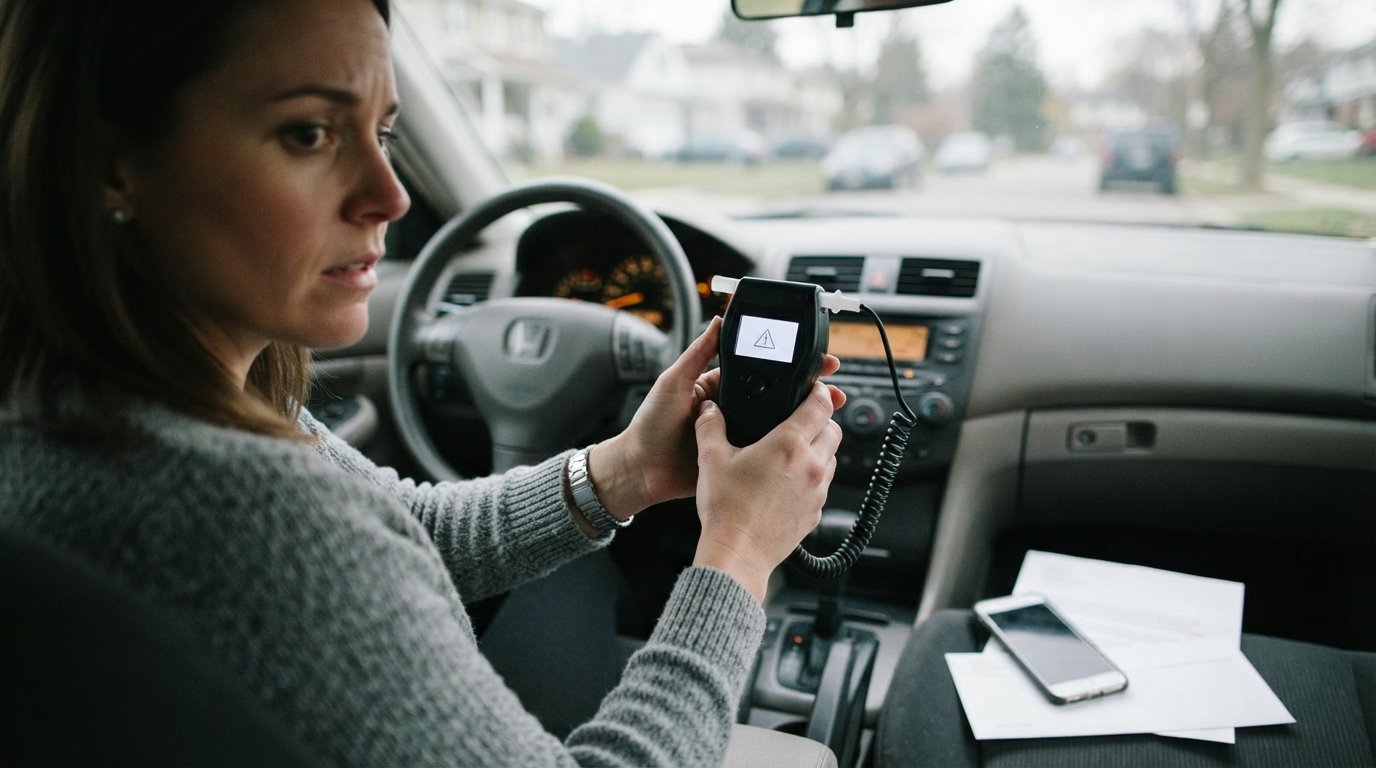
You roll to a stop, blow into the handheld unit, and see a message you did not expect: a violation code. Your heart races. You followed the rules, yet the device recorded something. Now you are wondering whether a letter from the monitoring company will arrive, whether the court will find out, and whether your driving privileges are in jeopardy. The truth is that an interlock device violation report sets off a chain of events that varies by state, by program, and by the nature of the violation. Understanding how those reports travel from the device to the monitoring authority and then to the court is the first step toward protecting your ability to drive legally.
This article explains the common reasons devices register violations, how the reports are used, how you can contest a false reading, and what steps reduce the risk of escalation to a full license revocation. It is general information for educational purposes only, not legal advice. Because interlock rules differ from state to state, and because the consequences of a violation can affect your freedom and your livelihood, speaking with a DUI defense attorney who knows your local program is worth considering. You can also request a free, no-obligation case review through services like AutoInjuryAccident.com if you are unsure where to turn. And for a deeper look at who must install a device and why, our guide on ignition interlock device requirements after DUI covers the foundational rules.
How Ignition Interlock Devices Record and Report Violations
An ignition interlock device is a breath alcohol analyzer wired into your vehicle's ignition system. To start the car, you blow into the mouthpiece. If the device detects alcohol above the programmed limit (often 0.02 or 0.025, though some states use different thresholds), the vehicle will not start. The device also prompts rolling retests while you drive, and it logs every blow, every start attempt, every missed test, and every reading with a timestamp. That data is stored in the device's memory and downloaded periodically, either at a service appointment or remotely through a cellular connection.
When the data is downloaded, the monitoring company or program administrator reviews it and flags anything that qualifies as a violation under the program's rules. A violation report is then generated. That report may go to the state licensing agency, the court that ordered the device, or both, depending on the jurisdiction. In many programs, the report is also sent to your probation officer or the monitoring authority designated by the court. The device itself does not decide your fate; it simply records data. The interpretation of that data by humans, and the rules those humans apply, determine what happens next.
It helps to know that not every flagged event is treated equally. Programs typically distinguish between minor and major violations, and the response differs accordingly. A single missed rolling retest might trigger a warning letter, while a high breath alcohol reading might trigger an immediate court notification. Some states require the monitoring company to report all violations, while others only report certain categories. Your program's written rules should spell out the thresholds, and you are entitled to ask for them.
Common Reasons Devices Register Violations
Violations fall into several broad categories, and understanding them helps you anticipate what a report might say. Some violations are genuine, meaning the device correctly detected alcohol or a missed test. Others are false positives caused by environmental factors, device malfunction, or user error. The distinction matters because a false violation can often be contested, while a genuine one may require a different strategy.
Here are the most frequent reasons an interlock device registers a violation:
- Breath alcohol above the limit: The device detects alcohol on your breath, whether from drinking, mouthwash, hand sanitizer, or certain foods. Even a small amount can trigger a fail if the threshold is low.
- Missed rolling retest: The device prompts you to blow again while driving. If you do not provide a sample within the allowed time, it logs a missed test, which many programs treat as a violation.
- Missed service appointment: Failing to bring the device in for calibration or data download on schedule is a violation in most programs.
- Tampering or circumvention: Attempts to bypass the device, disconnect it, or have someone else blow for you are serious violations that can lead to revocation.
- Early recall or lockout: Some devices enter a lockout mode after a failed test, requiring a service visit or a waiting period before you can start the car again.
Environmental false positives deserve special attention. Mouthwash, breath sprays, hand sanitizer, and even certain foods can produce a temporary alcohol reading. So can a device that has not been calibrated properly. If you know you did not drink, a violation report based on a low reading might be contestable with the right evidence. Keep in mind that some devices require a clean retest within a few minutes to clear a false positive, and failing to provide that retest can turn a minor event into a logged violation.
How Monitoring Authorities and Courts Use the Reports
Once a violation report is generated, it enters a review process. The monitoring company sends the report to the designated authority, which may be the state department of motor vehicles, a court probation department, or a private program administrator. That authority compares the reported event against the program rules and decides whether it constitutes a violation and what consequence applies. In some jurisdictions, the report is automatically forwarded to the court, and a hearing is scheduled. In others, the licensing agency takes administrative action independently of the court.
The consequences can range from a warning letter to a required service visit, an extension of the interlock requirement, a lockout period, or a full license revocation. Serious violations, such as tampering or a high breath alcohol reading, often trigger immediate court notification and may result in a probation violation or a new criminal charge. Minor violations, such as a single missed rolling retest, might result in a warning or a requirement to complete an additional calibration. The key point is that the report is not self-executing; a human decision-maker applies the rules, and you usually have an opportunity to respond before the most severe consequences take effect.
Courts use these reports in several ways. In a DUI case where the interlock is a condition of probation, a violation report can be the basis for a probation violation hearing. In a pretrial context, a violation can affect bail conditions or pretrial release. In an administrative context, the licensing agency may use the report to suspend or revoke your driving privileges. Because the same report can travel to multiple decision-makers, it is important to respond promptly and consistently. Ignoring a notice from the monitoring company can lead to a default consequence before you have a chance to explain.
Options to Contest a False Violation
If you believe a violation report is wrong, you have options, but timing matters. The first step is to request the underlying data and the program's violation notice. You are generally entitled to see what the device recorded, including timestamps, breath alcohol readings, and any retest results. Review that data carefully. Look for inconsistencies, such as a reading that appeared after you used mouthwash, a missed test that coincided with a device malfunction, or a service appointment that was actually completed on time.
Next, gather evidence that supports your position. This might include receipts from a service appointment, a record of the mouthwash or food product you used, a mechanic's statement about a device defect, or witness statements. If the violation is based on a missed rolling retest, consider whether the device gave you enough time to respond or whether a traffic emergency made it unsafe to blow. Some programs allow you to request a hearing or an administrative review, and some allow you to submit a written explanation before a decision is final. A DUI attorney can help you navigate the specific procedure in your state and present the evidence effectively.
It is also worth asking whether the device itself was faulty. Interlock devices can malfunction, and a malfunction can produce false readings or missed prompts. If you suspect a defect, request a device inspection and keep a record of any error messages. Some monitoring companies will re-download the data or replace the unit if a defect is confirmed. Documenting everything, from the moment you see the violation message to the moment you file your contest, strengthens your position. For broader legal resources on consumer rights and disputes involving attorneys, you can visit AttorneyLawsuit, which offers information on legal malpractice and attorney-related disputes.
Steps to Avoid Escalation to Revocation
The best way to avoid revocation is to prevent violations from escalating in the first place. Most programs give you a chance to correct minor issues before they become major ones, but that grace period disappears if you ignore notices or miss deadlines. The following steps can help you stay ahead of the process.
- Respond to every notice promptly: If you receive a violation notice, do not wait. Contact the monitoring company or the authority listed on the notice and ask what your options are. A quick response often preserves your ability to contest or explain.
- Keep your service appointments: Calibration and data downloads are mandatory. Put them on your calendar and arrive on time. If you cannot make an appointment, reschedule before the deadline.
- Avoid products that can trigger false positives: Do not use mouthwash, breath sprays, or hand sanitizer immediately before blowing. If you must use them, rinse your mouth with water and wait at least fifteen minutes before providing a sample.
- Provide rolling retests safely: When the device prompts a retest, pull over safely if you cannot blow while driving. Do not ignore the prompt, and do not ask a passenger to blow for you.
- Document everything: Keep receipts, service records, and notes about any device errors. If a violation occurs, you will have the evidence you need to contest it.
Beyond these steps, consider hiring a DUI attorney early if you face a violation report that could lead to revocation. An attorney can communicate with the monitoring company and the court on your behalf, request hearings, and present evidence that you complied with the program. In some cases, an attorney can negotiate a resolution that avoids revocation, such as an extension of the interlock period or additional community service. The cost of legal representation is often far less than the cost of losing your license and the consequences that follow.
Finally, remember that interlock programs are designed to allow you to drive legally while ensuring you do not drive impaired. A violation report is serious, but it is not automatically the end of the road. With prompt action, good documentation, and knowledgeable help, you can often resolve a false or minor violation without losing your driving privileges. If you are facing a DUI charge and need to understand your options, you can request a free, confidential case review from participating attorneys through AutoInjuryAccident.com. Submitting a form does not create an attorney-client relationship, and you are never obligated to hire a lawyer, but it can connect you with someone who understands your state's interlock rules.