
Motorcycle Accident Claim When the Other Driver Says They Did Not See You
Fight back when a driver claims they never saw you. Get a free motorcycle accident claim review. Call (855)-545-2917 to explore your legal options today.

By Claire Griffin
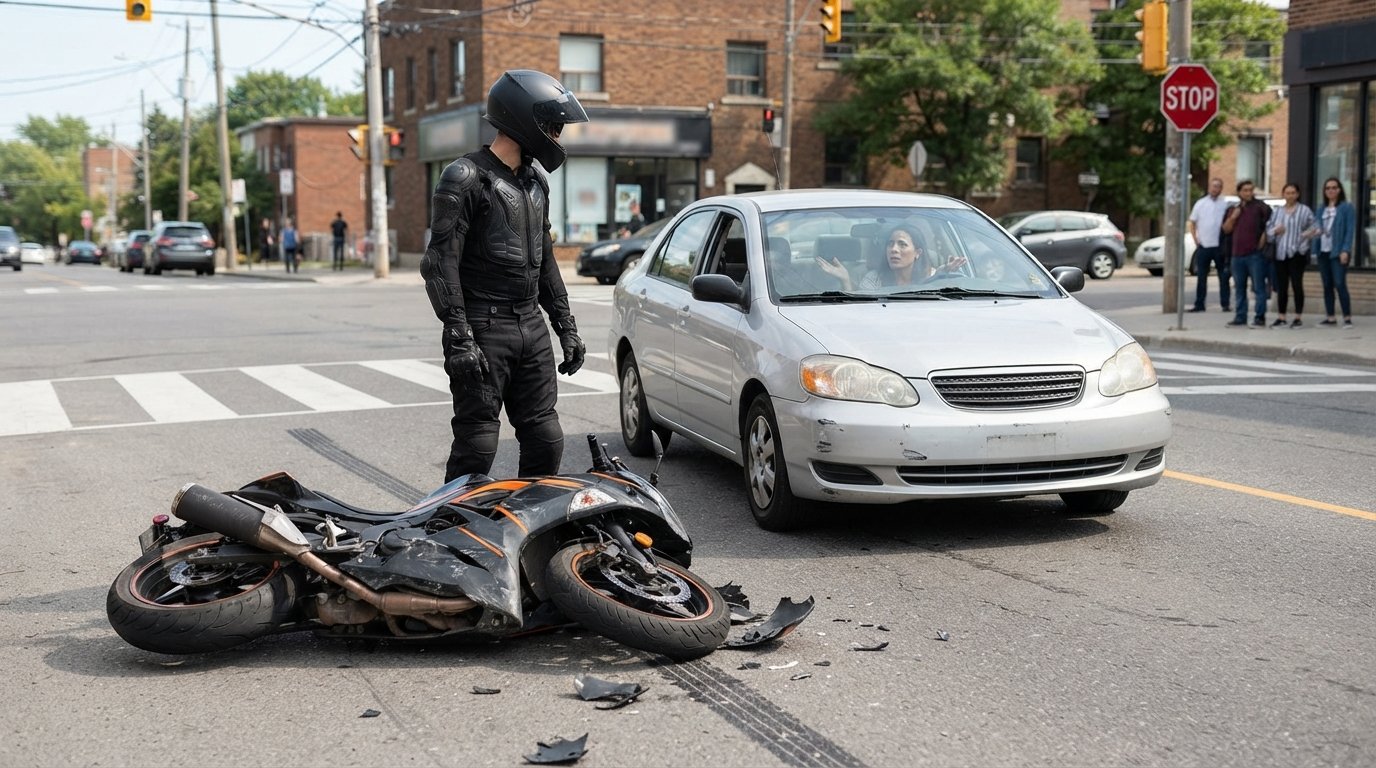
You were riding legally, wearing your gear, and paying attention. Then a driver turned across your lane or pulled out from a side street, and the crash happened in a split second. At the scene, the other driver looks at you and says the words that will define the entire claim: "I did not see you." That single sentence can follow you through weeks of insurance negotiations, and it is one of the most common defenses raised in motorcycle crash cases. The good news is that "I did not see you" is not a legal magic wand. It is an admission of a failure to look properly, and it can be challenged with the right evidence and the right strategy.
This guide explains why the visibility defense is so common, how insurers use it to shift blame onto riders, and what you can do to build a motorcycle accident claim when the other driver says they did not see you. The information here is educational only. It is not legal advice, and it does not create an attorney-client relationship. Fault rules, insurance requirements, and filing deadlines vary by state, so a free, confidential case review with a licensed attorney is the best way to understand your specific options.
Why "I Did Not See You" Is the Most Common Motorcycle Crash Defense
Drivers who collide with motorcycles rarely say "I was distracted" or "I misjudged your speed." They say they never saw the bike at all. There is a psychological reason for this. Researchers call it inattentional blindness: the human brain filters out objects it does not expect to encounter. Most drivers scan for cars, trucks, and SUVs, so a narrower motorcycle profile can fail to register even when the rider is directly in the driver's field of view. The driver is not necessarily lying. They genuinely may not have perceived the motorcycle before impact, but that failure to perceive is itself a form of negligence.
From a legal standpoint, a driver has a duty to keep a proper lookout and to yield the right of way when required. "I did not see you" does not erase that duty. It actually confirms that the driver failed to perform it. Courts and insurers recognize that a driver who looks but does not see a plainly visible motorcycle has not looked carefully enough. This is especially true at intersections, which is where a large share of motorcycle crashes occur. Left-turn collisions, where an oncoming driver turns across a rider's path, are a classic example.
Insurers know this defense resonates with jurors and adjusters. They use it to argue that the rider was somehow invisible, unpredictable, or riding too fast to be seen. If you accept that framing, your claim weakens quickly. The counter is to treat the statement as an evidentiary issue rather than a conclusion: what did the driver actually do to look, and what does the physical evidence show about visibility and timing?
How Helmet Use, Lane Position, and Speed Get Raised Unfairly
Once the visibility defense is on the table, insurers often pile on secondary arguments that have little to do with who caused the crash. These arguments are designed to reduce the rider's credibility and the claim's value, even in states where helmet use cannot legally reduce recovery for crash causation.
Helmet use is a frequent talking point. A driver or adjuster may imply that a rider without a helmet was reckless, or that a helmet somehow made the rider harder to see. Neither claim holds up. Helmet laws vary by state, and in many states a helmet is not required for adult riders. More importantly, helmet use generally goes to the severity of injuries, not to who caused the collision. A rider's decision about gear does not give a driver permission to turn into their path.
Lane position and speed are two more common targets. Drivers sometimes claim the motorcycle was "in my blind spot" or "came out of nowhere." Riders are entitled to use a full lane, and a motorcycle that is lawfully positioned and traveling at or near the speed limit should be visible to any attentive driver. When speed is raised, the question becomes whether the rider's speed was a legal cause of the crash. Even if a rider was speeding, many states apply comparative fault rules, which reduce recovery proportionally rather than eliminating it. That is a critical distinction, and it is one reason early legal review matters.
Insurance adjusters are trained to look for these angles. A rider who gives a recorded statement before speaking with a lawyer may inadvertently accept the framing that the crash was partly their fault. Once that statement hardens, it is difficult to walk back.
Evidence That Rebuts "I Never Saw Them" Claims
The most effective response to the visibility defense is evidence. A well-documented motorcycle accident claim when the other driver says they did not see you can overcome the defense by showing that the rider was visible, lawful, and predictable, and that the driver failed to look properly. The following categories of evidence are worth preserving as early as possible.
- Scene evidence: Photos of the collision scene, road markings, signage, lighting, weather, and sight lines. Skid marks and debris patterns can help a reconstruction expert determine speed and point of impact.
- Vehicle and gear evidence: Damage to the motorcycle and the other vehicle, plus the rider's helmet, jacket, and lighting equipment. A working headlight and bright gear undercut the "invisible rider" narrative.
- Witness statements: Independent witnesses are gold. A neutral bystander who says the motorcycle was plainly visible or that the driver rolled through a stop sign can dismantle the defense.
- Electronic data: Event data recorders in the other vehicle, traffic camera footage, nearby business surveillance, and the rider's own camera or phone data can establish timing and speed.
- Medical and injury records: Documentation of injuries supports damages and shows the force of the impact, which can be relevant to speed and visibility arguments.
An accident reconstruction expert can tie this evidence together into a clear narrative: where the vehicles were, when the driver should have seen the motorcycle, and what the driver did or failed to do. In many cases, the reconstruction shows the driver had several seconds of unobstructed view before the collision. That is powerful proof that the driver did not look, or looked without seeing.
It also helps to understand how liability is actually established in these cases. A useful resource is this explanation of motorcycle accident liability when the other driver caused it, which walks through how fault is analyzed and why the rider's conduct is often scrutinized more harshly than the driver's.
How Bias Against Motorcyclists Can Affect Claim Valuation
Motorcyclists face a well-documented credibility gap. Some jurors, adjusters, and even first responders carry implicit assumptions that riders are risk-takers. Those assumptions can show up in how a claim is valued, even when the evidence clearly favors the rider. An adjuster may offer a low initial number not because the case is weak, but because they expect the rider to accept it.
Bias can affect valuation in several ways. It may lead to a higher comparative fault assignment, a lower pain and suffering estimate, or skepticism about the severity of injuries. It can also affect how the rider's own statements are interpreted. A rider who says "I did not have time to react" may be heard as admitting speed, while a driver who says "I did not see them" is often given the benefit of the doubt.
Countering bias starts with documentation and presentation. A claim built on physical evidence, expert analysis, and consistent statements is harder to discount. It also helps to have an attorney who understands motorcycle cases and can frame the rider's conduct in its proper context. If you are also dealing with related legal issues, such as a traffic citation or a criminal charge arising from the same event, it is worth understanding your broader rights. Resources such as attorney lawsuit information can help you research legal disputes and consumer legal guidance, though they are not a substitute for advice from a licensed attorney in your state.
Steps to Take After the Crash to Protect Your Claim
The days and weeks after a motorcycle crash are when a claim is won or lost. Statements harden, evidence disappears, and memories fade. Taking the right steps early preserves your ability to rebut the visibility defense and to pursue full compensation for medical bills, lost wages, and other damages.
- Get medical care immediately. Injuries that seem minor at the scene can worsen. Prompt treatment protects your health and creates a record linking your injuries to the crash.
- Document the scene. Take photos of the vehicles, the road, signage, lighting, and your gear. Exchange information with the other driver, but keep the conversation brief and do not apologize or speculate about fault.
- Collect witness information. Names and phone numbers of independent witnesses can be decisive later.
- Notify your insurer, but be careful with statements. You generally must report the crash, but you are not obligated to give a recorded statement to the other driver's insurer. Politely decline until you have spoken with a lawyer.
- Preserve evidence. Keep your helmet, jacket, and damaged parts. Do not repair or discard the motorcycle until it has been inspected.
- Seek a free case review. An attorney can assess liability, preserve evidence, and deal with insurers on your behalf.
One of the most important steps is avoiding a recorded statement before you understand the liability picture. Adjusters often call quickly, before the rider has spoken with anyone, and ask open-ended questions designed to surface admissions. A simple "I did not see them either" or "I might have been going a little fast" can be used to argue comparative fault for months. Early legal review helps you avoid that trap and keeps the focus on the driver's failure to keep a proper lookout.
Why Early Legal Review Matters Before Statements Harden
Insurance companies move fast after a crash. They may contact you within days, offer a quick settlement, or ask for a recorded statement. These early moves are not acts of kindness. They are strategies to lock in a version of events and a valuation before you know the full extent of your injuries or your legal options. Once a statement is recorded or a release is signed, reversing course is difficult.
An early case review does several things. It preserves evidence before it is lost, identifies the right experts, and puts the insurer on notice that you are represented. It also gives you a clear picture of the applicable fault rules in your state, including whether comparative fault applies and how it might affect your recovery. In many states, a rider who is found even partially at fault can still recover, but the amount is reduced. Understanding that framework helps you make informed decisions.
AutoInjuryAccident.com is a consumer matching site, not a law firm or lawyer referral service. It connects injured people with participating attorneys who advertise on the site. You can request a free, confidential case review, and there is no obligation to hire anyone. Submitting a form does not create an attorney-client relationship. The goal is simply to give you access to legal information and a pathway to a licensed attorney who can evaluate your motorcycle accident claim when the other driver says they did not see you.
The visibility defense is common, but it is not unbeatable. With prompt documentation, expert analysis, and a strategy that anticipates the insurer's arguments, riders can push back against the "I never saw them" narrative and pursue the compensation they deserve. The key is to act early, before statements harden and evidence fades.