
Multi Vehicle Pileup Car Accident Claim: Who Pays?
Fault in a multi vehicle pileup car accident claim who pays is rarely one driver. Get a free case review at (855)-545-2917 to protect your rights.

By Marcus Hale
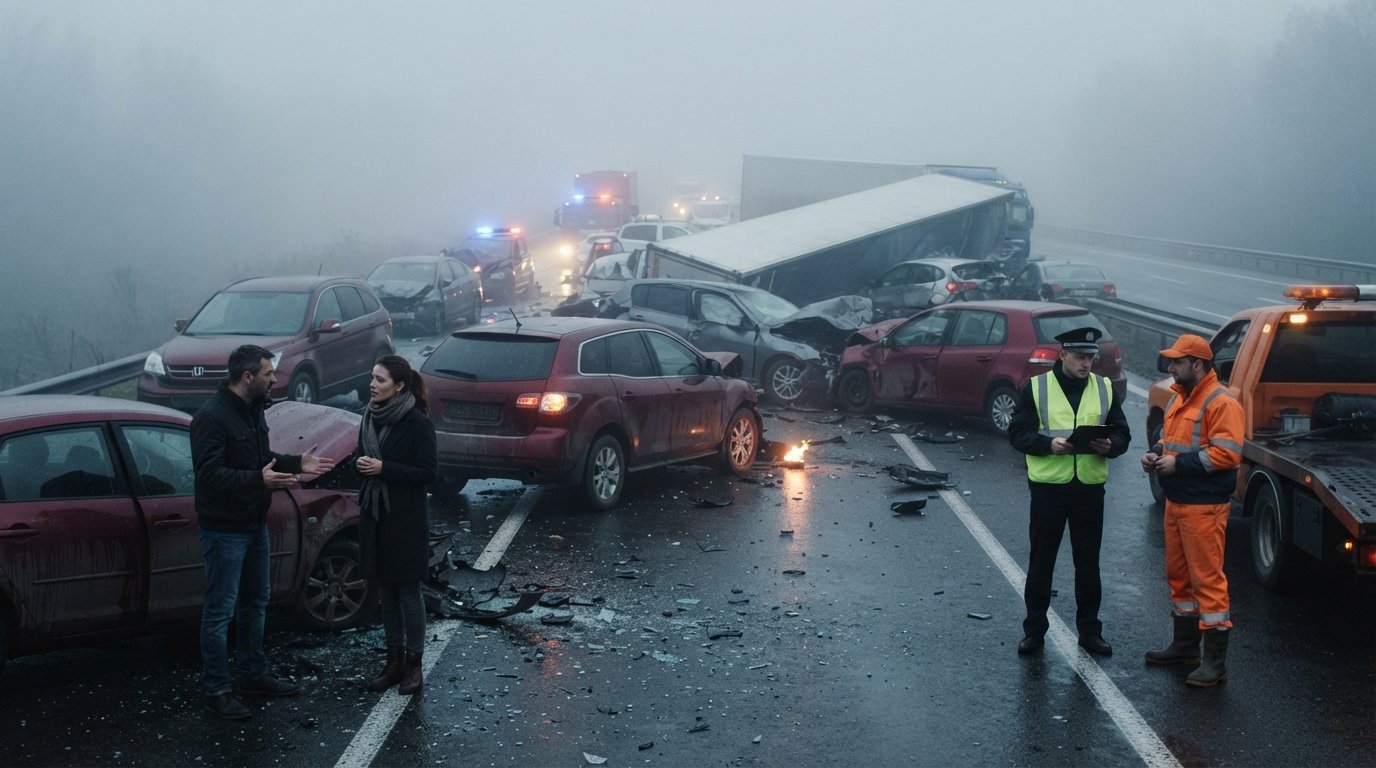
A chain-reaction crash on a foggy highway can leave a dozen drivers wondering the same thing: when so many cars are involved, who actually pays for the damage and the injuries? The short answer is that fault in a multi vehicle pileup car accident claim who pays is rarely assigned to one driver. Instead, liability is divided among multiple parties based on what each driver did, when they did it, and how the physics of the crash unfolded. That complexity is exactly why pileup claims are among the most disputed insurance matters on the road.
If you were hurt in a chain-reaction collision, the path to compensation is not blocked by the number of vehicles. It is simply more detailed. You will need a clear reconstruction of events, a solid understanding of how insurers share responsibility, and often a legal team that has handled multi-party crash claims before. Below, we break down how fault is allocated, how evidence is used, and what injured drivers in the middle or rear of a pileup should know before speaking with an adjuster.
Why Chain-Reaction Crashes Rarely Have a Single At-Fault Driver
In a simple two-car rear-end collision, the driver in back is usually presumed at fault. A pileup is different because it is a series of collisions, not one event. Each impact has its own cause: one driver following too closely, another changing lanes without a signal, a third failing to brake in time. When ten or twenty vehicles are involved, the question of who pays becomes a question of which driver caused which specific impact and which injuries.
Consider a common scenario. Traffic slows suddenly on an interstate. The first driver brakes hard and stops. The second driver stops behind them. The third driver is distracted and hits the second car, pushing it into the first. The fourth driver, following too closely, hits the third, and the chain continues. In that sequence, the third and fourth drivers may share fault for the middle impacts, while the first driver may bear no responsibility at all. The driver at the very back is not automatically liable for every car ahead, and the driver at the front is not automatically off the hook if they stopped abruptly without brake lights.
Insurance companies and courts look at each impact separately. They ask: who failed to maintain a safe following distance? Who was speeding for conditions? Who was impaired or distracted? Did a commercial truck driver violate hours-of-service rules? Did a vehicle have a mechanical defect? The answers assign percentages of fault, and those percentages determine who pays what. This is why a multi vehicle pileup car accident claim who pays analysis often involves multiple adjusters, multiple policies, and sometimes multiple lawsuits.
How Police Reconstruction and Event Data Support Fault Allocation
Because fault is divided, evidence becomes the backbone of any pileup claim. Police accident reconstruction teams document skid marks, debris fields, vehicle damage patterns, and final resting positions. They interview drivers and witnesses. In serious crashes, they may use drone mapping or 3D scanning to create a precise model of the scene. That reconstruction helps establish the sequence of impacts and the speed of each vehicle at the moment of collision.
Event data recorders, often called black boxes, provide another layer. Many modern vehicles store information such as pre-impact speed, braking, steering input, and seat belt use. For commercial trucks, electronic logging devices and onboard cameras can show whether the driver was fatigued, distracted, or speeding. Surveillance footage from nearby businesses or highway cameras may also capture the crash as it happened. When these sources are combined, they can either support or challenge a driver's version of events.
For injured drivers, this evidence is critical because it can shift fault away from them. A middle driver who was struck from behind and pushed into the car ahead may be presumed at fault by an adjuster who has not seen the reconstruction. But if event data shows the middle driver had already stopped and was hit by a speeding vehicle behind, the middle driver may have a valid claim against the at-fault driver. Without that evidence, the middle driver could be unfairly blamed for an impact they did not cause. This is one reason why preserving evidence quickly, including requesting police reports and notifying insurers, matters in the days after a pileup.
Dealing with Multiple Insurers and Overlapping Policy Limits
A pileup can involve a dozen drivers and a dozen insurance policies, each with different limits. Some drivers may be underinsured. Some may have no insurance at all. Commercial vehicles may carry higher limits, while personal policies may be minimal. The question of who pays in a multi vehicle pileup car accident claim who pays often comes down to how those policies stack up against the total damages.
In many states, fault is allocated on a comparative basis. If you are found 20 percent at fault for an impact and another driver is 80 percent at fault, your recovery may be reduced by your percentage of fault. Some states follow modified comparative fault rules, where you can recover only if you are less than 50 or 51 percent at fault. A few states follow pure comparative fault, allowing recovery even if you are mostly at fault, though the amount is reduced. A handful of states still use contributory negligence, which can bar recovery if you are found even slightly at fault. Because these rules vary, the same pileup facts can lead to different outcomes depending on where the crash occurred.
Policy limits create another layer of complexity. If five drivers are injured and the at-fault driver has a $25,000 policy, that money may not cover everyone. Injured parties may need to pursue underinsured motorist coverage on their own policies or seek compensation from other at-fault drivers. In some cases, multiple policies contribute proportionally. An attorney can help identify all available coverage sources, including umbrella policies, commercial policies, and uninsured motorist provisions, and negotiate with multiple insurers at once.
If you are dealing with a diminished value claim after a car accident, the same multi-party complexity can apply, because fault allocation affects which insurer is responsible for the loss in value. You can read more about that process in our guide on what a diminished value claim involves. The key takeaway is that in a pileup, no single adjuster may have the full picture, so documenting your own damages and treatment is essential.
Why Injured Middle and Rear Drivers May Still Have Valid Claims
Drivers in the middle or rear of a pileup often assume they are automatically at fault because they hit the car in front. That assumption is not legally sound. If you were struck from behind and pushed into the vehicle ahead, the driver who hit you may be responsible for both impacts. If you were rear-ended while stopped and your car was shoved into the next lane, the driver who failed to stop may bear fault for the chain you were part of. Even rear drivers can have claims if they were hit by a vehicle that was already out of control or if another driver cut them off and caused the initial collision.
Injured middle and rear drivers should focus on three things: medical treatment, evidence preservation, and avoiding recorded statements to insurers before they understand the fault picture. Insurance adjusters may call quickly after a pileup and ask for a recorded statement. Those statements can be used later to argue that you admitted fault or that your injuries were not serious. It is better to consult with an attorney before giving a detailed statement, especially in a multi-vehicle crash where fault is still being sorted out.
Another issue is injury causation. In a pileup, multiple impacts occur in quick succession. An insurer may argue that your injuries came from a different impact than the one their driver caused, or that your injuries pre-existed the crash. Medical records that document the timing and mechanism of injury, along with a clear reconstruction of the impacts, help counter those arguments. A doctor who understands crash biomechanics can be a valuable witness. So can an attorney who knows how to present the sequence of events to an adjuster or jury.
How an Attorney Network Can Match a Pileup Case to the Right Experience
Not every personal injury attorney has handled a multi vehicle pileup case. These claims require familiarity with accident reconstruction, comparative fault rules, multiple insurance policies, and sometimes commercial trucking regulations. A lawyer who mostly handles simple rear-end collisions may not have the resources to pursue a ten-car pileup with disputed liability. That is where a nationwide attorney network can help.
AutoInjuryAccident.com is a consumer matching site, not a law firm or lawyer referral service. It helps injured people request a free, confidential case review from participating attorneys who advertise on the site. The site does not provide legal advice, and submitting a form does not create an attorney-client relationship or obligate anyone to hire a lawyer. But for someone facing a complicated pileup claim, the ability to connect with an attorney who has experience in multi-party crashes can make a meaningful difference. You can ask for a no-cost case review following a car crash and discuss your options without pressure.
When evaluating a pileup case, an experienced attorney will typically take several steps. First, they will gather the police report, witness statements, and available event data. Second, they will identify all potential at-fault drivers and their insurers, including commercial policies and umbrella coverage. Third, they will assess comparative fault issues and explain how your state's rules may affect your recovery. Fourth, they will coordinate with medical providers to document your injuries and their cause. Finally, they will negotiate with multiple insurers or, if necessary, file suit against the responsible parties.
For readers who want to understand their legal options more broadly, platforms like LawyerOffer provide educational content and attorney referral services for civil matters, including personal injury and insurance claims. The value of such resources is that they help you ask better questions before you sign anything or give a recorded statement. In a pileup, the quality of your legal representation can directly affect how fault is allocated and how much compensation you receive.
Steps to Take After a Multi Vehicle Pileup
If you are involved in a chain-reaction crash, the actions you take in the first hours and days can shape your claim. The scene may be chaotic, with multiple drivers, passengers, and responders. Focus on safety first, then on preserving the information that will be needed later.
- Move to safety and call 911. If your vehicle can be moved, pull to the shoulder or a safe location. Turn on hazard lights. Check for injuries and call emergency services. Do not leave the scene before police arrive.
- Document the scene. Take photos of vehicle positions, damage, skid marks, debris, and traffic conditions. Exchange insurance and contact information with other drivers, but do not discuss fault or apologize. Apologies can be used against you later.
- Seek medical attention promptly. Some injuries, like whiplash or internal injuries, may not be obvious immediately. A medical evaluation creates a record linking your injuries to the crash. Follow your doctor's recommendations.
- Notify your insurer and preserve evidence. Report the crash to your own insurance company, but avoid giving a recorded statement to other drivers' insurers until you have legal guidance. Keep your damaged vehicle until it has been inspected, if possible, and save all receipts and records.
- Consult with an attorney before accepting any settlement. In a multi-vehicle pileup, an early settlement offer may not reflect the full extent of your damages or the complexity of fault allocation. A free case review can help you understand your rights.
These steps apply broadly, but every state has its own deadlines and rules. For example, the statute of limitations for personal injury claims varies by state, and missing it can bar your claim entirely. Insurance requirements also differ, including whether personal injury protection or medical payments coverage applies. Because of that variation, it is wise to confirm the specific rules in your state with a licensed attorney.
Common Mistakes That Hurt Pileup Claims
One of the most common mistakes is assuming that the driver at the back of the pileup is automatically liable for everything. That assumption can lead injured middle drivers to accept low offers or to blame themselves unnecessarily. Another mistake is giving a recorded statement to an adjuster before understanding the fault picture. Adjusters are trained to ask questions that may narrow your claim or shift blame onto you.
Failing to preserve evidence is another risk. Vehicles get repaired or sold, and event data may be overwritten. If you wait too long to request the police report or to have your vehicle inspected, valuable evidence may be lost. Similarly, gaps in medical treatment can be used to argue that your injuries were minor or unrelated. Following through with recommended care and documenting your symptoms consistently helps protect your claim.
Finally, trying to handle a multi-party pileup claim alone can be overwhelming. Coordinating with multiple insurers, negotiating comparative fault, and identifying all coverage sources is a lot to manage while recovering from injuries. An attorney who has handled complex crash cases can take that burden off your shoulders and help you focus on healing. The question of who pays in a multi vehicle pileup car accident claim who pays is ultimately answered by evidence, state law, and the skill of the advocates involved. Getting the right help early can make all the difference.