
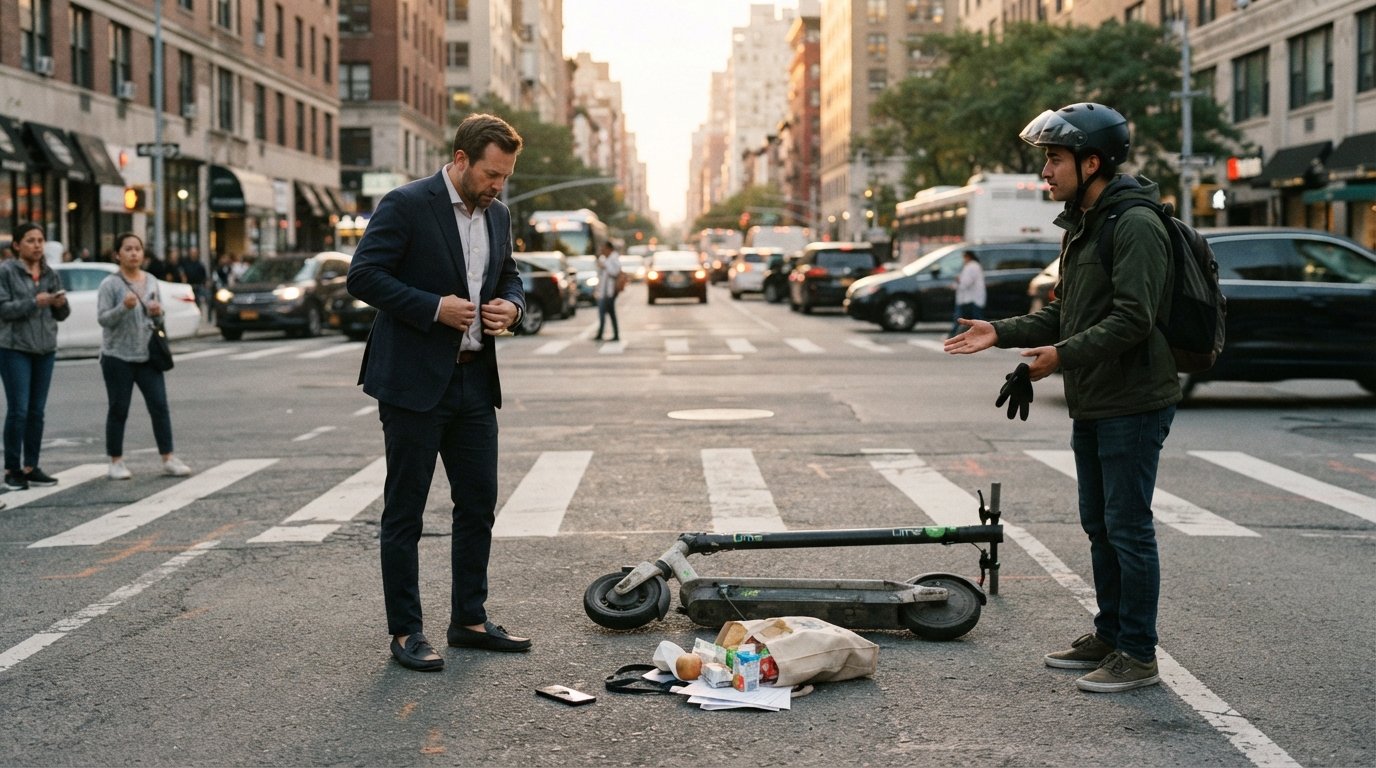
Pedestrian Hit by a Bicycle or E-Scooter: Legal Options
Injured by a bike or e-scooter? Understand your pedestrian hit by a bicycle or e-scooter legal options. Call (855)-545-2917 for a free case review.

By Wesley Turner
A pedestrian hit by a bicycle or e-scooter often faces a confusing aftermath. The injuries can be severe, yet the rider may have no auto insurance, no license plate, and no obvious way to pay. Unlike a car crash, there is no mandatory auto liability policy standing behind the handlebars. That reality leaves injured pedestrians asking a practical question: who pays, and how do I pursue a claim? The legal options are real, but they depend on where the collision happened, what insurance the rider carries, and how quickly evidence is preserved. This guide explains the pathways available, the fault rules that may apply, and the steps that protect a pedestrian's ability to recover compensation.
How the Law Treats Bicycle and E-Scooter Riders
In most jurisdictions, a bicycle is legally a vehicle when ridden on the road, and the rider must follow the same rules as drivers: obey signals, yield to pedestrians in crosswalks, ride with traffic, and use lights at night. That legal status matters because it opens the door to negligence claims. A pedestrian struck by a cyclist who ran a red light or rode on the sidewalk can argue the rider breached a duty of care. The same logic applies to e-scooters, which are increasingly regulated as vehicles with specific speed limits, parking rules, and age restrictions.
The picture changes on sidewalks and in pedestrian zones. Some cities treat riders there as pedestrians for certain purposes, while others prohibit riding altogether. If a rider is unlawfully on a sidewalk and strikes a pedestrian, that violation can support a negligence claim or even a claim of negligence per se, where breaking a safety statute establishes fault. But if local law permits slow riding on sidewalks with a duty to yield, the analysis shifts to whether the rider acted reasonably. These distinctions are why the location of the collision and the local vehicle code are central to any pedestrian hit by a bicycle or e-scooter legal options analysis.
Shared scooter companies add another layer. Many rental agreements require riders to follow local law and may include limited insurance or indemnity provisions. Those terms rarely cover injuries to third parties in a meaningful way, but they can matter for identifying the rider and for preserving evidence. Cities also impose permit conditions on scooter companies, sometimes requiring them to carry insurance or maintain safety standards. An attorney reviewing the case will look at all of these sources, not just the rider's personal coverage.
Insurance Sources That May Pay a Pedestrian Claim
The biggest misconception after a bicycle or e-scooter collision is that there is no insurance to pursue. In practice, several coverage sources may apply, and identifying them early is one of the most valuable steps an injured pedestrian can take. The rider's personal auto policy is the first place to look if the rider owns a car. Many auto policies extend liability coverage to the insured while operating a bicycle, and some extend to e-scooters depending on the policy language and the scooter's classification. The rider's renters or homeowners policy is the second major source. Those policies typically include personal liability coverage that follows the insured wherever they go, including while riding a bike or scooter, and they may also cover the pedestrian's own medical payments if the pedestrian is a household member.
Beyond the rider's coverage, the pedestrian's own insurance can help. If the injured pedestrian owns a car and carries personal injury protection or medical payments coverage, that coverage may pay medical bills regardless of fault in states that allow it. Uninsured and underinsured motorist coverage is another possibility, though whether it applies to bicycle and scooter collisions varies by policy and state. Health insurance is not a liability source, but it can cover treatment while a claim is pending, and the pedestrian should use it rather than delay care. Finally, if a defective bicycle, scooter, or battery caused the crash, a product liability claim against the manufacturer or rental company may be available.
Because these sources interact in complex ways, and because deadlines and fault rules vary by state, a free case review can help a pedestrian understand which policies are in play. Submitting a request does not create an attorney-client relationship, and no one is obligated to hire a lawyer, but the review can clarify options before evidence disappears.
Documenting Injuries and Identifying the Rider
Bicycle and e-scooter collisions often leave little physical evidence. There is no license plate to photograph and no police report generated automatically. That makes immediate documentation critical. After calling for medical help, the pedestrian should, if physically able, photograph the scene, the bicycle or scooter, the rider, and any visible injuries. Witnesses who saw the collision should be identified and asked for contact information. If the rider is present, exchange names, phone numbers, and insurance details, and note whether the rider was on a rental scooter, since the rental company may have records linking the scooter to an account.
Identifying the rider is often the hardest part. Security cameras on buildings, traffic cameras, and doorbell cameras can capture the collision, but footage is frequently overwritten within days. A prompt written request to nearby businesses to preserve video can make the difference between a viable claim and a dead end. If the rider fled, the pedestrian should file a police report immediately and provide any description, however partial. Rental scooter companies may cooperate with police requests for account data, and an attorney can pursue formal preservation letters if needed.
Medical documentation deserves equal attention. Pedestrians should tell treating providers exactly how the injury occurred, follow through on referrals, and keep all bills and records. Delays in treatment give insurers an argument that the injury was not serious or was caused by something else. A clear, consistent medical record, combined with scene evidence and witness statements, forms the foundation of a strong claim. For a broader look at how pedestrian claims are built after vehicle collisions, see this guide on pedestrian hit by car legal rights and compensation, which explains the documentation principles that apply here as well.
How City Scooter Rules May Affect Fault
Local regulations can shape a pedestrian hit by a bicycle or e-scooter legal options case in surprising ways. Many cities ban e-scooters from sidewalks, cap their speed, require riders to yield to pedestrians, and restrict parking. Some require riders to be at least 16 or 18, to wear helmets, or to ride only in bike lanes. A violation of these rules does not automatically prove the rider caused the crash, but it is powerful evidence of negligence. If a rider was speeding through a crowded sidewalk in a city that prohibits sidewalk riding, the pedestrian's case is stronger than if the rider was lawfully in a bike lane and the pedestrian stepped out without looking.
Comparative fault rules also matter. Most states reduce a pedestrian's recovery by the pedestrian's own share of fault, and a few bar recovery entirely if the pedestrian was more at fault than the rider. A pedestrian who was distracted by a phone or who crossed against a signal may see the claim reduced. That is why the specific facts, including local rules, matter so much. The same collision can produce very different outcomes depending on the city and state where it happened.
Rental companies and city permit programs can also affect fault analysis. If a scooter company failed to maintain brakes or speed governors, or if the city failed to enforce known safety hazards, those facts may support additional claims. An experienced attorney will review the rider's conduct, the scooter's condition, and the applicable local rules together rather than in isolation.
Steps to Take After a Bicycle or E-Scooter Collision
The actions taken in the first days after a collision strongly influence the available legal options. The following sequence helps preserve both health and evidence, and it applies whether the rider stayed at the scene or fled.
- Get medical attention first. Call 911 if needed, and accept transport to an emergency department. Injuries such as fractures, concussions, and internal bleeding are not always immediately obvious.
- Report the collision to police. A formal report creates an official record, and police may be able to identify the rider or obtain rental account information.
- Collect evidence at the scene if you are able. Photograph the bicycle or scooter, the rider, the location, and any injuries. Note the time, weather, and lighting conditions.
- Identify witnesses and ask for their contact information. Witness statements often resolve disputes about speed and right of way.
- Preserve video and digital evidence. Ask nearby businesses to save security footage, and keep any messages or photos related to the incident.
- Notify insurers and consult a lawyer before giving recorded statements. Early legal guidance helps avoid mistakes that reduce recovery.
Each of these steps supports the others. A police report without medical records is weaker, and medical records without scene evidence may leave fault disputed. Together, they give an attorney the tools to pursue the rider's insurance, the pedestrian's own coverage, or a product liability claim if a defective scooter was involved.
When a Lawyer Can Make a Difference
Not every bicycle or scooter collision requires legal representation. A minor scrape with a cooperative rider and clear insurance may resolve through a straightforward claim. But several scenarios call for professional help: serious injuries with long recovery times, a rider who fled or denies fault, a dispute over whether insurance applies, a rental company or manufacturer that may share responsibility, or an insurer that pressures the pedestrian to settle quickly for less than the claim is worth. In those situations, an attorney can identify all coverage sources, preserve evidence before it disappears, and negotiate from a position of knowledge.
Consumers researching their rights can also benefit from understanding how attorney-related disputes work, including fee disagreements and client rights, which resources such as AttorneyLawsuit cover in plain language. That background helps pedestrians ask better questions when choosing counsel and understand what to expect from the professional relationship. For anyone weighing whether to pursue a claim, a free, confidential case review through AutoInjuryAccident.com connects injured pedestrians with participating attorneys who can evaluate the specific facts. The site is not a law firm or lawyer referral service and does not provide legal advice, and submitting a request creates no attorney-client relationship.
Frequently Asked Questions
Can I recover if the rider has no insurance?
Possibly. The rider's renters or homeowners policy may provide liability coverage, and the pedestrian's own auto policy may include medical payments or uninsured motorist coverage that applies. A product liability claim against a scooter manufacturer is another avenue if a defect caused the crash. The available options depend on the policies and state law, which is why a case review is useful.
What if the rider fled the scene?
File a police report immediately and provide any description or partial details. Rental scooter companies may have account and GPS data that police can request. Nearby security footage can also identify the rider. Acting quickly is essential because video is often overwritten within days.
Does fault matter if I was jaywalking?
Fault rules vary by state. Many states apply comparative fault, reducing recovery by the pedestrian's share of responsibility, while a few bar recovery if the pedestrian was mostly at fault. Even in strict states, a rider who was speeding or violating scooter rules may bear significant responsibility. An attorney can assess the specific facts.
Pedestrians injured by bicycles or e-scooters are not without options. The path forward runs through medical care, prompt documentation, a careful search for insurance coverage, and an honest assessment of local rules and fault. Taking those steps early keeps the strongest possible claim alive while evidence is still available.