
What to Do After a Hit and Run Accident: Steps That Protect You
A hit and run accident leaves you shaken and unsure where to turn. We break down the exact steps to protect your claim. Call 8555452917 for a free case review.

By Marcus Hale
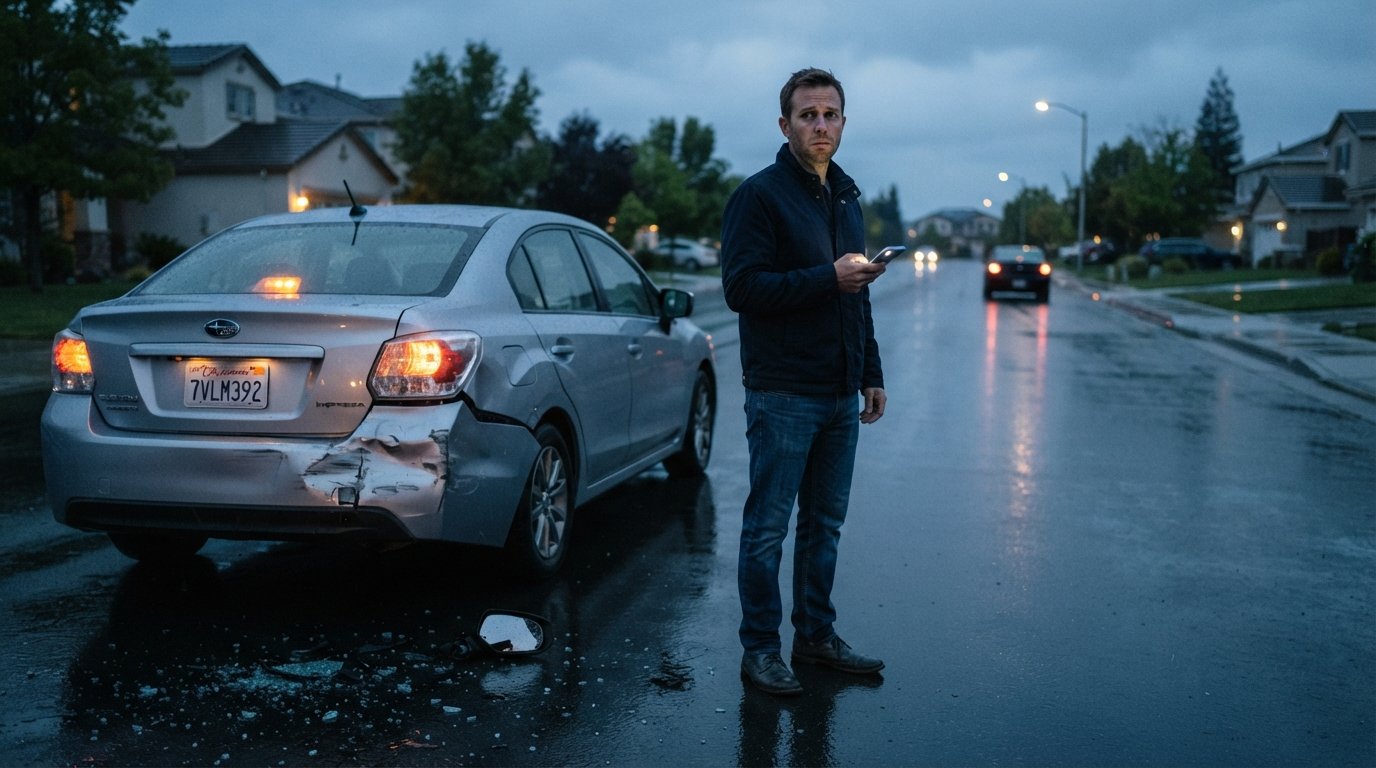
A screech of tires, a sudden impact, and then the blur of a bumper disappearing down the street. A hit and run accident leaves you standing in the road with a wrecked car, a racing heart, and no one to exchange information with. The driver who fled broke the law, but right now your focus needs to be on what you do next, because the steps you take in the first hours and days can shape everything that follows: your insurance claim, your medical care, and any future legal action.
Hit and run crashes are more common than many people realize. The AAA Foundation for Traffic Safety estimates that more than one hit and run crash happens every minute somewhere in the United States, and roughly 60 percent of fatal hit and run crashes involve a pedestrian or bicyclist. When the at-fault driver cannot be identified, victims often assume they are out of luck. That is rarely true. Uninsured motorist coverage, personal injury protection, and a well-documented police report can all open doors to compensation, and a free case review can clarify which doors apply to your situation.
Step One: Stop, Stay Calm, and Make Sure Everyone Is Safe
The instinct to chase the fleeing driver is powerful, and it is almost always the wrong move. Chasing a hit and run driver puts you at risk of a second crash, a confrontation, or a criminal charge if things escalate. Instead, pull over to a safe location as soon as traffic allows, turn on your hazard lights, and check yourself and your passengers for injuries. Adrenaline can mask pain, so even if you feel fine, assume you may not be.
If anyone is seriously hurt, call 911 immediately and do not move an injured person unless they are in imminent danger from traffic or fire. If the scene is safe, set out warning triangles or flares if you have them. Your safety and the safety of everyone around you comes before anything else, including gathering evidence.
Step Two: Call the Police and Insist on a Report
In a hit and run case, the police report is one of the most valuable documents you will ever have. Call law enforcement from the scene, even if the damage seems minor. Officers will document the time, location, and circumstances, interview witnesses, and note any description of the fleeing vehicle. That report becomes the official record your insurer and any attorney will rely on.
When the officer arrives, share everything you remember: the color, make, and model of the car, any partial license plate, the direction the driver fled, and a description of the driver if you caught a glimpse. Even a fragment of information can help investigators. Ask for the report number and the officer's name before you leave, and follow up with the department in a few days to request a copy. Some jurisdictions take longer than others to finalize reports, so mark your calendar. If the police cannot respond to the scene, you can often file a report at a station or online, and you should do so within 24 hours.
Step Three: Gather Evidence Before It Disappears
Evidence at a hit and run scene is fragile. Debris gets swept away, skid marks fade, and nearby surveillance footage is often overwritten within days or even hours. While you wait for police, do what you safely can to preserve the scene. Take wide photos of the intersection or road showing the positions of vehicles and traffic signals, then close-ups of damage, debris, and any paint transfer on your car. Look for pieces of the other vehicle's headlight, taillight, or bumper, which can sometimes be traced back to a specific make or model.
Then look outward. Businesses, homes, and even buses in the area may have security cameras that captured the collision or the fleeing vehicle. Note the addresses of every camera you can see and ask owners or managers to preserve footage. Witnesses matter just as much. Get names and phone numbers from anyone who saw what happened, and ask them to write down what they remember while it is fresh. In our guide on what to do if you are hit by a drunk driver, we explain how evidence collection works when the at-fault driver is impaired, and many of the same principles apply here.
Step Four: Report the Crash to Your Insurer Promptly
Your own insurance company should hear about the hit and run from you, not from a third party. Most policies require prompt notice of any accident, and delays can give an insurer grounds to question or deny a claim. Call the claims line as soon as you reasonably can, describe what happened factually, and open a claim.
This is where many victims get confused about what to do after a hit and run accident. Because the other driver is unknown, there is no liability insurer to pursue in the usual way. Instead, your claim will likely run through your own uninsured motorist (UM) coverage, which is designed for exactly this scenario, or through collision coverage, medical payments coverage, or personal injury protection, depending on your policy and your state's rules. Uninsured motorist coverage is required in some states and optional in others, so check your declarations page or ask your adjuster directly whether you have UM coverage and what it includes. If you do not have it, do not panic: an attorney can review whether other coverage options, such as a family member's policy or an employer's policy, might apply.
A few practical tips for this stage:
- Stick to the facts and avoid speculating about fault or your own injuries.
- Do not accept a quick settlement before you know the full extent of your medical treatment.
- Keep a dedicated folder or email label for claim numbers, adjuster names, and every document you receive.
- Follow your policy's cooperation requirements, but consult an attorney before giving a recorded statement if the insurer asks for one.
Insurers handle thousands of claims and know that hit and run victims often feel desperate. That imbalance is one reason a documented, organized claim and, when appropriate, legal representation can make a real difference in the outcome.
Step Five: Get Medical Attention Even If You Feel Fine
Soft tissue injuries, concussions, and internal bleeding do not always announce themselves immediately. Whiplash may not fully surface for a day or two, and adrenaline can suppress pain for hours. Seeing a doctor within 24 to 72 hours creates an official medical record linking your symptoms to the crash, which matters enormously if you later need to prove that your injuries came from the hit and run rather than something else.
Follow your treatment plan, attend every appointment, and keep notes about how you feel, including headaches, sleep problems, and pain that limits your daily activities. Gaps in treatment are one of the most common ways insurance adjusters discount an injury claim, so consistency is your friend. If you cannot afford care, ask the hospital or clinic about payment plans or lien-based treatment, and mention the situation to any attorney you consult.
Step Six: Understand Your Compensation Options When the Driver Is Unknown
When the at-fault driver flees and is never identified, the path to compensation changes but does not close. Depending on your state and your policy, several sources may be available. Uninsured motorist coverage typically steps in when the responsible driver has no insurance or cannot be found. Medical payments coverage or personal injury protection can pay medical bills regardless of who caused the crash. Collision coverage can repair or replace your vehicle. In some states, a government fund exists for hit and run victims who have exhausted other options.
If the driver is later identified, either through investigation or an anonymous tip, a personal injury claim against that driver becomes possible, and in particularly egregious cases, punitive damages may come into play. Deadlines matter here. Every state sets a statute of limitations for personal injury claims, and the clock generally starts on the date of the crash. Waiting can permanently erase your right to recover, even when the case is strong. Because fault rules, insurance requirements, and deadlines vary from state to state, it helps to get a no-cost, confidential case review early rather than guessing at your options. If you would rather research attorneys on your own first, you can compare lawyers in your city through TheLawyerDirectory and request a quote with no obligation to hire.
Common Mistakes That Weaken a Hit and Run Claim
Even honest, well-meaning victims sometimes undermine their own cases without realizing it. The most damaging mistakes tend to fall into predictable patterns, and knowing them in advance helps you avoid them.
Leaving the scene without calling police is the first and biggest error, because without an official report, insurers often treat the incident as unverified. Posting about the crash on social media is another trap: a casual comment like "I'm fine, just a fender bender" can be used to argue that you were not really injured. Delaying medical care, missing appointments, or waiting weeks to notify your insurer can all reduce or eliminate recovery. Finally, accepting a fast settlement offer before your prognosis is clear can lock you into an amount that does not cover future treatment, lost wages, or pain and suffering.
A simple rule covers most of these situations: document everything, say less than you think you should, and do not sign anything until you understand what you are giving up.
When to Involve an Attorney
Not every hit and run requires a lawyer. A minor parking lot scrape with clear uninsured motorist coverage and a cooperative adjuster may resolve without one. But certain signs suggest that professional help is worth pursuing. If you were injured, if the insurer is delaying, lowballing, or denying your claim, if the police have identified a driver who may have assets or a commercial employer, or if the facts are disputed, an attorney can level the playing field.
An attorney can also investigate facts you cannot easily access, such as surveillance video, body shop records, and databases that help identify vehicles by paint or parts. Most personal injury attorneys handle these cases on contingency, meaning you pay nothing unless there is a recovery, and the initial consultation is typically free. That structure exists because these cases are difficult to pursue alone against experienced adjusters. Whether you use a matching service, a directory, or a personal referral, the goal is the same: get accurate information about your rights before you make decisions that are hard to undo.
Remember that a website that connects you with attorneys is not a law firm and does not provide legal advice, and submitting a form does not create an attorney-client relationship or obligate you to hire anyone. It simply starts a conversation.
Protecting Yourself in the Days After the Crash
In the weeks that follow, protect your health and your claim at the same time. Keep driving to a minimum until your vehicle is inspected and repaired, and ask the shop to document hidden damage. Save receipts for rideshare fares, rental cars, and any out-of-pocket medical costs, because these are often recoverable. Stay reachable and respond to your adjuster, but route anything that feels like a settlement pressure tactic through your attorney or your own careful review.
It also helps to write down your memory of the event once, in detail, while it is fresh. Where were you coming from? What did you hear before the impact? Which way did the other car go? Memory fades and details shift, and a written account made soon after the crash carries more weight than one reconstructed months later.
A hit and run accident is a violation of the law and of basic decency, but it does not have to mean the end of your ability to recover. Act quickly, document thoroughly, get medical care, and do not assume that an unidentified driver means no compensation. The right steps, taken in the right order, keep your options open.