
DUI Arrest Without Driving: Keys Not in Ignition
Facing a DUI arrest with no actual driving and keys not in the ignition? Get clarity on defenses and your rights. Call (855)-545-2917 for a free case review.

By Marcus Hale
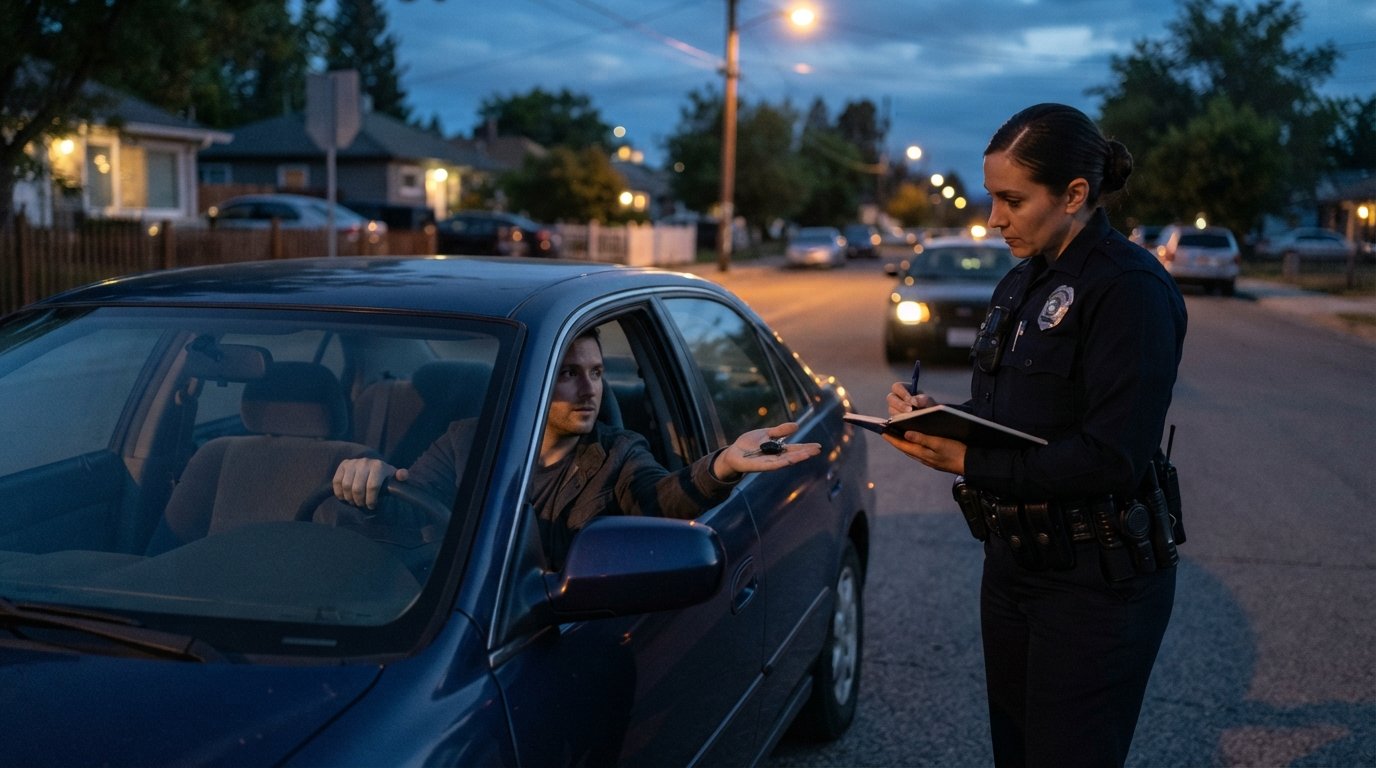
You are sitting in a parked car with the engine off, the keys in your pocket, and no intention of moving. A police officer approaches, asks questions, and within minutes you are in handcuffs facing a DUI charge. It sounds unfair, and many people assume that a DUI arrest with no actual driving and keys not in the ignition must be invalid. But the law in many states allows prosecution based on theories of control rather than motion. The outcome depends heavily on state statutes, court interpretations, and the specific facts at the scene. This article explains how these cases work, what defenses may apply, and why early evidence gathering is critical.
If you are facing a DUI charge in this scenario, you likely have questions about whether the arrest was lawful and what steps to take next. A free, confidential case review can help you understand your options without obligation. You can request one through AutoInjuryAccident.com's no-cost case review, which connects you with participating attorneys. The site is not a law firm and does not provide legal advice, but it can help you explore your situation with an independent lawyer.
How States Define Operation of a Vehicle
DUI and DWI statutes across the United States do not use a single, uniform definition of driving or operating a vehicle. Some states require proof that the vehicle was in motion, while others define operation much more broadly. Understanding your state's approach is the first step in evaluating a no-driving defense.
In a minority of jurisdictions, courts have held that the vehicle must actually be moving for a DUI conviction. These states typically require evidence of movement, even if slight, such as rolling a few feet. In such jurisdictions, a DUI arrest with no actual driving and keys not in the ignition may be vulnerable to a motion to dismiss if the prosecution cannot show movement.
However, most states use broader definitions. Some statutes define operation as being in physical control of a vehicle, while others look at whether the person was in a position to control the vehicle or had the ability to start it. Courts often consider factors like whether the keys were in the ignition, whether the engine was running, where the driver was sitting, and whether the vehicle was on a public road. These factors are weighed differently depending on the state's case law.
For example, some states follow a totality of the circumstances test, examining all facts to determine whether the defendant had actual physical control. Others apply a more rigid statutory definition. Because these rules vary widely, a defense strategy that works in one state may not work in another. Consulting with an attorney licensed in your jurisdiction is essential.
Physical Control Theories Courts Use
Even when there is no evidence of driving, prosecutors often rely on physical control theories to secure DUI convictions. The core idea is that a person who is in a position to control a vehicle while intoxicated poses a danger to the public, regardless of whether the vehicle was moving.
Courts have developed several factors to assess physical control. These factors are not exhaustive, and judges may weigh them differently. Common considerations include:
- Whether the key was in the ignition or within easy reach
- Whether the engine was running or the vehicle was otherwise operational
- The location of the driver in the vehicle (for example, in the driver's seat versus the passenger seat)
- Whether the vehicle was parked legally or illegally, and whether it was on a public roadway
- The driver's behavior and statements to police
These factors can cut both ways. A driver found asleep in the driver's seat with the keys in the ignition is more likely to be deemed in physical control than a person sitting in the passenger seat with keys in the glove box. However, even in the latter scenario, some courts have found physical control if the person had access to the keys and could easily start the vehicle.
Some states apply a two-part test: first, whether the defendant was in physical control, and second, whether there was a substantial risk of the vehicle being set in motion. Other states focus on whether the defendant had the present ability to control the vehicle. These nuances create opportunities for defense, but they also mean that general advice is no substitute for a careful review of your state's law and the facts of your case.
In some cases, the prosecution may argue that the defendant was in control even if the keys were not in the ignition. For instance, if the keys were on the dashboard or in the driver's pocket, the argument may be that the driver could have started the car at any moment. The defense may counter that mere possession of keys does not equal control, especially if the vehicle was inoperable or parked on private property.
Facts That Strengthen a No-Driving Defense
If you were arrested for DUI while parked and the keys were not in the ignition, several facts can support a defense. The strength of your case will depend on the specific evidence and your state's legal standards. Gathering and preserving evidence early is critical.
First, the location of the vehicle matters. If you were parked on private property, such as a driveway or a private parking lot, some states may not apply DUI statutes, or the prosecution may face additional hurdles. Second, the condition of the vehicle is relevant. If the car was inoperable, out of gas, or missing a battery, it may be harder for the prosecution to prove you had the ability to drive. Third, your statements and actions at the scene can be important. If you told the officer you were waiting for a sober ride or had no intention of driving, that may support your defense.
Other helpful facts may include:
- The keys were in a location that made starting the car difficult or impossible (for example, in the trunk or with another person)
- You were not in the driver's seat when contacted by police
- The engine was cold, indicating it had not been running recently
- There were no signs that you had attempted to move the vehicle
- Witnesses can confirm you were not driving
It is important to remember that even strong facts may not guarantee a dismissal. Prosecutors can still argue physical control, and judges may accept that argument. An attorney can help you evaluate the strength of your defense and decide whether to negotiate a plea or take the case to trial.
In some jurisdictions, courts have recognized a defense when the defendant was asleep in a parked car with the keys not in the ignition, especially if the car was off the roadway and the defendant had taken steps to avoid driving. However, these cases are highly fact-specific. A lawyer can review the police report, witness statements, and any available video footage to build a defense strategy.
Why Witness and Scene Evidence Should Be Gathered Early
Evidence can disappear quickly. Surveillance footage from nearby businesses may be overwritten within days or weeks. Witnesses may move or forget details. The sooner you act, the better your chances of preserving evidence that supports your account.
If you were parked in a lot with security cameras, the footage could show that you were not driving and that the car was stationary for an extended period. If there were passengers or bystanders, their statements could corroborate your version of events. Even your own notes and photographs of the scene can be valuable. For example, a photo showing the keys in your pocket or the engine off could support your defense.
Time is also critical because of court deadlines. After a DUI arrest, you may face a short window to request a hearing to challenge your license suspension. Missing that deadline can result in automatic suspension, regardless of the outcome of your criminal case. An attorney can help you navigate these deadlines and ensure that your rights are protected.
If you are unsure where to start, consider reaching out to a legal professional who handles DUI cases in your area. A free case review can provide clarity without cost or obligation. You can also learn more about the court date and arraignment process after a DUI arrest to understand what comes next.
The Role of Legal Representation in No-Driving DUI Cases
DUI cases involving no actual driving are complex. They require a deep understanding of state-specific statutes, case law, and the science behind field sobriety and chemical tests. An experienced attorney can challenge the prosecution's evidence, cross-examine witnesses, and argue motions to suppress or dismiss.
For example, an attorney may file a motion to suppress evidence if the police lacked reasonable suspicion to approach or detain you. They may also challenge the accuracy of breath or blood tests or question whether the officer followed proper procedures. In some cases, the defense may argue that the prosecution cannot prove you were in physical control beyond a reasonable doubt.
If you are facing a DUI charge and are considering your options, you do not have to navigate the process alone. A confidential case review can connect you with an attorney who understands your state's laws and can evaluate the specific facts of your arrest. There is no obligation to hire, and the review is free.
Remember that every case is different, and the outcome depends on many factors. No one can promise a specific result. However, having legal guidance can help you make informed decisions and protect your rights.
Practical Steps to Take After a No-Driving DUI Arrest
If you were arrested for DUI while parked with keys not in the ignition, the steps you take in the days following the arrest can significantly impact your case. First, write down everything you remember about the incident as soon as possible. Include details about where you were parked, where the keys were, what you said to the officer, and whether anyone else was present. Memory fades quickly, and these notes can be valuable to your attorney.
Second, gather any available evidence. Take photographs of the location, your vehicle, and the keys. If there are businesses nearby, ask if they have surveillance footage and request that it be preserved. Get contact information for any witnesses. Third, do not discuss the case with anyone other than your attorney. Statements made to friends, family, or on social media can be used against you.
Finally, seek legal advice promptly. An attorney can review your case, explain your rights, and help you decide on a strategy. They can also handle communications with the prosecutor and represent you at hearings. If you cannot afford an attorney, you may be eligible for a public defender, but eligibility rules vary by state.
For those who are unsure about their legal options, a free case review through AutoInjuryAccident.com can provide a starting point. The service is not a law firm and does not provide legal advice, but it can connect you with participating attorneys who offer free consultations. You can also explore general information about DUI defense on the site.
Dealing with a DUI charge is stressful, but you have rights. Understanding how your state defines operation and physical control, gathering evidence early, and consulting with a knowledgeable attorney can make a meaningful difference in your case. Take action quickly to preserve your options and protect your future. CheapInjuryLawyer