
Self Driving Car Accident: Who Is Liable When Autopilot Fails?
Who is liable when Autopilot causes a crash? Learn how fault shifts among drivers, manufacturers, and software. Call (855)-545-2917 for a free case review.

By Owen Ingram
When a vehicle operating on Autopilot or a similar driver-assist system crashes, the question of fault becomes far more complicated than a typical fender bender. The driver may have been distracted, the software may have misread a lane marking, or the manufacturer may have shipped an update with a known flaw. In the aftermath, injured victims often hear conflicting answers about who is legally responsible. This guide explains how liability may be distributed among drivers, manufacturers, and software developers, why electronic data is critical, and what steps to take immediately to protect your claim. If you or a loved one has been hurt in a crash involving automated driving features, a free case review service can help you understand your options without obligation.
How Liability Shifts Between Driver, Manufacturer, and Software Developer
In a conventional car accident, fault usually rests on one or more human drivers. With partial automation, the analysis expands. Most states still place ultimate responsibility on the human driver, even when Autopilot, Super Cruise, or a similar system is engaged. Drivers are typically required to keep their hands on the wheel and eyes on the road, and owner's manuals explicitly state that the system does not make the car fully autonomous. However, that does not automatically clear the manufacturer or software developer. If the system failed to detect a pedestrian, braked too late, or steered unexpectedly, product liability theories may allow victims to pursue the company that designed the technology.
Courts and regulators are still developing the rules for these cases. The key is that liability is rarely all-or-nothing. A jury might find the driver 30 percent at fault for failing to monitor the road, the manufacturer 50 percent at fault for a defective sensor, and the software developer 20 percent at fault for a faulty over-the-air update. Because every state has different fault rules, from pure comparative negligence to modified comparative negligence with a 50 percent bar, the outcome of a self-driving car accident claim can vary dramatically depending on where the crash occurred. Nationwide consistency does not exist, which is why local legal guidance matters.
One emerging issue is the distinction between conditional automation (Level 2, like Tesla Autopilot) and higher automation (Level 3 and above). At Level 2, the driver must constantly supervise, so defenses often focus on driver inattention. At Level 3, the system handles most driving tasks but expects the driver to intervene when prompted. If the prompt never came, the manufacturer may bear more responsibility. For now, most consumer vehicles on the road are Level 2, meaning the driver remains the primary fallback. Yet product liability claims are increasingly viable when evidence shows the system performed outside its advertised capabilities.
Why Vehicle Data Logs and Software Version Records Matter as Evidence
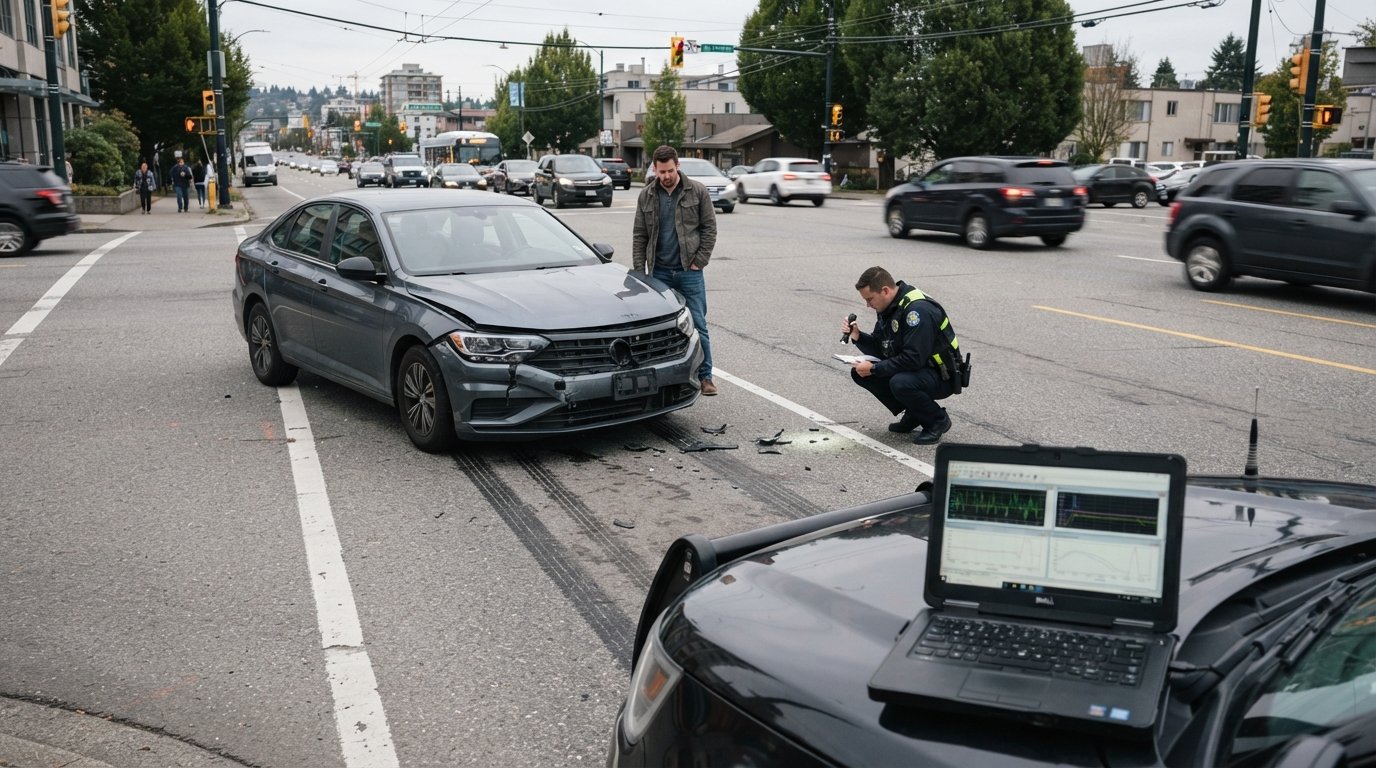
Modern vehicles are rolling computers. They record speed, steering input, brake pressure, seat belt status, and whether driver-assist features were active in the seconds before impact. This data, often stored in an event data recorder (EDR) or sent to a cloud server, is the closest thing to an objective witness. In a self-driving car accident, the data can show whether the driver was holding the wheel, whether the system issued a hands-on warning, and whether the software version was up to date. Without this evidence, insurers and manufacturers can frame the crash in ways that minimize their exposure.
Software version records are equally important. Manufacturers push over-the-air updates that change how a vehicle behaves. If a crash occurred after an update that altered lane-keeping sensitivity, the plaintiff may argue that the update introduced a defect. Conversely, the manufacturer may claim the driver ignored an update that would have prevented the crash. Accessing these records requires preservation letters and, often, a court order. Once the vehicle is repaired or sold, the data may be overwritten or lost forever. That is why the notice and preservation steps below are time-sensitive.
In many cases, the vehicle's telematics system transmits data to the manufacturer in real time. The manufacturer may be the only party with access. An experienced attorney can send a spoliation letter demanding that the company preserve all logs, including the exact software build, sensor alerts, and driver monitoring camera footage. If the manufacturer fails to preserve the data after notice, sanctions may follow. But the burden is on the victim to act quickly. For a related discussion on shared responsibility in app-based rides, see our guide on rideshare accident liability.
Notice and Preservation Steps Before the Vehicle Is Repaired or Sold
The first 48 to 72 hours after a crash involving Autopilot or another driver-assist system are critical. Insurance companies may pressure you to move the car to a repair shop, where technicians could reset systems or replace modules that contain crash data. Before that happens, you need to put all potential parties on notice. This includes the driver, the vehicle owner, the manufacturer, and any software supplier. Sending written preservation letters creates a legal duty to retain evidence. If you skip this step, you may lose the most valuable proof in your case.
Here is a practical sequence to follow immediately after the crash:
- Do not repair or sell the vehicle. Keep it in a secure location and inform the shop that it is evidence in a potential legal claim.
- Send preservation letters. Notify the manufacturer, dealer, and software provider in writing that you intend to pursue a claim and demand retention of all data.
- Request the EDR data. Ask law enforcement or your attorney to download the event data recorder before it is overwritten.
- Photograph and document everything. Capture the scene, road conditions, dashboard warnings, software version screen, and any visible sensor damage.
- Consult a lawyer before speaking to insurers. Statements made to an adjuster can be used to shift blame to you.
These steps are not just formalities. In product liability cases against large manufacturers, the company will have a team of lawyers and engineers working within hours. You need to level the playing field. A free, confidential case review can connect you with an attorney who understands the technical and legal nuances of automated driving systems and can act before evidence disappears. Remember that submitting a form does not create an attorney-client relationship and does not obligate you to hire anyone, but it does start the preservation clock.
Why State Fault Rules and Product Liability Theories Vary Nationwide
There is no federal law that governs liability for self-driving car accidents. Each state has its own tort rules, and those rules determine how much you can recover and from whom. In a pure comparative negligence state like California or New York, you can recover damages even if you are 90 percent at fault, though your award is reduced by your percentage of fault. In a modified comparative negligence state like Texas or Florida (which uses a 51 percent bar), you are barred from recovery if you are more at fault than the defendant. A few states, like Alabama and North Carolina, still use contributory negligence, which bars recovery if you are even 1 percent at fault. These differences can make or break a case.
Product liability theories also vary. The most common claims in an Autopilot crash include:
- Design defect: The system was engineered in a way that made it unreasonably dangerous, such as failing to detect stationary emergency vehicles.
- Manufacturing defect: A specific sensor or camera was installed incorrectly or was defective from the factory.
- Failure to warn: The manufacturer did not adequately warn drivers about the system's limitations.
- Negligent software update: An over-the-air update introduced a new hazard or removed a safety feature without proper testing.
Each theory requires different evidence and expert testimony. A design defect claim may require reconstructing the crash with simulation software and comparing the system's performance to industry standards. A failure to warn claim may focus on the owner's manual and in-car alerts. Because these cases are complex, they often involve multiple defendants and cross-claims. The driver may sue the manufacturer, the manufacturer may blame the driver, and the software supplier may be brought in as a third party. An experienced attorney can map out the parties and theories that apply in your state. If you are unsure where to start, a no-cost case review can clarify which parties to pursue and what deadlines apply.
How a Free Case Review Can Clarify Which Parties to Pursue
Investigating a self-driving car accident requires resources that most individuals do not have. You need to preserve data, hire an accident reconstruction expert, review software version histories, and navigate multiple insurance policies. A free case review through a consumer matching service like AutoInjuryAccident.com can connect you with attorneys who handle these claims on a contingency basis, meaning you pay nothing upfront and only owe a fee if there is a recovery. The review is confidential, and there is no obligation to hire anyone. It is simply a way to get answers about your rights and the potential parties at fault.
During the review, an attorney will typically ask about the crash, the vehicle's features, whether the driver was using Autopilot, and what evidence has been preserved. They will also explain the deadlines in your state, which can be as short as one year for personal injury claims. Missing a deadline can permanently bar your claim, regardless of how strong the liability case may be. Because fault rules and insurance requirements vary nationwide, it is important to speak with someone familiar with your jurisdiction. Do not wait until the vehicle is repaired or the data is overwritten. Take action while the evidence is still available.
Finally, keep in mind that this article is educational and not legal advice. AutoInjuryAccident.com is not a law firm or lawyer referral service and does not provide legal advice. Submitting a form does not create an attorney-client relationship or require you to hire a lawyer. It simply starts a conversation that can help you understand your options. If you have been injured in a crash involving driver-assist technology, protect your rights by preserving evidence and seeking a confidential review as soon as possible.