
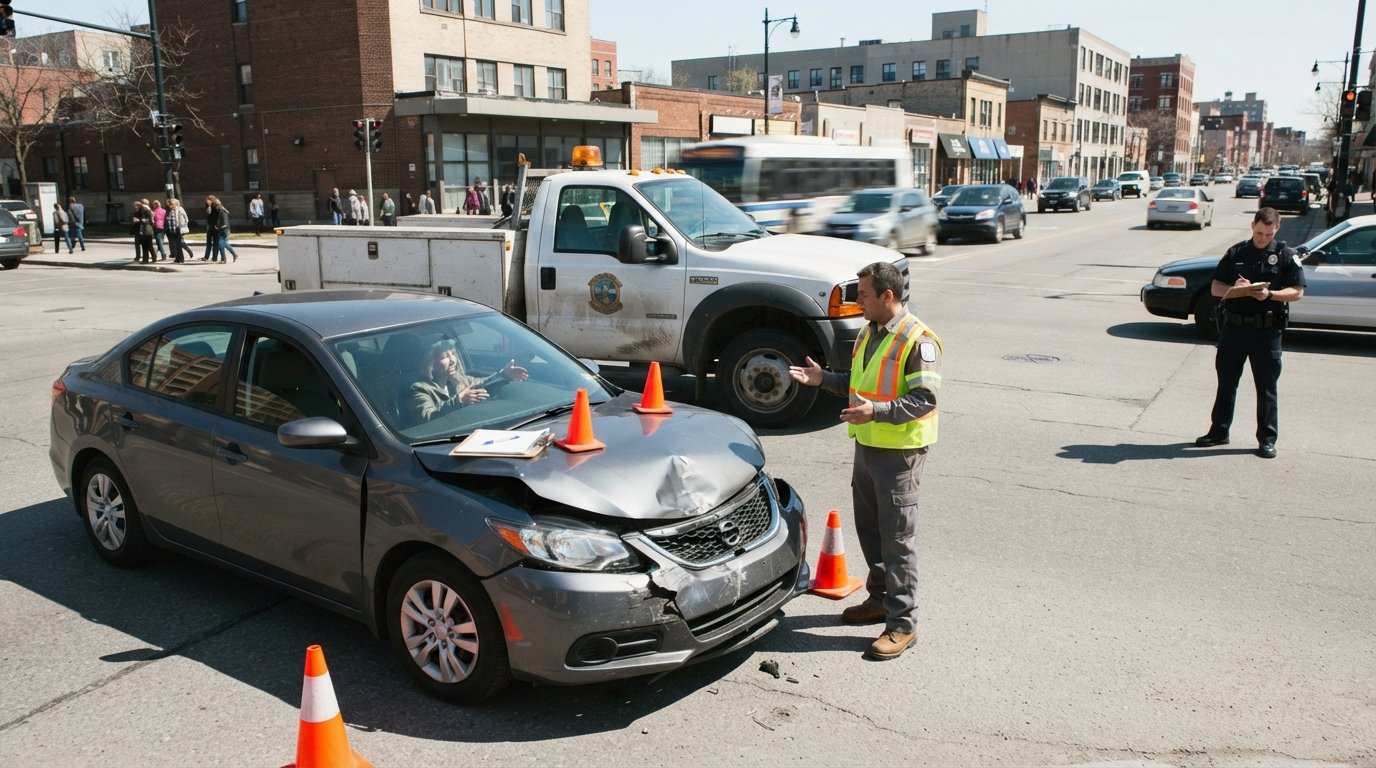
Government Vehicle Accident Claim: City or State Agency
Filing a government vehicle accident claim against a city or state agency requires quick notice and evidence preservation. Call (855)-545-2917 for a free case review.

When a city bus, a state highway truck, or a municipal utility vehicle strikes you, the path to recovery is not the same as a claim against a private driver. A government vehicle accident claim against a city or state agency is governed by a distinct set of rules that can shorten your deadline to file, limit the evidence you can access, and cap the amount you may recover. Understanding these differences is critical because a single missed procedural step can permanently bar your right to compensation.
Most people hurt by a public employee quickly learn that sovereign immunity, the legal doctrine that protects governments from certain lawsuits, adds layers of complexity. The agency will not simply accept fault the way a private insurer might. Instead, you must navigate notice requirements, prove that the employee was acting within the scope of duty, and preserve evidence that the agency itself controls. This article explains those hurdles in plain language and shows how an experienced attorney evaluates a claim against a municipality or state entity.
Notice of Claim Requirements and Short Filing Windows
The first and most unforgiving distinction in a government vehicle accident claim against a city or state agency is the notice of claim requirement. Unlike a private negligence case where you may have two or three years to file a lawsuit, most jurisdictions require you to formally notify the government entity within a much shorter window, sometimes as little as 60 to 180 days from the date of the crash. This written notice typically must include specific details: the time, place, and circumstances of the accident, a description of your injuries, and the amount of damages you seek. Failing to file a timely and compliant notice can result in dismissal of your case, regardless of how strong the underlying liability evidence may be.
After the notice is filed, the agency usually has a period to investigate and respond. Some states require you to wait a certain number of days before filing a formal lawsuit, while others allow you to proceed if the agency denies the claim. The deadlines vary dramatically by jurisdiction, and they can be even shorter for claims involving certain public entities like transit authorities or school districts. Because these windows are strict, you should treat the notice deadline as the most urgent date in your case.
Here is a general sequence that many government claim procedures follow, though you must confirm the exact rules for your state:
- Identify the correct government entity and its designated agent for receiving claims.
- Prepare a written notice of claim that meets statutory content requirements.
- File the notice within the short deadline, often by certified mail or personal delivery.
- Wait for the agency's response or the statutory waiting period to expire.
- File a formal lawsuit in the appropriate court if the claim is denied or unresolved.
Each step carries its own pitfalls. For example, filing notice with the wrong agency, such as the police department instead of the city attorney's office, may not satisfy the legal requirement. Similarly, a notice that omits a required element like the specific location of the crash can be deemed defective. An attorney familiar with government claims in your state can draft a notice that withstands scrutiny and preserve your right to sue.
Distinguishing a Public Employee Acting Within Scope of Duty
Not every accident involving a government vehicle automatically creates a claim against the government. The key question is whether the public employee was acting within the scope of their employment at the time of the crash. If a city bus driver is on their assigned route, they are clearly acting within scope. But what about a police officer driving home after a shift, or a state worker using a fleet vehicle for a personal errand? In those cases, the government may argue that the employee was not acting within scope, which could shift liability to the employee personally or create a disputed legal battle.
Scope of duty analysis often hinges on factors such as whether the employee was performing a task assigned by the employer, whether the vehicle was being used for official business, and whether the employee was subject to the employer's control at the time. Courts also consider whether the employee's actions were motivated, at least in part, by a purpose to serve the employer. This determination can be fact-intensive, and the government will often try to narrow the scope to avoid liability.
If the employee was acting outside the scope of duty, you may still have a claim against the employee individually, but collecting a judgment from an individual can be far more difficult than recovering from a government entity. Moreover, some states provide immunity even for employees acting within scope, leaving the government as the sole defendant. An attorney will investigate the employee's duties, the vehicle's assignment, and the circumstances of the crash to establish scope of duty and identify all potential defendants.
Preserving Evidence Held by a Public Agency
Government agencies control a vast amount of evidence that can make or break your claim. This includes dashcam footage from the government vehicle, maintenance records, employee training files, dispatch logs, and internal accident reports. Unlike a private party, a government agency is not always subject to the same automatic discovery rules, and some records may be protected by privileges or statutory exemptions. However, you can take steps to preserve this evidence before it is lost or destroyed.
One of the most effective tools is a spoliation letter, also known as a preservation demand. This letter puts the agency on notice that litigation is anticipated and that it must retain all relevant evidence, including electronic data like GPS tracking and onboard camera recordings. If the agency destroys evidence after receiving a preservation letter, you may be able to seek sanctions or an instruction to the jury that the destroyed evidence was unfavorable to the agency. Timing is critical because many government vehicles record over footage on a rolling basis, often within days or weeks.
In addition to preservation demands, you may need to file public records requests under your state's open records law to obtain documents like accident reports and vehicle maintenance logs. These requests can be time-consuming, and agencies may delay or deny them. An attorney can craft targeted requests, appeal denials, and if necessary, file a motion to compel discovery once a lawsuit is filed. Securing evidence early also helps you evaluate the strength of your claim and counter any arguments the agency might raise about comparative fault or sudden emergency.
Why Sovereign Immunity Rules Vary by State
Sovereign immunity is not a single nationwide standard. Each state has its own statutes, court decisions, and exceptions that determine when and how you can sue a government entity. Some states have broad waivers of immunity for negligent operation of government vehicles, while others impose caps on damages, require proof of a special duty, or exclude certain types of claims altogether. For example, a state might waive immunity for injuries caused by a city bus but retain immunity for emergency response vehicles like fire trucks or ambulances.
These variations mean that a government vehicle accident claim against a city or state agency must be evaluated under the specific law of the jurisdiction where the crash occurred. What works in one state may be irrelevant in another. The damages cap alone can significantly affect your recovery, as many states limit the amount you can recover from a government entity even in cases of severe injury. Some states also have separate notice requirements for different types of public entities, such as counties, municipalities, and special districts.
Because of this patchwork of rules, it is essential to consult with an attorney who practices in the relevant state and has experience with government claims. A lawyer who handles car accident cases against private parties may not be familiar with the unique procedural hurdles of suing a city or state agency. If you are considering a claim, resources like a free case review can connect you with attorneys who understand these distinctions. For example, CheapInjuryLawyer offers a no-cost, confidential case review and attorney-matching service for people injured in accidents, though it is not a law firm and does not provide legal advice.
How an Attorney Evaluates a Claim Against a Municipality
When you bring your case to an attorney, the evaluation process begins with a thorough investigation of the accident and the government entity involved. The attorney will typically request the police report, interview witnesses, and obtain the notice of claim requirements for the specific agency. They will also examine whether the employee was acting within scope of duty, whether any immunity exceptions apply, and whether the agency had notice of a dangerous condition or pattern of negligence.
Another critical part of the evaluation is determining the full extent of your damages. This includes medical expenses, lost wages, pain and suffering, and future care needs. Because government entities often have damages caps, the attorney will assess whether your claim exceeds those limits and whether other defendants, such as a private contractor or another driver, might also be liable. The attorney will also evaluate the likelihood of a lawsuit and the costs associated with litigation, which can be higher in government cases due to the additional procedural steps.
Finally, the attorney will consider the practical realities of suing a government agency. These cases can take longer to resolve, and the government may be more willing to litigate than a private insurer. However, a well-prepared claim can still result in a fair settlement before trial. If you were injured in a crash involving a government vehicle, it is wise to seek a case evaluation promptly so that notice deadlines are met and evidence is preserved. You can also read about related topics like motorcycle lane splitting accident claim rules by state to understand how fault rules can vary, though the government claim process has its own unique requirements.
To summarize, the key steps in evaluating a government vehicle accident claim include:
- Confirming the identity of the government entity and its notice requirements.
- Determining whether the employee was acting within the scope of duty.
- Preserving evidence through spoliation letters and public records requests.
- Analyzing the state's sovereign immunity waivers and damages caps.
- Calculating damages and identifying all potential defendants.
Each of these steps requires attention to detail and knowledge of local law. An attorney can guide you through the process, but you should act quickly because the deadlines are short and evidence can disappear.
If you have been hurt by a city or state vehicle, do not assume that the government will treat you fairly or that the ordinary car accident claim process applies. The combination of short notice deadlines, sovereign immunity protections, and evidence control by the agency makes these cases uniquely challenging. Seeking a confidential, no-obligation case review with an attorney who handles government claims can help you understand your rights and avoid costly mistakes. Remember that submitting a request for a case review does not create an attorney-client relationship, and you are never obligated to hire a lawyer.