
DUI Court Process: Arraignment to Sentencing Walkthrough
Get a clear DUI court process from arraignment to sentencing walkthrough. Call (855)-545-2917 for a free case review and protect your rights.

Being charged with a DUI sets off a chain of events that can feel overwhelming. One day you are driving home, and the next you are holding a citation with a court date and facing a criminal charge. The uncertainty of what happens next can be as stressful as the charge itself. This DUI court process from arraignment to sentencing walkthrough is designed to demystify each stage, so you know what to expect and can make informed decisions about your defense. Whether you are facing a first offense or a more serious charge, understanding the roadmap ahead is the first step toward protecting your rights.
The Arraignment: Your First Court Appearance
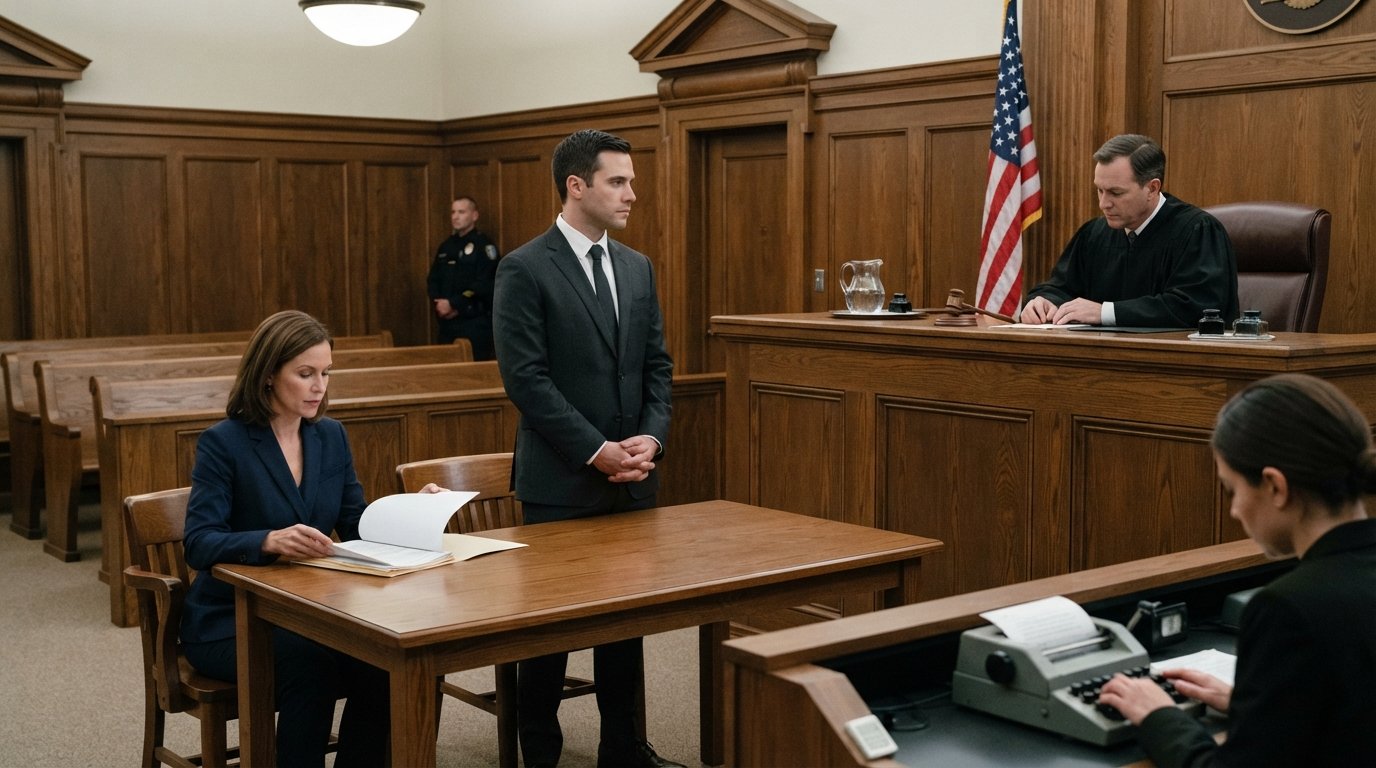
The arraignment is typically your first formal appearance before a judge. It usually occurs within a few days to a few weeks after your arrest, depending on the jurisdiction and whether you were released on bail or on your own recognizance. At the arraignment, the judge will read the charges against you, confirm your identity, and advise you of your constitutional rights, including the right to an attorney and the right to remain silent. This is also when you will enter a plea.
Most defendants plead not guilty at arraignment. Pleading not guilty does not mean you are denying the possibility of a later deal; it simply preserves your options and allows your attorney to review the evidence. If you plead guilty at this stage, you give up the opportunity to challenge the prosecution's case and may face immediate sentencing. In some cases, the judge may set bail or release conditions, such as a requirement to install an ignition interlock device or attend a treatment program. For a detailed look at what happens at this early stage, see our guide on court date and arraignment after a DUI arrest.
It is crucial to have legal representation at the arraignment. An experienced DUI attorney can negotiate with the prosecutor, request a reduction in charges, or argue for lower bail. Without counsel, you may inadvertently waive important rights or agree to conditions that could harm your case later. If you cannot afford an attorney, you may be appointed a public defender, but keep in mind that public defenders often carry heavy caseloads and may have limited time to devote to your case.
Pretrial Conferences and Motions
After the arraignment, your case enters the pretrial phase. This period is often the most critical for building your defense. The prosecution is required to provide discovery, which includes evidence such as police reports, breath or blood test results, dashcam footage, and witness statements. Your attorney will review this evidence to identify weaknesses in the prosecution's case, such as improper traffic stops, inaccurate breathalyzer calibration, or violations of your rights.
Pretrial conferences are meetings between the judge, prosecutor, and defense attorney to discuss the status of the case, exchange information, and potentially negotiate a plea bargain. These conferences are not trials; they are administrative hearings that help move the case toward resolution. Your attorney may file motions to suppress evidence, dismiss charges, or challenge the legality of the stop. Common motions in DUI cases include motions to suppress breath or blood test results, motions to exclude statements you made without Miranda warnings, and motions to challenge the accuracy of field sobriety tests.
If a motion to suppress is granted, key evidence may be excluded, which can lead to a dismissal or a favorable plea deal. For example, if the police did not have reasonable suspicion to pull you over, any evidence obtained after the stop could be thrown out. This is why having an attorney who understands DUI defense is essential. During this phase, you should also consider whether a DMV license hearing is pending. In many states, you must request a hearing within a short window (often 10 days) after your arrest to challenge an automatic license suspension. This administrative hearing is separate from the criminal case but can have a significant impact on your driving privileges.
Trials: Bench vs. Jury
If your case does not resolve through a plea bargain or dismissal, it will proceed to trial. You have the right to a trial by jury or a bench trial, where a judge alone decides your fate. The choice between a jury trial and a bench trial is strategic and should be made with your attorney. A jury trial involves selecting jurors, presenting evidence, and arguing your case to a panel of your peers. A bench trial may be preferable if the case involves complex legal issues or if the judge is likely to be more objective than a jury.
During a jury trial, both sides present evidence and call witnesses. Your attorney will have the opportunity to cross-examine prosecution witnesses, including the arresting officer, and to present your defense. The prosecution must prove beyond a reasonable doubt that you were driving under the influence. Your attorney may argue that the traffic stop was unlawful, that the breath test was unreliable, or that your constitutional rights were violated. If you are convicted, the judge will schedule a sentencing hearing. If you are acquitted, the charges are dismissed, and you may be eligible to have your record expunged.
The trial process can be lengthy and stressful, but it is your constitutional right to have your case heard. Many DUI cases are resolved before trial, but if yours goes to trial, having a skilled attorney is crucial. The outcome can depend on the strength of the evidence, the credibility of witnesses, and the effectiveness of your attorney's arguments.
Sentencing and Potential Penalties
If you are convicted or plead guilty, the judge will impose a sentence. Sentencing in DUI cases varies widely by state and by the specifics of your case, including your blood alcohol concentration (BAC), whether you have prior offenses, and whether anyone was injured. Common penalties include fines, probation, community service, license suspension, mandatory alcohol education or treatment programs, and in some cases, jail time.
Judges consider several factors when determining your sentence. These may include the severity of the offense, your criminal history, your attitude and remorse, and any mitigating circumstances. For example, a first-time offender with a low BAC and no accident may receive a lighter sentence than a repeat offender with a high BAC. Your attorney can present mitigating evidence, such as completion of a treatment program or character references, to argue for a reduced sentence.
In some cases, you may be eligible for alternative sentencing programs, such as diversion programs or house arrest. These programs are designed to reduce jail overcrowding and address the underlying issues that led to the offense. However, they often come with strict requirements, and failure to comply can result in harsher penalties. It is important to discuss your options with your attorney to understand what is available in your jurisdiction.
The DMV License Hearing: A Parallel Process
Many people are surprised to learn that a DUI arrest triggers two separate cases: a criminal case in court and an administrative case with the Department of Motor Vehicles (DMV). The DMV hearing is independent of the criminal proceedings and focuses on whether your license should be suspended. In most states, you have only a short window after your arrest to request a hearing, and failing to do so can result in an automatic suspension.
At the DMV hearing, you have the right to be represented by an attorney, present evidence, and cross-examine witnesses. The issues at the hearing are typically limited to whether the police had reasonable cause to stop you and whether you were lawfully arrested. Unlike a criminal trial, the standard of proof is lower, and the hearing officer has significant discretion. Winning the DMV hearing can help you keep your license, but it does not affect the criminal case. Conversely, losing the criminal case does not automatically mean you lose the DMV hearing, but the outcomes can influence each other.
Because the DMV hearing and the criminal case are separate, it is essential to have an attorney who can handle both or coordinate with another attorney. Missing a DMV deadline can result in a suspended license even if you are ultimately acquitted of the criminal charges. For many people, the ability to drive is critical for work and family, so addressing the DMV hearing promptly is crucial.
How a DUI Attorney Can Help at Every Stage
Navigating the DUI court process from arraignment to sentencing is complex, and the stakes are high. A DUI conviction can result in jail time, fines, license suspension, and a permanent criminal record. Having an experienced DUI attorney by your side can make a significant difference in the outcome of your case. An attorney can explain your rights, review the evidence, negotiate with prosecutors, file motions, represent you at hearings and trial, and advocate for the best possible sentence.
If you are facing DUI charges and need help finding a qualified attorney, consider using a service like GoFreeLegal to connect with legal professionals in your area. GoFreeLegal offers a free, confidential way to describe your situation and get matched with attorneys who handle DUI cases. While AutoInjuryAccident.com is not a law firm and does not provide legal advice, it can also connect you with participating attorneys who advertise on the site for a free case review. Remember that submitting a form does not create an attorney-client relationship, and you are under no obligation to hire any attorney.
The DUI court process can be daunting, but understanding each step empowers you to make informed decisions. From the arraignment to sentencing, each stage offers opportunities to protect your rights and pursue a favorable resolution. Whether you choose to fight the charges at trial or negotiate a plea, having knowledgeable counsel is your best defense.