
How to Gather Witness Statements After a Car Accident
Master how to gather witness statements after a car accident to protect your claim. Call (855)-545-2917 for a free case review.

By Owen Ingram
Glass on the pavement, sirens in the distance, and a hundred thoughts racing through your mind. In the chaos that follows a car accident, the most valuable evidence often walks away: the witnesses. Their memories fade, their contact information gets lost, and their willingness to help diminishes with each passing day. If you want to protect your claim and ensure your version of events is supported, you need to know how to gather witness statements after a car accident. This is not about playing detective; it is about preserving critical evidence that can make the difference between a fair settlement and a disputed liability battle. Whether you are dealing with a simple fender bender or a serious injury crash, the steps you take in the minutes and days after impact matter. For a broader overview of your legal options, you can also request a free car accident case review to understand how an attorney might approach your situation.
Finding and Approaching Witnesses at the Scene
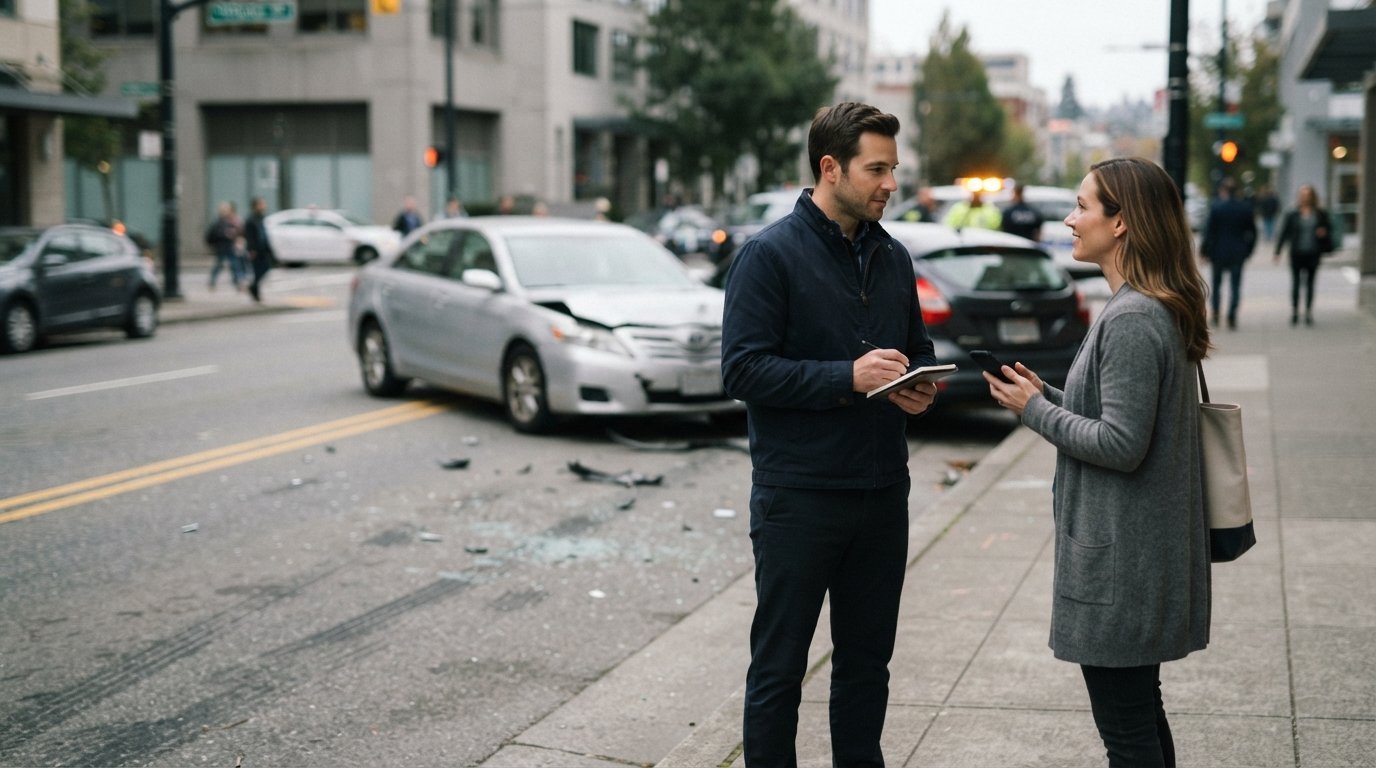
The scene of an accident is not just a place of damage; it is a temporary evidence locker. Witnesses are present, but they are also in a hurry to leave. Your first task is to identify them before they disappear. After ensuring everyone is safe and emergency services have been called, look for people who may have seen the collision. They might be other drivers who stopped, pedestrians, or nearby workers. Approach them politely and calmly, even if you are shaken. Identify yourself and ask if they would be willing to provide their account.
Safety must always come first. Do not step into traffic or put yourself in danger to chase down a witness. If the scene is unsafe, wait for police to arrive and direct traffic. Once you have found a willing witness, ask for their contact information and a brief statement. Be respectful of their time and emotions; they may have witnessed something traumatic. If they are hesitant, explain that their perspective could help prevent unfair blame and ensure insurance companies see the full picture.
Here are the key steps to follow when approaching witnesses at the scene:
- Ensure your own safety and the safety of others before engaging with bystanders.
- Scan the area for potential witnesses, including other drivers, passengers, and pedestrians.
- Approach them with a calm and appreciative demeanor, introducing yourself and explaining why you need their help.
- Ask for their contact details and a brief account of what they saw.
- Thank them for their time and let them know they may be contacted later for a formal statement.
Once you have identified a witness, the next step is to collect the right information. This is not just about getting a phone number; it is about capturing details that will be useful for your claim or legal case.
What Information to Collect from Each Witness
A witness statement is only as good as the details it contains. When you speak with a witness, you need to gather enough information to identify them, contact them later, and understand their perspective. Start with basic contact details: full name, phone number, email address, and, if possible, their home address. If they are driving, note their license plate and vehicle description. This helps corroborate their presence at the scene.
Next, ask them to describe what they saw in their own words. Do not lead them or suggest answers. Simply ask, "What did you see?" and let them talk. Take notes if you can, or record their statement with their permission. Pay attention to key details such as the direction of travel, speed, traffic signals, weather conditions, and any unusual behavior they noticed. If they mention something that supports your account, note it precisely. Also, ask if they are willing to be contacted by your attorney or insurance company in the future.
Here is a checklist of information to collect from each witness:
- Full name and contact information (phone, email, address).
- Their role at the scene (driver, passenger, pedestrian, etc.).
- A brief description of what they saw, in their own words.
- Any photos or videos they may have taken.
- Their willingness to provide a formal statement later.
Collecting this information at the scene is ideal, but it is not always possible. If you are injured or the scene is chaotic, you may only have time to get a name and number. That is okay; the goal is to establish contact so you can follow up later. However, time is of the essence. The longer you wait, the more likely it is that memories will fade or witnesses will become uncooperative.
How Police Reports Capture Witness Accounts
When police arrive at the scene, they will conduct their own investigation. Part of that process involves interviewing witnesses and documenting their statements in the police report. This report is a crucial piece of evidence, but it is important to understand its limitations. Police officers are trained to gather facts, but they may not interview every witness, and their notes may be brief. Sometimes, witnesses leave before the police arrive, or they are not asked for a detailed statement.
If you are able, tell the responding officer that there are witnesses and provide their contact information. The officer may include this in the report. After the accident, you can request a copy of the police report. Review it carefully to see which witnesses were interviewed and what they said. If a witness statement in the report is incomplete or missing, you may need to follow up with the witness yourself or through your attorney.
Keep in mind that police reports are not always admissible as evidence in court, but they are highly influential during insurance negotiations. They provide an official record of the accident and can support your version of events. If a witness gave a statement to the police that contradicts the other driver's account, that is powerful evidence. However, if the witness was not interviewed by the police, their statement may need to be obtained separately.
Why Early Written or Recorded Statements Carry More Weight
Human memory is fragile. Studies have shown that memories can be altered by subsequent information, stress, and time. A witness who is interviewed a week after the accident may have a less accurate recollection than one who is interviewed immediately. This is why early written or recorded statements are so valuable. They capture the witness's account while it is fresh and untainted by outside influences.
If you have the opportunity to record a witness statement at the scene, do so with their permission. A simple smartphone recording can be effective. Alternatively, ask the witness to write down their account and sign it. If you are unable to do this at the scene, follow up as soon as possible. Send the witness a text or email asking them to write down what they remember. The sooner you act, the more reliable the statement will be.
Written or recorded statements also carry more weight because they are harder to dispute. If a witness later changes their story, the earlier statement can be used to impeach their credibility. Insurance companies and courts give more credence to contemporaneous accounts. Therefore, make it a priority to secure a written or recorded statement from each witness as early as possible.
Risks of Contacting Witnesses Later Without Legal Guidance
Contacting witnesses after the accident can be tricky. If you wait too long, witnesses may forget details or be reluctant to get involved. However, reaching out without legal guidance can also backfire. The other driver's insurance company or attorney may try to contact witnesses and influence their statements. If you contact witnesses directly, you might inadvertently say something that could be used against you or be accused of witness tampering.
This is where legal guidance becomes invaluable. An experienced car accident attorney knows how to approach witnesses, obtain statements properly, and preserve evidence. They can also advise you on what to say and what not to say. If you are unsure about how to proceed, it is best to consult with an attorney before contacting witnesses on your own. Many attorneys offer free consultations, and services like GoFreeLegal can connect you with legal help at no cost.
Additionally, if you are injured and unable to gather witness statements yourself, an attorney can handle this for you. They have investigators and resources to locate witnesses and take detailed statements. This is especially important in complex cases where liability is disputed.
Practical Tips for Preserving Witness Evidence
Gathering witness statements is just one part of the puzzle. You also need to preserve other evidence that can corroborate their accounts. Take photos of the scene, including vehicle damage, road conditions, and traffic signals. If the witness took photos or videos, ask them to share copies. Keep a log of all communications with witnesses, including dates and times. This log can be useful if you need to prove that you acted promptly.
Store all evidence in a safe place. If you are working with an attorney, provide them with copies. Do not alter or edit any recordings or written statements. The original is the most valuable. If you have a witness's contact information, follow up with a thank-you note and remind them that they may be contacted by your attorney. This maintains a positive relationship and increases the likelihood they will cooperate.
Finally, be aware that witness statements are not always favorable. A witness may have seen the accident differently than you did. If that happens, do not argue or try to persuade them. Simply document their statement and let your attorney handle it. An honest and accurate record is always better than a biased one.
When to Involve an Attorney or Professional Investigator
If the accident resulted in serious injuries or significant property damage, or if liability is disputed, you should involve an attorney as soon as possible. An attorney can take over the process of gathering witness statements, ensuring that all evidence is properly preserved and that your rights are protected. They can also handle communications with insurance companies and the other driver's legal team.
Professional investigators can be particularly useful if witnesses are hard to locate or if their statements are crucial to your case. They have the skills and resources to conduct thorough interviews and obtain affidavits. If you are unsure whether you need an attorney, consider a free case review. Many law firms offer free consultations, and online platforms can help you connect with attorneys in your area. Remember, submitting a request does not create an attorney-client relationship, but it can give you a clearer picture of your options.
In the end, the steps you take to gather witness statements after a car accident can significantly impact the outcome of your claim. By acting quickly, being organized, and seeking professional guidance when needed, you can strengthen your position and protect your rights.