
Marijuana DUI Charge When There Is No Precise Impairment Standard
Facing a marijuana DUI charge when there is no precise impairment standard? Call (855)-545-2917 for a free, confidential case review and protect your rights.

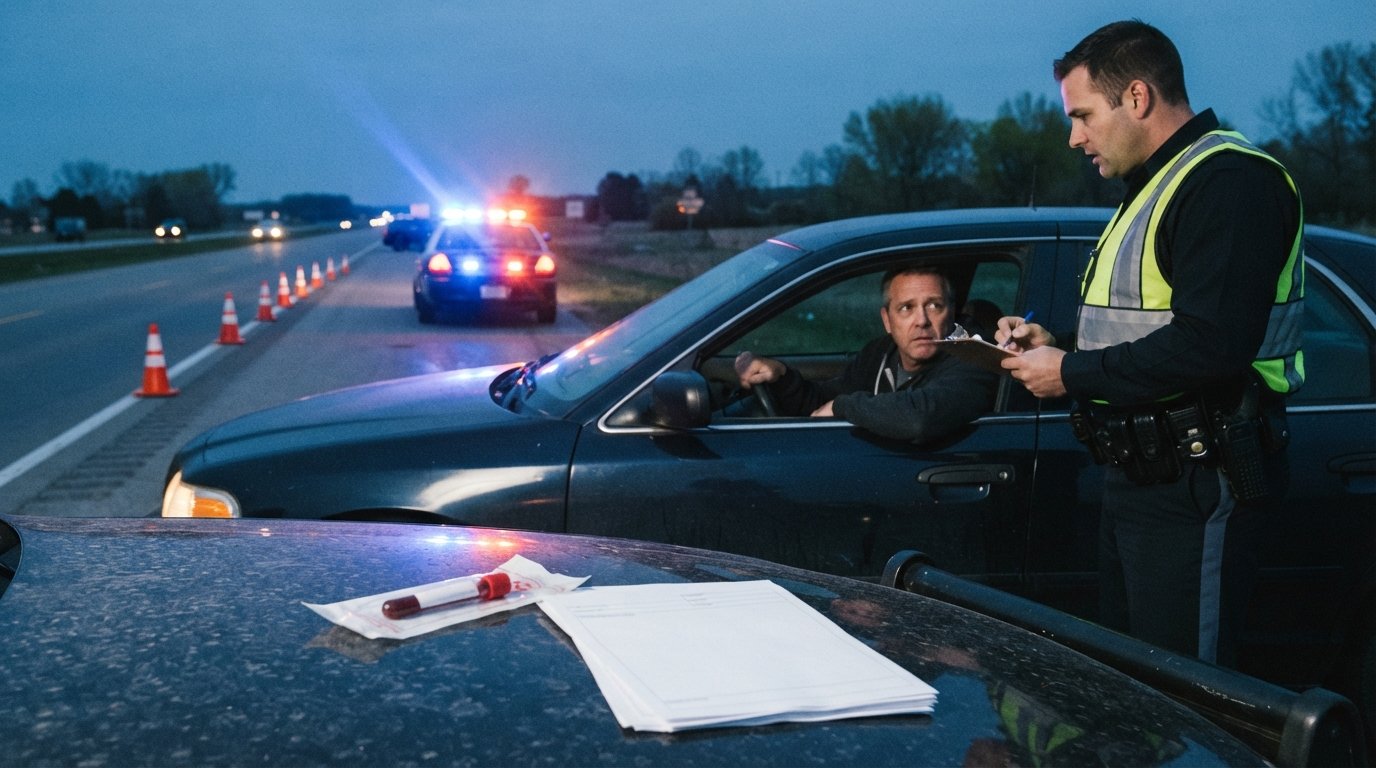
You were pulled over, asked to perform field sobriety tests, and now face a marijuana DUI charge when there is no precise impairment standard to guide the stop, the arrest, or the prosecution. Unlike alcohol, where a blood alcohol concentration of 0.08 percent creates a legal presumption of impairment in every state, cannabis has no equivalent national threshold. That absence of a clear standard cuts both ways: it gives prosecutors room to argue that any detectable THC means you were unsafe, but it also gives your defense attorney powerful angles to challenge the evidence and the science behind it. Understanding how these cases are built, and how they are defended, is the first step toward protecting your rights and your record.
Why THC Testing Does Not Map Neatly to Impairment
The central problem with marijuana DUI prosecutions is that the presence of THC in your blood or urine does not tell anyone how impaired you were at the time of driving. THC is fat-soluble and stores in the body, meaning it can remain detectable for days or even weeks after the last time you used cannabis, long after any psychoactive effect has worn off. A regular user might have a positive blood test on a Monday morning after using on Friday night and still be entirely sober behind the wheel. Yet in many courtrooms, that number becomes the centerpiece of the state's case.
Researchers have repeatedly found that blood THC concentrations correlate poorly with actual driving impairment. The National Highway Traffic Safety Administration has acknowledged that cannabis effects vary widely based on tolerance, dose, potency, and the method of consumption. A person who uses daily may show a high THC level with minimal behavioral effect, while an occasional user might be significantly impaired at a much lower concentration. This variability is precisely why no state has adopted a per se THC limit that functions the way the 0.08 percent BAC limit does for alcohol, and even states that have established numerical thresholds often allow defendants to rebut the presumption.
For a driver facing a marijuana DUI charge when there is no precise impairment standard, this scientific uncertainty is the foundation of the defense. If the prosecution cannot show that a specific THC level equates to a specific level of impairment, then the case must rest on other evidence: the officer's observations, the field sobriety tests, and the circumstances of the stop. Each of those categories can be challenged, and a skilled attorney will scrutinize every piece of it.
Officer Observations and Field Sobriety Evidence
When there is no reliable chemical standard, the arresting officer's testimony becomes the backbone of the prosecution. Officers are trained to document specific indicators of impairment: bloodshot eyes, the odor of marijuana, slurred speech, fumbling with documents, slowed responses, and difficulty following instructions. They also administer standardized field sobriety tests such as the horizontal gaze nystagmus, the walk-and-turn, and the one-leg stand. These tests were validated primarily for alcohol impairment, and their reliability for detecting cannabis impairment is contested even by the agencies that promote them.
Defense challenges to field sobriety evidence often focus on several recurring weaknesses. The tests are subjective, scored by the same officer who already decided to arrest you. Environmental conditions such as uneven pavement, poor lighting, or distracting traffic can skew results. Medical conditions, fatigue, anxiety, and even footwear can affect performance. And crucially, many officers receive limited training specific to cannabis, leading them to interpret nervousness or ordinary mistakes as proof of intoxication.
Body camera and dash camera footage can be a double-edged sword, but it often helps the defense. If the video shows you speaking clearly, answering questions coherently, and walking without stumbling, it undercuts the officer's written narrative. A thorough review of the stop, the questions asked, the instructions given, and the exact scoring of each test is essential. In cases involving a marijuana DUI charge when there is no precise impairment standard, the video record frequently becomes the most persuasive evidence of your actual condition at the time of driving.
Challenging Blood Draw Procedures and Chain of Custody
Many cannabis DUI cases rely on a blood draw, and the procedures surrounding that draw are fertile ground for defense scrutiny. Every state has rules about who may draw blood, where it may be drawn, how the sample must be handled, and how it must be stored and transported to the laboratory. A violation at any link in that chain can compromise the reliability of the result and, in some cases, lead to suppression of the evidence entirely.
Common issues include improper sterilization of the draw site, use of an expired or incorrect collection kit, failure to follow the required preservative and anticoagulant protocols, delayed refrigeration, and gaps in the documented chain of custody. Laboratory analysis itself can be attacked: was the testing method validated, was the equipment properly calibrated, was the analyst qualified, and were confirmatory tests performed? In cannabis cases, the question of what exactly was measured matters enormously, because some tests detect inactive metabolites that have no impairing effect whatsoever.
An attorney should request the full laboratory packet, the chain of custody form, the officer's training records, and the maintenance logs for the testing instrument. Discrepancies between the police report and the lab documents can be powerful at trial. For anyone researching how serious these allegations can become, a guide on what is a felony DUI charge explains how aggravating factors and prior offenses can elevate a case, which is why early and detailed review of the blood evidence matters so much.
State Legalization Differences and Emerging Rules
Cannabis law in the United States is a patchwork, and the rules that apply to drivers vary dramatically depending on where you were stopped. Some states have legalized recreational use for adults, others permit medical use only, and others still criminalize possession entirely. Even among legalization states, the driving laws diverge: some have zero-tolerance statutes that prohibit any detectable THC in a driver's system, while others require proof of actual impairment, and a few have established numerical per se limits with rebuttable presumptions.
This variability creates real confusion for drivers and real opportunities for defense. A visitor from a legal state can be arrested in a zero-tolerance state after consuming cannabis days earlier and testing positive with no impairment at all. Conversely, a driver in an impairment-only state may face a prosecution that struggles to prove impairment without a chemical standard. Courts across the country are still wrestling with how to handle these cases, and appellate decisions continue to shape what evidence is admissible and what instructions juries receive.
Because the legal landscape shifts so frequently, a marijuana DUI charge when there is no precise impairment standard requires an attorney who knows the specific statutes, case law, and local court practices in the jurisdiction where you were charged. National generalizations are a starting point, but the details that decide cases are almost always state-specific.
The Value of Early Legal Review Before Court Dates
The period between your arrest and your first court appearance is critical. Evidence can be preserved or lost, witnesses' memories fade, and deadlines for filing motions begin to run. An early legal review allows an attorney to request discovery, examine the arrest report, identify inconsistencies, and determine whether constitutional issues such as an unlawful stop or an invalid search apply. It also gives you time to understand the potential consequences, including license suspension, fines, mandatory education programs, and the long-term impact on employment or professional licensing.
If you are unsure where to start, a free, confidential case review can connect you with a participating attorney who handles cannabis DUI defense in your area. Services such as CheapInjuryLawyer help injured people and drivers facing charges request a no-cost review and get matched with attorneys, many of whom work on contingency for injury matters. For criminal charges like DUI, fee arrangements vary, but the initial conversation is typically free and carries no obligation. Keep in mind that submitting a request does not create an attorney-client relationship, and you are never required to hire anyone.
Practical steps to take before your first court date include writing down everything you remember about the stop, preserving any text messages or receipts that show your activities and timing, noting any medical conditions or medications that could explain your behavior, and avoiding any statements about the case on social media. These small actions can make a meaningful difference when your attorney begins building a defense around the weaknesses in the prosecution's evidence.
Building a Defense Strategy Around an Uncertain Standard
Because the prosecution cannot lean on a simple number, a strong defense attacks the case at multiple points simultaneously. The stop itself must be justified by reasonable suspicion. The arrest must be supported by probable cause. The field sobriety tests must be administered and scored properly. The blood or urine evidence must be collected, stored, and analyzed according to protocol. And the state must connect all of it to actual impairment at the moment of driving, not merely the presence of a substance in your system.
A well-prepared defense might pursue several of these avenues in parallel:
- Filing motions to suppress evidence obtained through an unlawful stop, arrest, or blood draw.
- Challenging the admissibility of field sobriety test results and the officer's qualifications to interpret them.
- Retaining an independent toxicologist to explain the limitations of THC testing and the absence of a reliable impairment threshold.
- Presenting medical or behavioral explanations for the observations the officer recorded.
- Negotiating with prosecutors when the evidence is weak, sometimes resulting in reduced charges or diversion programs.
Each of these strategies depends on the specific facts of your case, and no attorney can promise a particular outcome. What a thorough review can do is identify the strongest arguments, preserve your rights, and give you a realistic picture of your options before you stand in front of a judge.
If you are facing a marijuana DUI charge when there is no precise impairment standard, do not wait for your court date to arrive before seeking information. The science is unsettled, the laws vary by state, and the evidence against you may be weaker than it first appears. A timely, confidential case review with a knowledgeable attorney is the most reliable way to understand where you stand and what steps to take next.