
Reduced Visibility at an Intersection Car Accident: Who Is at Fault?
When sun glare or fog causes a crash, fault can be split. Get a free case review to protect your rights. Call (855)-545-2917 for help.

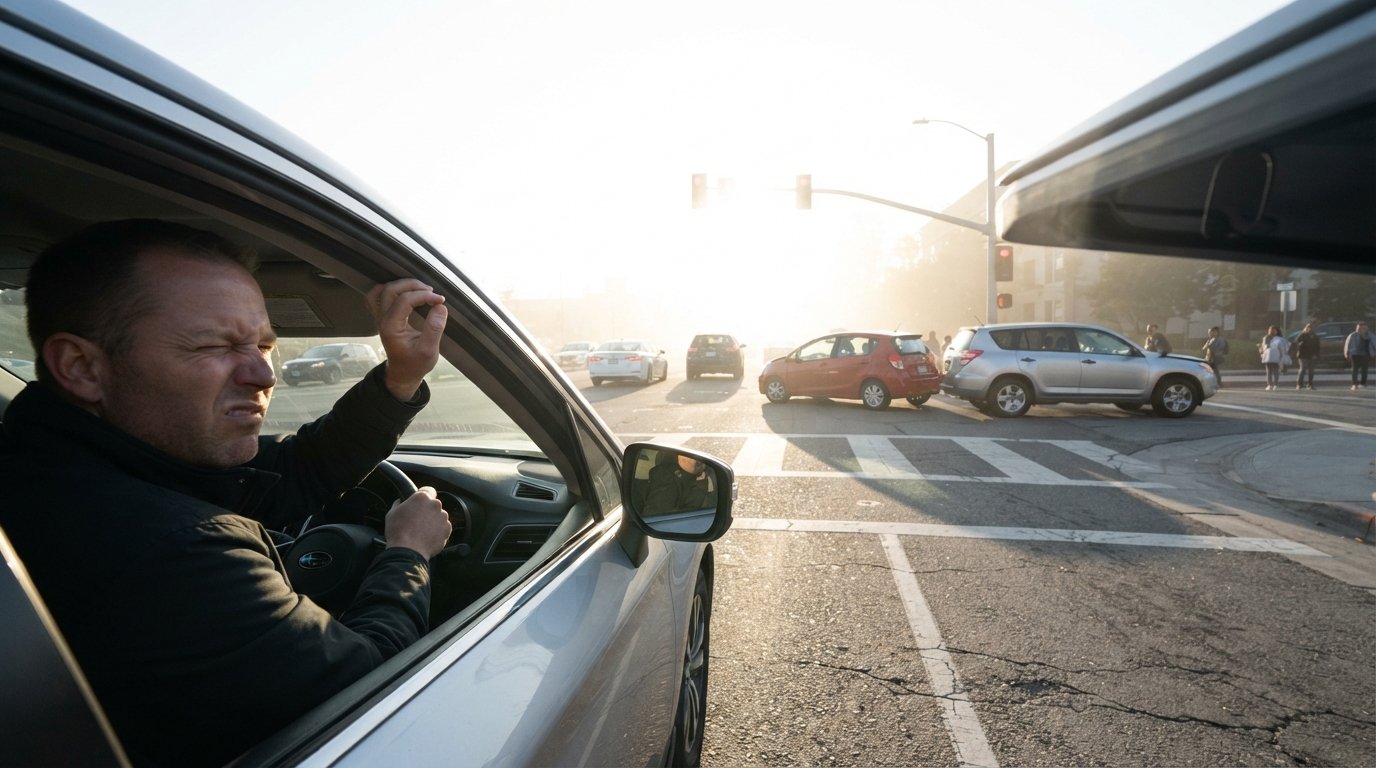
You approach a busy intersection on a bright morning, the sun blazing directly into your windshield. For a split second, you cannot see the traffic light or the car ahead. Then comes the crash. When reduced visibility at an intersection causes a car accident, determining who is at fault becomes a complex puzzle of weather, road design, driver behavior, and legal rules. If you are wondering who pays when sun glare or fog obscures the view, you are not alone. This guide breaks down how fault is evaluated in visibility-related intersection crashes, what evidence matters, and how to protect your rights.
How Reduced Visibility Affects Fault at an Intersection
Reduced visibility does not automatically excuse a driver from liability. In most states, the law requires motorists to operate their vehicles at a speed and with a level of care that accounts for current conditions. If sun glare, fog, rain, or a blocked view makes it impossible to see clearly, a driver may still be held responsible for failing to adjust their driving. The key question is whether a reasonable driver in the same situation would have acted differently, for example by slowing down, yielding, or waiting until the view cleared.
Insurance adjusters and courts look at several factors when visibility is compromised. They examine the time of day, weather reports, sun angle, and the specific location of the sun relative to the driver. They also consider whether the driver took any precautions, such as using sun visors, sunglasses, or defoggers. If a driver admits they could not see but proceeded into the intersection anyway, that admission can weigh heavily against them. On the other hand, if the other driver ran a red light or failed to yield, the visibility issue may become secondary.
Under comparative negligence rules, which most states follow in some form, fault can be split between multiple parties. For example, if you were partially blinded by the sun but the other driver was speeding, a jury or adjuster might assign 30 percent fault to you and 70 percent to the other driver. Your compensation would then be reduced by your percentage of fault. Some states use pure comparative negligence, where you can recover damages even if you are 99 percent at fault, while others use modified comparative negligence, which bars recovery if you are 50 or 51 percent at fault. A handful of states still use contributory negligence, which can bar recovery entirely if you are found even slightly at fault. Because these rules vary by state, it is wise to consult a local attorney who understands your jurisdiction.
Weather, Sun Glare, and Obstructed Views: What Evidence Matters
When visibility is a factor, evidence becomes your strongest ally. The scene of the accident holds clues that can support or undermine a fault claim. For instance, sun glare cases often hinge on the exact time of day and the direction of travel. If you were driving east into a rising sun, the glare may have been unavoidable, but the other driver should also have anticipated it. Photos of the sun's position, shadows, and the dashboard can help reconstruct what you could see. Similarly, fog or heavy rain cases require weather data and road condition reports to show that visibility was indeed poor.
Obstructed views are another common cause of intersection crashes. A large truck parked at the corner, overgrown foliage, a poorly placed sign, or a broken traffic signal can block sightlines. In these situations, fault may extend beyond the drivers to a property owner, a municipality, or a maintenance contractor responsible for keeping intersections safe. For example, if a city failed to trim trees that blocked a stop sign, the city could share liability. Proving this requires evidence such as photos of the obstruction, maintenance records, and expert testimony on sight-distance standards.
Signage and road design also play a role. If a stop sign was missing or a traffic light was malfunctioning, the driver who failed to yield might argue they had no warning. However, drivers are still expected to proceed cautiously when signals are out. Insurance adjusters will look at police reports, traffic camera footage, and witness statements to determine whether the intersection's design contributed to the crash. In some cases, a road design defect can lead to a claim against a government entity, though these claims often have strict notice deadlines and require specialized legal help.
To strengthen your case, gather as much evidence as possible at the scene. If you are able, take photos of the intersection from multiple angles, including the position of the sun, any obstructions, and the location of the vehicles. Collect contact information from witnesses and ask them what they saw. Note the weather conditions and the time of day. If there are traffic cameras nearby, your attorney can request the footage before it is overwritten. Early evidence collection is critical because memories fade and physical conditions change.
Comparative Negligence: Why Responsibility May Be Split
Comparative negligence is the legal principle that allows a judge or jury to assign a percentage of fault to each party involved in an accident. In reduced visibility cases, this often means that both drivers share some responsibility. For instance, one driver may have been blinded by the sun and failed to see a red light, while the other driver may have been speeding. The first driver could be 60 percent at fault for running the light, and the second driver 40 percent at fault for excessive speed. The final compensation would be reduced accordingly.
Insurance companies use comparative negligence to minimize payouts. They may argue that you should have known about the sun glare, that you were not wearing sunglasses, or that you were driving too fast for conditions. Even if the other driver clearly violated a traffic law, the insurer may try to shift some blame to you. This is why it is important to document everything that shows the other driver's negligence and your own reasonable care. For example, if you were driving at or below the speed limit, had your headlights on, and were using your visor, those facts can counter claims that you were careless.
In states that follow modified comparative negligence, being found 50 or 51 percent at fault can bar you from recovering anything. That makes the battle over percentages critical. An experienced attorney can help you present evidence that minimizes your fault and maximizes the other driver's responsibility. They may use accident reconstruction experts, meteorology reports, and witness testimony to build a convincing case. If you are unsure how your state's rules apply, consider requesting a free case review through a service like AutoInjuryAccident's case review guide, which can connect you with attorneys who handle visibility-related crashes.
Gathering Photos and Witness Statements Early
The moments after a crash are chaotic, but the evidence you collect can make or break your claim. Start by checking for injuries and calling 911. Once everyone is safe, take out your phone and photograph the scene. Capture the position of the vehicles, the traffic signals, any skid marks, and the weather conditions. If the sun is in your eyes, take a photo facing the same direction to show the glare. If foliage or a sign blocked your view, photograph that too. These images can later be used to reconstruct the accident and counter insurance company arguments.
Witness statements are equally valuable. Bystanders, other drivers, and passengers may have seen what happened. Ask for their names and phone numbers, and if they are willing, record a quick video statement on your phone. Witnesses can confirm that the sun was blinding, that the other driver ran the light, or that a tree obscured the stop sign. Their accounts can be crucial if the other driver tells a different story. Police officers will also collect statements, but their report may not include every detail, so your own notes matter.
In addition to photos and witnesses, keep a record of everything related to the accident. Save your medical bills, repair estimates, and correspondence with insurance companies. Write down your own recollection of the events as soon as possible, including the time, weather, and what you could see. This contemporaneous record can be powerful evidence if your case goes to court. If you are unable to gather evidence at the scene due to injuries, ask a family member or friend to help, or contact an attorney who can investigate promptly.
How Insurance Adjusters Argue Visibility Cases
Insurance adjusters are trained to find reasons to deny or reduce claims. In reduced visibility cases, they often argue that the driver should have pulled over or slowed down more than they did. They may claim that sun glare is a foreseeable condition and that a reasonable driver would have anticipated it. They might also point to your own actions, such as not wearing sunglasses or failing to use the sun visor, to suggest you were negligent. Some adjusters will argue that the accident was unavoidable, which can reduce the insurer's liability.
To counter these arguments, you need evidence that shows you acted reasonably. For example, if you were driving below the speed limit, had your headlights on, and were using your visor, you can demonstrate that you took precautions. If the other driver was speeding or ran a red light, that is strong evidence of their fault. Adjusters may also try to use your statements against you. If you say "I didn't see the other car because of the sun," they may twist that into an admission of fault. That is why it is best to avoid discussing fault with the other driver or the insurance company until you have spoken with an attorney.
Another tactic adjusters use is to delay or lowball offers, hoping you will accept a quick settlement out of financial pressure. They may argue that your injuries are pre-existing or that the damage to your car is unrelated to the accident. Having an attorney can level the playing field. An attorney can handle communications with the insurer, gather expert evidence, and negotiate a fair settlement. If a lawsuit becomes necessary, they can represent you in court. For those concerned about cost, many personal injury attorneys work on contingency, meaning you pay nothing unless they win. Services like CheapInjuryLawyer offer free case reviews and can connect you with attorneys who work on contingency, making legal help accessible even if you are worried about upfront fees.
Steps to Take After a Reduced Visibility Intersection Crash
If you are involved in a crash where visibility was reduced, your actions in the days and weeks following can significantly impact your claim. Here is a step-by-step guide to protect your rights:
- Ensure safety and call for help. Check for injuries, move to a safe location if possible, and call 911. Police will document the scene and file a report, which is valuable evidence.
- Document the scene. Take photos of everything: vehicles, road conditions, traffic signals, sun position, and any obstructions. Exchange information with the other driver, but do not discuss fault.
- Collect witness information. Ask bystanders for their contact details and a brief statement. Their perspective can corroborate your version of events.
- Seek medical attention. Even if you feel fine, see a doctor. Some injuries, like whiplash, take time to appear. Medical records also link your injuries to the accident.
- Contact a personal injury attorney. Many offer free consultations. An attorney can evaluate your case, explain your state's fault rules, and help you gather evidence before it disappears.
Following these steps can strengthen your position when dealing with insurance companies. Remember that deadlines vary by state, so do not delay. The sooner you act, the easier it is to preserve evidence and build a compelling case.
Fault Rules Vary by State: Why Local Guidance Matters
Every state has its own rules for determining fault in car accidents. Some use pure comparative negligence, some use modified comparative negligence, and a few still use contributory negligence. The threshold for barring recovery differs, as do the deadlines for filing a lawsuit. For example, in a pure comparative negligence state, you can recover damages even if you are 90 percent at fault, but your award will be reduced by your percentage. In a modified state, if you are 50 percent or more at fault, you may get nothing. These distinctions can make or break your claim.
Additionally, some states have specific laws about sun glare and visibility. For instance, a few states require drivers to use headlights when visibility is reduced, such as during rain or fog. Failing to do so can be used as evidence of negligence. Others have statutes that presume fault in certain rear-end or left-turn accidents, which can affect how visibility evidence is weighed. Because these laws are complex and vary widely, it is essential to consult an attorney licensed in your state. They can explain how local courts interpret visibility issues and what evidence carries the most weight.
If you are unsure where to start, consider reaching out to a consumer matching service that can connect you with local attorneys. AutoInjuryAccident.com is not a law firm or lawyer referral service, but it offers a free, confidential case review with participating attorneys. Submitting a form does not create an attorney-client relationship or obligate you to hire anyone. It is simply a way to get information and explore your options. With the right guidance, you can navigate the complexities of a reduced visibility accident and pursue the compensation you deserve.
Reduced visibility at an intersection does not automatically mean you are at fault, nor does it let the other driver off the hook. By understanding how fault is evaluated, gathering strong evidence, and seeking knowledgeable legal advice, you can protect your rights and focus on recovery. Whether the sun was in your eyes or a blind corner caused the crash, the steps you take after the accident matter. Stay informed, document everything, and do not hesitate to ask for help when you need it.