
Out-of-State Driver Accident: Insurance & Jurisdiction Qs
Facing accident with an out of state driver insurance and jurisdiction questions? Get clarity on coverage and deadlines. Call (855)-545-2917 for a free case review.

By Marcus Hale
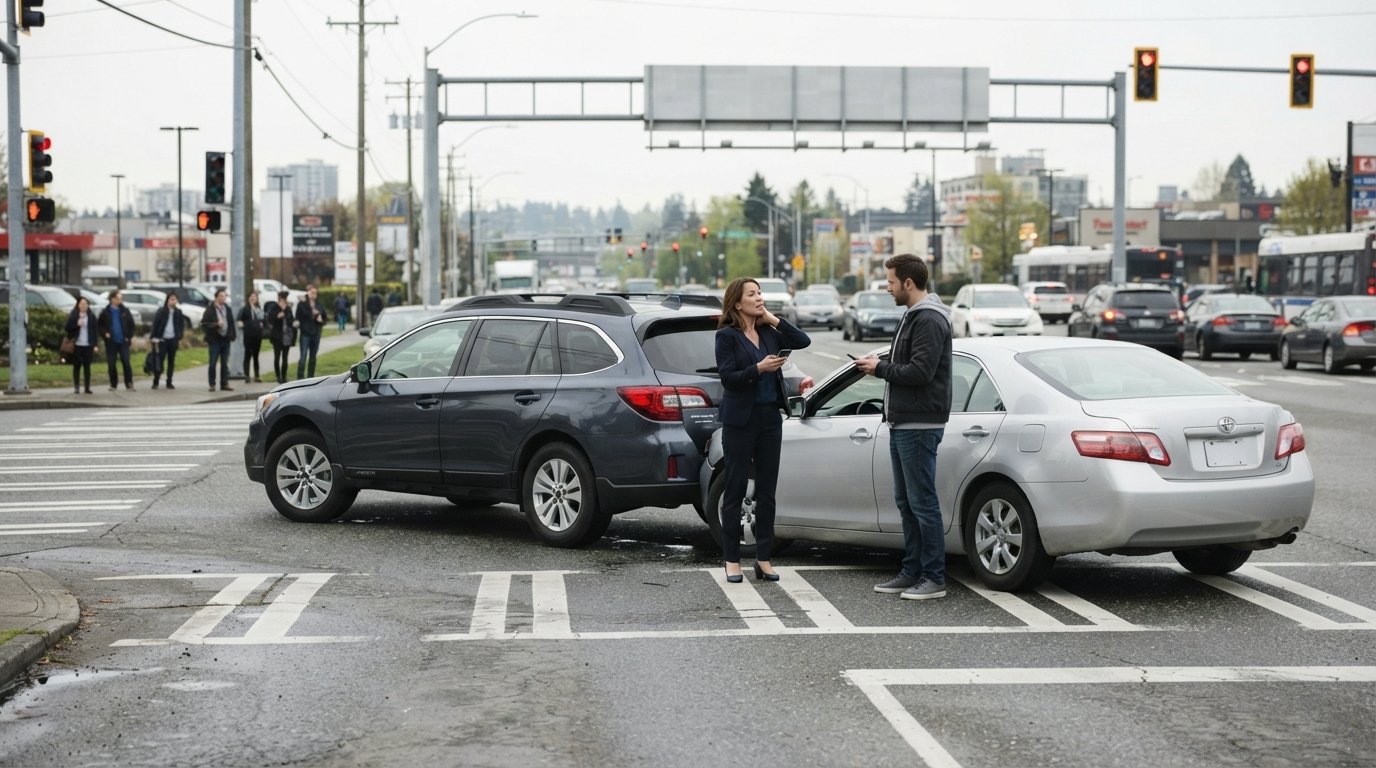
You are sitting at a red light when a car with plates from three states away slams into your rear bumper. Your neck is sore, your car is crumpled, and the other driver is already apologizing and promising to "take care of it." Then you realize the driver lives 800 miles away, their insurance is from a company you have never heard of, and you have no idea which state's rules apply to your injury claim. This scenario plays out every day on highways and city streets across the country, and it raises some of the most confusing questions in car accident law: accident with an out of state driver insurance and jurisdiction questions that can determine whether you get paid fairly or spend months fighting a distant insurer.
The good news is that the legal system has clear answers for most of these situations, even if they are not always intuitive. The bad news is that insurance companies know out-of-state claims are harder for victims to manage, and some adjusters use that complexity to pressure people into low settlements. Understanding how coverage, fault rules, and filing deadlines interact across state lines puts you in a much stronger position, whether you handle the claim yourself or decide to bring in a lawyer.
Which State's Rules Apply After a Crash with an Out-of-State Driver?
The first thing to understand is that two different sets of rules can apply to the same crash. The location of the accident generally controls how fault is determined and what deadlines you must meet for filing a lawsuit. The driver's home state, by contrast, controls how their insurance policy was written and what minimum coverage they were required to carry. When those two sets of rules overlap, you get the jurisdiction questions that make out-of-state claims so tricky.
For example, suppose you are injured in a state that follows a pure comparative negligence rule, meaning you can recover damages even if you are 80 percent at fault, reduced by your share of responsibility. The other driver is from a state that follows modified comparative negligence with a 50 percent bar, meaning you cannot recover anything if you are 50 percent or more at fault. In most cases, the accident state's fault rule applies to your claim, not the other driver's home state rule. This matters because the same facts can produce very different outcomes depending on where the crash happened. Insurance adjusters sometimes try to apply the more favorable rule for their bottom line, and knowing which state's law governs is your first line of defense.
Jurisdiction also affects where you can file a lawsuit if negotiations fail. Generally, you can sue the at-fault driver in the state where the accident occurred, and sometimes in the defendant's home state as well, depending on long-arm statutes and minimum contacts. For most injury victims, filing in the accident state is simpler and more practical, but an experienced attorney will evaluate whether another forum offers advantages. If you are wondering whether you can file a claim in your own state when the other driver is from elsewhere, our guide on filing a claim in your state after an out-of-state driver hit you walks through the key considerations.
How Out-of-State Insurance Coverage Works (and Where It Falls Short)
Every state requires drivers to carry a minimum amount of liability insurance, but those minimums vary dramatically. Some states require as little as $15,000 per person for bodily injury, while others require $50,000 or more. A driver from a low-minimum state who causes a serious crash in a high-minimum state is still bound by their own policy limits, not the higher requirements of the accident state. That gap is one of the most common reasons out-of-state accidents produce inadequate insurance money for victims.
Here is where it gets more complicated. Many policies include a clause that automatically bumps coverage up to the accident state's minimum if that minimum is higher than the driver's home state coverage. Not all policies have this feature, and the language varies by insurer. Some courts enforce these "extension of coverage" clauses, while others have limited their reach. The practical takeaway is that you cannot assume the other driver's policy limits based on their home state's minimums alone. You need to see the actual policy declarations page, and you may need an attorney to interpret whether an out-of-state extension applies.
Another wrinkle involves no-fault states. If you are injured in a no-fault state, your own personal injury protection (PIP) coverage typically pays your medical bills and lost wages first, regardless of who caused the crash. If the out-of-state driver was at fault, you may still have a claim against them for damages that exceed your PIP benefits, but the rules differ from state to state. Conversely, if you are from a no-fault state and are injured in a traditional fault state, the accident state's rules usually control. These cross-state interactions are exactly why jurisdiction questions in out-of-state accidents deserve careful attention rather than guesswork.
Gathering the Right Information at the Scene
What you do in the minutes after the crash can make or break your claim months later. When the other driver is from out of state, you need more information than you would typically collect from a local driver. The goal is to capture enough details to identify the driver, the vehicle, the insurer, and the policy so that your attorney or adjuster can pursue the claim without delays.
Here is a checklist of the essential information to gather at the scene, assuming you are physically able to do so safely:
- Photograph the other driver's license, registration, and insurance card, including the front and back of each document.
- Record the vehicle's license plate, state of issue, make, model, and VIN if visible through the windshield.
- Ask for the driver's current address and phone number, and confirm they match the documents (out-of-state drivers sometimes have outdated addresses on their licenses).
- Note the insurance company name, policy number, and the named insured on the policy, which may differ from the driver.
- Get contact information for any witnesses and ask them to describe what they saw in their own words.
If the other driver refuses to share information or claims they do not have insurance, do not argue. Call the police and let the responding officer document the scene. A police report creates an official record that identifies the out-of-state driver and their insurance details, which is invaluable if the driver later disputes the claim or disappears. Also, take photos of the entire scene, including road signs, traffic signals, and vehicle positions, because an adjuster 800 miles away will rely on images to evaluate fault.
Filing Against Your Own Uninsured or Underinsured Motorist Coverage
When the at-fault driver's policy is too small to cover your injuries, or when they have no insurance at all, your own uninsured motorist (UM) or underinsured motorist (UIM) coverage becomes the safety net. UM coverage pays when the other driver has no insurance, and UIM coverage pays when their insurance limits are lower than your damages. These coverages are optional in some states and mandatory in others, so check your policy declarations page to see what you purchased.
Filing a UM or UIM claim is not always straightforward, especially when the at-fault driver is from out of state. Your insurer may argue that the other driver's policy should pay first, or that the accident state's rules limit your recovery. In most states, UIM coverage applies only after the at-fault driver's policy has been exhausted, which means you may need to settle with the out-of-state insurer before your own insurer will pay the difference. An attorney can help you coordinate these claims so that one settlement does not inadvertently waive your rights against the other policy.
There is also a practical timing issue. Some policies require you to notify your insurer of a potential UM or UIM claim within a certain period, and some require written consent before you settle with the at-fault driver. If you settle with the out-of-state driver's insurer without notifying your own insurer, you could jeopardize your UIM benefits. Read your policy carefully or have a lawyer review it before signing any release.
State-Specific Deadlines and Filing Requirements
Every state sets a statute of limitations for personal injury lawsuits, and those deadlines range from one year to six years depending on where the crash happened. If you miss the deadline, you lose your right to sue, no matter how strong your case is. When the at-fault driver is from out of state, the deadline analysis can become more complex because some states have tolling provisions that pause the clock while the defendant is outside the state. Other states have repealed those provisions or limited them. Do not assume you have extra time just because the other driver lives far away; in most cases, the accident state's deadline applies and it does not pause.
Beyond the statute of limitations, there are other deadlines that can affect your claim. Many states require you to file a crash report within a certain number of days, and insurance policies often require prompt notice of a claim. If you are dealing with a government vehicle or a commercial truck, special notice requirements may apply, sometimes as short as 60 or 90 days. An out-of-state driver in a rental car or a commercial vehicle adds another layer because the rental company or employer may have its own claims process and deadlines.
If you are unsure which deadlines apply to your situation, a free, confidential case review can clarify your options without obligation. Platforms like LawyerOffer connect injury victims with attorneys who can evaluate jurisdiction questions and filing deadlines, and they can help you understand whether you have a viable claim before time runs out.
When to Bring in an Attorney for an Out-of-State Accident
Not every out-of-state accident requires legal representation. If the crash was minor, the other driver's insurance is adequate, and liability is clear, you may be able to handle the claim yourself. But several red flags suggest you should at least consult a lawyer before accepting any settlement.
Consider legal help if any of the following apply:
- The other driver's policy limits appear low compared to your medical bills and lost wages.
- The other driver's insurer is disputing fault or delaying the investigation.
- You have significant injuries, ongoing treatment, or uncertain future medical needs.
- The accident involved a commercial vehicle, rental car, or government vehicle.
- You are unsure which state's law applies to your claim or which deadlines you must meet.
An attorney can investigate the out-of-state driver's policy, determine whether extension-of-coverage clauses apply, coordinate UM/UIM claims, and file suit in the correct jurisdiction if negotiations stall. Most personal injury attorneys handle out-of-state accident cases on a contingency fee basis, meaning you pay nothing upfront and the fee comes out of any recovery. That structure makes a consultation low-risk, even if you ultimately decide to handle the claim yourself.
Practical Steps to Protect Your Claim
The weeks after an out-of-state accident are a critical window. Start by reporting the crash to your own insurer, even if you were not at fault. Provide the facts and the other driver's information, but do not give a recorded statement to the other driver's insurer without understanding how it will be used. Keep a folder with the police report, medical records, repair estimates, photos, and all correspondence with insurers. Document your symptoms and treatment in a journal, because soft-tissue injuries and pain levels can be hard to prove later.
If an adjuster from the other driver's insurer calls and offers a quick settlement, resist the urge to accept it on the spot. Initial offers are often based on incomplete information and may not account for future medical costs or lost earning capacity. You are not required to give a recorded statement, and you are not required to accept the first offer. Take notes on what the adjuster says, including any statements about fault or coverage, and consult an attorney if the offer seems low or the insurer becomes evasive.
Finally, remember that the complexities of accident with an out of state driver insurance and jurisdiction questions are not something you have to navigate alone. A free case review can tell you whether you have a claim, which state's rules likely apply, and what steps to take next. Whether you hire a lawyer or not, understanding the interplay between the other driver's insurance, your own coverage, and the accident state's deadlines is the best way to protect your recovery.