
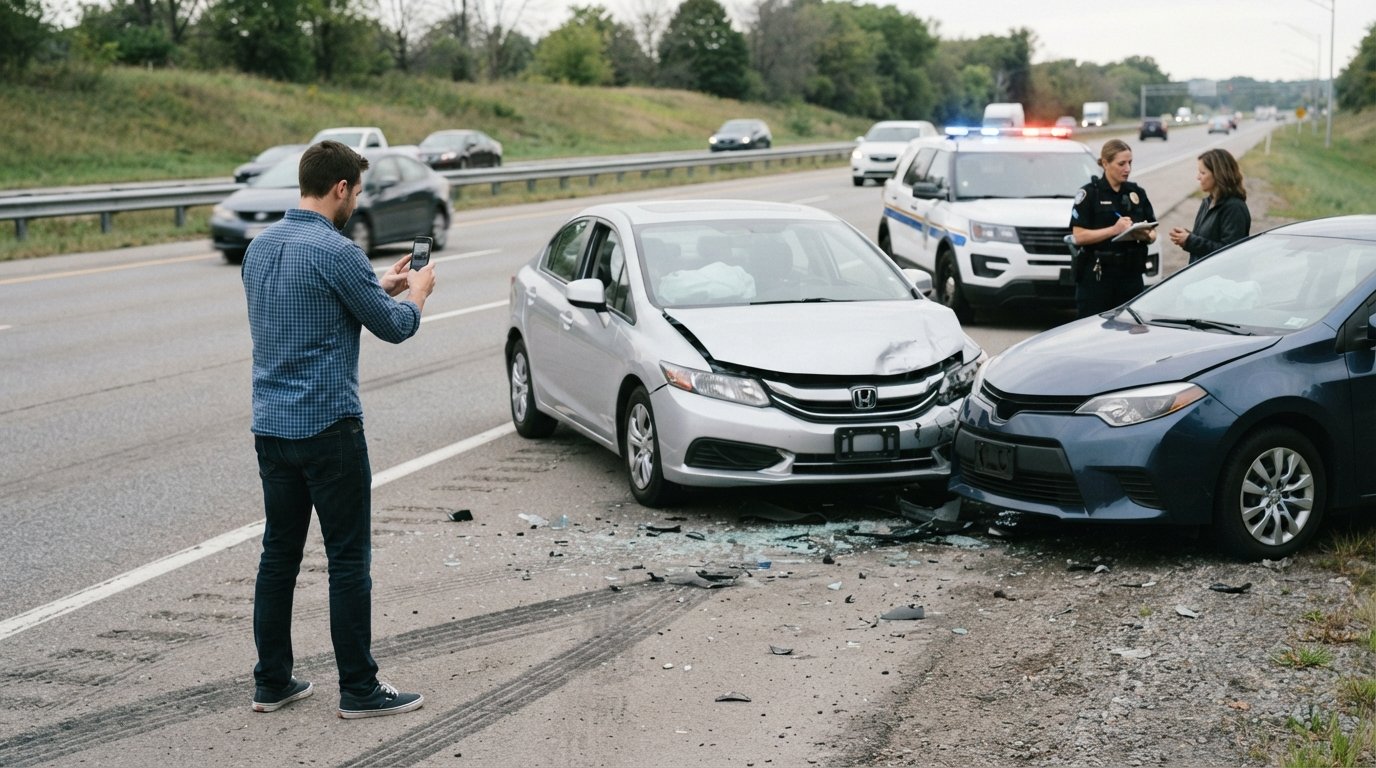
Car Accident Evidence Checklist: Photos, Witnesses, Police Report
A car accident evidence checklist for photos, witnesses, and the police report helps you protect your claim and pressure insurers for a fair outcome.

By Hannah Briggs
A car accident can leave you shaken, injured, and unsure what to do next. In the minutes and days that follow, the evidence you gather (or fail to gather) can shape how insurers evaluate your claim and whether a fair settlement is possible. That is why a simple car accident evidence checklist covering photos, witnesses, and the police report matters so much. It gives you a clear plan when your mind is racing and your hands are shaking.
This guide walks you through what to collect, why each piece of evidence carries weight, and how to preserve it before it disappears. It also explains how a free, confidential case review can help you understand your options. AutoInjuryAccident.com is a consumer matching site, not a law firm or lawyer referral service, and nothing here is legal advice. Still, the steps below will help you protect your interests while you decide what comes next.
Start With Safety, Then Move to Evidence
Before you reach for your phone camera, make sure everyone is out of harm's way. Move to the shoulder or sidewalk if you can do so safely, turn on hazard lights, and call 911 if anyone appears injured. Evidence collection only works if you are not standing in traffic while doing it. Once the scene is stable, your priority shifts to documenting what happened while memories are fresh and physical clues are still in place.
Time is your enemy after a crash. Skid marks fade, debris gets swept away, and witnesses drive off. The sooner you begin gathering information, the stronger your record will be. Even if you feel fine in the moment, adrenaline can mask pain, so treat the scene as if a serious claim might develop later.
Your Car Accident Evidence Checklist: Photos, Witnesses, Police Report
Think of your evidence as three pillars: what you can see (photos and video), what others can say (witnesses and statements), and what officials can document (the police report and related records). Each pillar supports the others. A photo proves the dent; a witness explains how it got there; a police report ties it together with an official account. Missing one pillar weakens the whole structure.
Below is a practical sequence you can follow at the scene and in the days afterward. Adapt it to your situation, but try to cover every item.
- Photograph everything. Take wide shots of the scene, then close-ups of damage, injuries, and road conditions. Capture license plates, street signs, and traffic signals.
- Collect witness information. Get names, phone numbers, and email addresses from anyone who saw the crash, including passengers in other vehicles.
- Call the police and get the report number. An official report creates a neutral record and often includes insurance and contact details for all drivers.
- Exchange information carefully. Share your name, insurance, and vehicle details, but avoid discussing fault or apologizing at the scene.
- Seek medical attention and keep records. Even a routine exam creates documentation linking your injuries to the crash.
Each of these steps feeds into the others. For example, the police report will list the officers and parties involved, which helps you request the full report later. Photos you take can corroborate or challenge statements in that report. Witness contact information lets an attorney follow up if a disputed fact becomes central to your claim.
Photos and Video: The Most Immediate Evidence
Your phone is the most powerful evidence tool you have at the scene. Start with wide-angle shots that show the position of all vehicles, lane markings, and traffic controls. Then move closer: damage to each vehicle, debris on the road, and any visible injuries. If there are skid marks or gouges in the pavement, photograph them with something for scale, like a shoe or a coin.
Do not forget the less obvious shots. Traffic lights, stop signs, yield signs, and crosswalks help establish right-of-way. Weather and lighting conditions matter too, especially in cases involving poor visibility. If you have a dashcam, preserve the footage immediately, because many systems overwrite old files. The same goes for nearby surveillance cameras at businesses or homes; note their locations so you or your attorney can request the footage before it is erased.
Witnesses: Independent Voices Carry Weight
Witnesses can be the difference between a disputed claim and a clear one. A neutral bystander who saw the other driver run a red light is far more persuasive than two drivers pointing fingers at each other. Approach witnesses politely, ask if they would be willing to share their contact information, and write down what they say in their own words if possible.
Passengers in your own vehicle can also provide statements, though insurers may view them as biased. That is why independent witnesses matter so much. If a witness is reluctant to get involved, simply ask for a phone number and let a professional follow up later. Never pressure anyone or offer payment for a statement.
The Police Report: An Official Anchor for Your Claim
In most jurisdictions, officers who respond to a crash will file a report that includes the date, time, location, parties involved, and a brief narrative. The report often contains insurance information, vehicle descriptions, and notations about citations or injuries. It becomes a foundational document that insurers and attorneys rely on.
Ask the responding officer for the report number before you leave the scene. In the days that follow, request a copy from the appropriate agency, which may be a local police department, county sheriff, or state highway patrol. Review it carefully for errors, because mistakes about lane position or direction of travel can quietly undermine your claim. If you spot an error, you can often request a correction or add a supplemental statement.
For crashes involving commercial vehicles, evidence collection can be more complex because trucking companies have their own investigators and preservation obligations. If your case involves a large truck, our guide on truck accident claim differences from car crash cases explains how those claims diverge and why acting quickly matters even more.
Other Evidence Worth Gathering
Photos, witnesses, and the police report form the core of your evidence, but other records can strengthen your position. Medical documentation links your injuries to the crash. Repair estimates and property damage records establish the cost of fixing your vehicle. If you missed work, pay stubs or employer letters can support a lost-wages claim.
Keep a folder, physical or digital, for everything related to the crash. Include receipts, prescription lists, and a simple journal describing your pain, treatment, and daily limitations. Insurance adjusters often scrutinize whether there are gaps in treatment, so consistent records help tell a coherent story.
- Medical bills, discharge papers, and treatment notes
- Vehicle repair estimates and towing receipts
- Pay stubs or letters documenting missed work
- Photos of visible injuries on the day of the crash and in the weeks after
- Any correspondence with insurers, including emails and letters
These records may seem minor on their own, but together they paint a picture of how the crash affected your life. That picture is what supports a demand for compensation.
Common Mistakes That Weaken Evidence
One of the most common mistakes is apologizing at the scene. A simple "I am sorry" can be interpreted as an admission of fault, even if you only meant to express sympathy. Another is posting about the crash on social media. Insurers and defense attorneys do monitor public posts, and a photo of you hiking two weeks after the crash can be used to argue your injuries are not serious.
Failing to call the police is another misstep. Without an official report, you may struggle to prove the other driver's identity or insurance coverage. Leaving the scene before gathering witness information is also risky, because those witnesses may never be found again. Finally, delaying medical treatment creates a gap that insurers love to exploit.
If you have already made one of these mistakes, do not panic. Evidence can sometimes be reconstructed through repair records, surveillance footage, or witness statements collected later. An experienced attorney can assess what is salvageable and what alternatives exist.
How an Attorney Uses Your Evidence
Once you have gathered your evidence, an attorney can evaluate it in the context of your state's fault rules and insurance requirements. In some states, fault is allocated proportionally, meaning your recovery may be reduced by your share of responsibility. In others, a strict bar applies if you are found even slightly at fault. These rules vary widely, which is why local guidance matters.
An attorney can also take steps you cannot, such as issuing preservation letters to businesses with surveillance cameras, subpoenaing phone records in distracted driving cases, and hiring accident reconstruction experts. Your evidence becomes the foundation for those efforts. The stronger your initial documentation, the more options you have.
If you are looking for legal help, you can use a trusted resource like AttorneyDirectory.Lawyer to find lawyers in your city and request a quote. AutoInjuryAccident.com offers a similar path through its nationwide network, with a free, confidential case review and no obligation to hire. Submitting a form does not create an attorney-client relationship, and you remain in control of every decision.
Timelines and Deadlines to Keep in Mind
Every state sets a statute of limitations for personal injury claims, typically ranging from one to three years, though some are shorter or longer. Missing that deadline can bar your claim entirely, no matter how strong your evidence is. Insurance policies also contain notice requirements, and some government entities impose very short windows if a public vehicle or roadway is involved.
Because these rules vary, it helps to speak with a lawyer early. Even a brief consultation can clarify which deadlines apply to you and what evidence still needs to be collected. Waiting months to act can mean losing access to witnesses, footage, or records that would have made your case significantly stronger.
Frequently Asked Questions
What if the police did not come to the scene?
In minor crashes, officers may decline to respond. You can still file a report yourself, often online or at a local station. Gather your own photos, witness information, and a written account, and report the crash to your insurer promptly.
How long should I keep my evidence?
Keep everything until your claim is fully resolved and any appeal periods have passed. That could mean years in some cases. Digital copies are easy to store, so there is little reason to discard anything.
Can I gather evidence if I was partially at fault?
Yes. Even if you share some responsibility, evidence can reduce your percentage of fault and preserve part of your recovery in states that allow proportional fault. Do not assume your claim is worthless without a professional review.
Protecting Your Claim Starts With a Checklist
A car accident evidence checklist is not about turning you into an investigator. It is about making sure the facts of your crash are captured before they fade. Photos, witness statements, and the police report form a trio that insurers and attorneys take seriously. Add medical records and repair estimates, and you have a file that supports your version of events.
If you are unsure whether your evidence is enough, consider a free, confidential case review through AutoInjuryAccident.com. There is no cost, no obligation, and no pressure to hire anyone. Take the first step toward understanding your options today.