
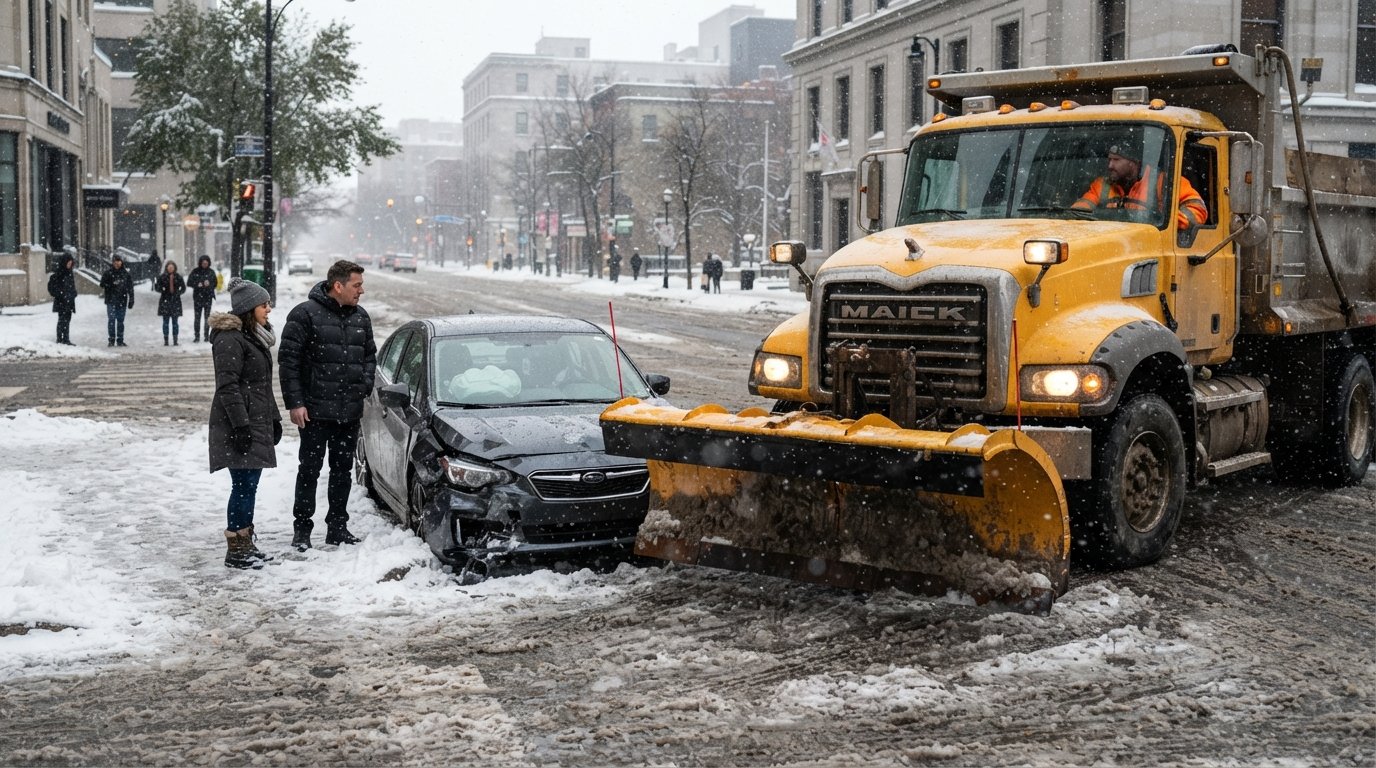
Municipal Snowplow Accident Claim: Who Pays for Injuries?
Injured by a city snowplow? Understand who pays for injuries in a municipal snowplow accident claim. Call (855)-545-2917 for a free case review.

Getting hit by a snowplow is a jarring, often frightening experience. The sheer size and weight of these vehicles mean that even a low-speed collision can cause serious damage and severe injuries. When the snowplow is owned and operated by a city, county, or state government, the path to recovery becomes significantly more complex than a typical car accident claim. You are no longer dealing with a private driver and their insurance company; you are dealing with a public entity that operates under a web of legal protections, strict procedural rules, and specialized claims processes. Understanding who pays for injuries in a municipal snowplow accident claim is essential, but it requires navigating government immunity, notice deadlines, and shared fault rules that vary widely by state.
Government Immunity and the Scope of Employment
One of the first questions in any municipal snowplow accident claim is whether the government can be sued at all. Under the legal doctrine of sovereign immunity, governments are generally protected from lawsuits unless they explicitly consent to be sued. Fortunately, most states and municipalities have enacted limited waivers of this immunity for certain types of negligent conduct, including the operation of motor vehicles. However, these waivers are often narrow and come with significant exceptions. For example, many jurisdictions maintain immunity for discretionary functions, such as the decision of when and where to deploy snowplows or how much salt to use. If the accident resulted from a policy decision rather than the driver's negligent operation, the government may be shielded from liability.
Another critical factor is whether the snowplow driver was acting within the scope of their employment at the time of the crash. If the driver was on duty, performing official snow removal duties, the government employer is typically responsible for the driver's negligence under a legal principle called respondeat superior. But if the driver was off-duty, using the plow for personal errands, or engaged in an unauthorized detour, the government might argue it is not liable. Proving scope of employment often requires examining work schedules, GPS data, and dispatch records. In many cases, the lines can blur, especially during extended snow events when drivers work long shifts. An attorney can help you gather the evidence needed to establish that the driver was acting for the public entity at the time of the collision.
Notice of Claim Deadlines and Exceptions
If you believe a municipal snowplow caused your injuries, you cannot simply file a lawsuit the way you would against a private party. Most states require that you first file a formal notice of claim with the government entity within a short window of time, often as little as 60 to 180 days from the date of the accident. This notice must typically include specific details about the incident, the injuries sustained, and the amount of damages sought. Failing to file a timely and proper notice can permanently bar your claim, regardless of how strong the evidence is. These deadlines are strict and rarely excused, so it is critical to act quickly and consult with an attorney who understands the local rules.
There are some exceptions and variations. Some states have shorter deadlines for certain types of claims, while others may allow a longer period if the government had actual notice of the incident. For example, if a police report was filed immediately after the accident, that might satisfy the notice requirement in some jurisdictions, but you should never assume. Additionally, if the claim involves a state-owned snowplow on a federal highway, different rules may apply. Because these deadlines are so unforgiving, it is wise to seek legal guidance as soon as possible after the accident. A free case review can help you understand the specific deadlines that apply to your situation and ensure that your claim is filed correctly and on time.
Evidence: Lights, Signage, and Road Maintenance
Building a successful municipal snowplow accident claim requires solid evidence. The government will have teams of lawyers and investigators working to protect its interests, so you need to level the playing field. Key evidence often includes the snowplow's lights and signage. Most jurisdictions require snowplows to be equipped with flashing lights, reflective tape, and slow-moving vehicle signs. If the plow was not properly lit or marked, that can be strong evidence of negligence. Additionally, you should document the road conditions, including whether the plow was spreading salt or sand, whether it was traveling at a safe speed for the conditions, and whether it was following its designated route. Photos and videos from the scene, witness statements, and the police report are all valuable.
Road maintenance records can also play a role. If the accident was caused not by the plow driver directly but by the government's failure to maintain the road (e.g., leaving large snowbanks that obstruct visibility), you may have a claim based on negligent road maintenance. However, these claims often face additional immunity hurdles. An experienced attorney can help you obtain these records through the discovery process and work with accident reconstruction experts to prove how the accident happened and who was at fault.
Insurance and Immunity Rules That Vary by State
Insurance coverage for municipal snowplow accidents is another area of variability. Some government entities are self-insured, meaning they pay claims out of a dedicated fund, while others purchase commercial insurance. In either case, the government may try to limit its payout or deny the claim based on immunity. Many states have caps on the amount of damages you can recover from a government entity, even if you prove negligence. These caps can be as low as $100,000 or $250,000, and they may apply per person or per accident. Additionally, some states have special rules for snow removal activities, providing broader immunity during declared snow emergencies. It is essential to understand the specific laws in your state, as they can dramatically affect the value of your claim and your ability to recover anything at all.
Because these rules are so state-specific, there is no one-size-fits-all answer to who pays for injuries in a municipal snowplow accident. A local attorney who handles government claims can evaluate your case under the applicable state law and help you pursue the compensation you deserve. If you are unsure where to start, you can request a free, confidential case review through a service like delivery van accident claim liability to connect with attorneys who understand complex liability issues. For those seeking a low-cost way to explore their legal options, CheapInjuryLawyer.com offers a free case review and attorney-matching service that can help you find a lawyer on a contingency basis.
How Fault May Be Shared with Other Drivers
Municipal snowplow accidents are not always the sole fault of the plow driver. In many cases, other drivers may share responsibility. For example, if you were following too closely, driving too fast for conditions, or failed to yield, the government may argue that your own negligence contributed to the accident. Most states follow a comparative fault system, meaning your recovery can be reduced by your percentage of fault, and in some states, if you are more than 50% at fault, you may be barred from recovering anything. Additionally, other parties, such as private contractors hired by the city to plow roads or the manufacturer of a defective snowplow part, could also be liable. Determining fault in a multi-party snowplow accident requires a thorough investigation and often expert testimony.
Insurance companies for the government will aggressively investigate to shift blame onto you or other drivers. They may surveil your social media, interview witnesses, and hire accident reconstructionists. Having your own attorney is crucial to protect your rights and ensure that all responsible parties are held accountable. Remember that you are not required to give a recorded statement to the government's insurer without legal advice, and doing so can harm your claim.
Steps to Take After a Municipal Snowplow Accident
If you are involved in an accident with a municipal snowplow, the actions you take immediately afterward can significantly impact your claim. Here is a step-by-step guide to protect your rights:
- Ensure your safety and call 911. Move to a safe location if possible, and wait for police and medical help. Even if you feel fine, some injuries like whiplash or concussions may not be immediately apparent.
- Document the scene. Take photos of the vehicles, the road conditions, the snowplow's lights and signage, and any visible injuries. Get contact information from witnesses and the plow driver, including the vehicle number and the government agency.
- Seek medical attention. Your health is the priority. Additionally, medical records serve as crucial evidence linking your injuries to the accident.
- File a notice of claim promptly. As discussed, these deadlines are short. Contact an attorney to help you prepare and file the notice correctly.
- Avoid giving statements to insurance adjusters. You are not obligated to provide a recorded statement to the government's insurer. Politely decline and consult with your lawyer first.
Following these steps can help preserve evidence and protect your legal rights. However, even with careful action, dealing with a government entity can be overwhelming. That is why many people choose to work with an attorney who has experience in municipal liability claims.
How an Attorney Can Help with Your Municipal Snowplow Accident Claim
Hiring an attorney for a municipal snowplow accident claim is not just about leveling the playing field; it is about navigating a complex legal landscape that is filled with pitfalls for the unprepared. An experienced attorney can investigate the accident, gather evidence, identify all liable parties, and ensure that all notice deadlines are met. They can also negotiate with the government's insurance adjusters and, if necessary, file a lawsuit in the appropriate court. Many personal injury attorneys work on a contingency fee basis, meaning you pay nothing upfront and only pay if they win your case. This makes legal representation accessible to injury victims who might otherwise be unable to afford it.
If you are unsure whether you have a case, consider scheduling a free consultation. During this consultation, an attorney can evaluate the strength of your claim, explain the applicable laws in your state, and outline your options. There is no obligation to hire, and the information can be invaluable in helping you make informed decisions about your future.
In the aftermath of a municipal snowplow accident, the question of who pays for injuries is rarely simple. Government immunity, strict notice deadlines, and shared fault rules all come into play. By understanding these issues and seeking timely legal guidance, you can improve your chances of recovering the compensation you need for medical bills, lost wages, and pain and suffering. Do not wait until it is too late; take action to protect your rights today.