
Tow Truck or Roadside Assistance Accident Liability Claim
Tow truck or roadside assistance accident liability claim rules can be complex. Call (855)-545-2917 for a free case review and clarity on fault and deadlines.

A flashing yellow light on the shoulder of a dark highway can be a beacon of help or the start of a complicated legal fight. When a tow truck or roadside assistance vehicle is involved in a crash, the usual rules of fault often bend in unexpected directions. You may be dealing with a private company, a government agency, a distracted passing driver, or a combination of all three. Understanding who may be responsible, what evidence matters, and how to protect your rights is the first step toward a fair recovery.
This guide breaks down the liability landscape for tow truck and roadside assistance accidents. It covers the difference between public and private operators, the safety rules that apply to roadside workers, how commercial insurance responds, and the special deadlines that can derail a claim against a city or state. It is educational only and not legal advice. Every state sets its own fault rules and filing deadlines, so a free, confidential case review with a participating attorney is often the fastest way to learn where you stand.
Who Can Be Held Liable in a Tow Truck or Roadside Assistance Crash
Liability in these cases rarely lands on one party alone. A tow truck operator might have parked without proper warning devices, a passing motorist might have been texting, and the municipality that owns the road might have failed to maintain a safe shoulder. Each of those parties can share fault, and the legal theories that apply to each are different. The key is to identify every potentially responsible party early, before evidence disappears and memories fade.
The most common candidates for liability include the tow truck driver, the towing company that employs the driver, the roadside assistance provider (such as a motor club or dispatch network), the driver who struck the scene, and the government entity responsible for road design, signage, or maintenance. In some cases, a vehicle manufacturer or a parts supplier may be liable if a defective warning light or hydraulic system contributed to the crash. Sorting through these layers is exactly the kind of work a personal injury attorney does before filing a claim.
Government Versus Private Tow Operator Liability
When the tow truck is owned by a city, county, or state agency, the claim becomes a claim against a public entity. That changes almost everything. Public entities are protected by sovereign immunity, which limits when and how they can be sued. Many jurisdictions require a formal notice of claim within a short window, sometimes as little as 60 to 180 days, and some cap the amount of damages a plaintiff can recover. If you miss the notice deadline, you may lose the right to sue entirely, even if the government driver was clearly at fault.
Private tow operators play by different rules. They are generally subject to ordinary negligence law, meaning you must show that the driver or company failed to exercise reasonable care and that the failure caused your injuries. A private company can be sued for vicarious liability if its employee was acting within the scope of employment, and for negligent hiring or training if the company put an unsafe driver on the road. The distinction matters because the evidence you need, the insurance policies involved, and the filing deadlines differ sharply between public and private defendants.
Commercial Auto Policies and Employer Responsibility
Most tow trucks and roadside assistance vehicles are covered by commercial auto policies, which typically carry higher limits than personal auto policies. That is good news for injured victims, but it also means you will be dealing with a commercial insurer that has a team of adjusters and lawyers protecting its interests. The employer may be liable under respondeat superior for the driver's negligence, and may also face direct claims for failing to maintain the vehicle, failing to train the driver, or pushing drivers to work unsafe hours.
Commercial policies often include coverage for hired and non-owned vehicles, which can matter if a motor club dispatches an independent contractor. Determining whether the driver was an employee or an independent contractor is a central question in many tow truck claims. Companies sometimes misclassify workers to avoid liability, and courts look at factors such as control over schedules, tools, and supervision. An attorney can help you untangle that relationship and identify every policy that might respond.
Roadside Worker Safety Rules and Warning Device Requirements
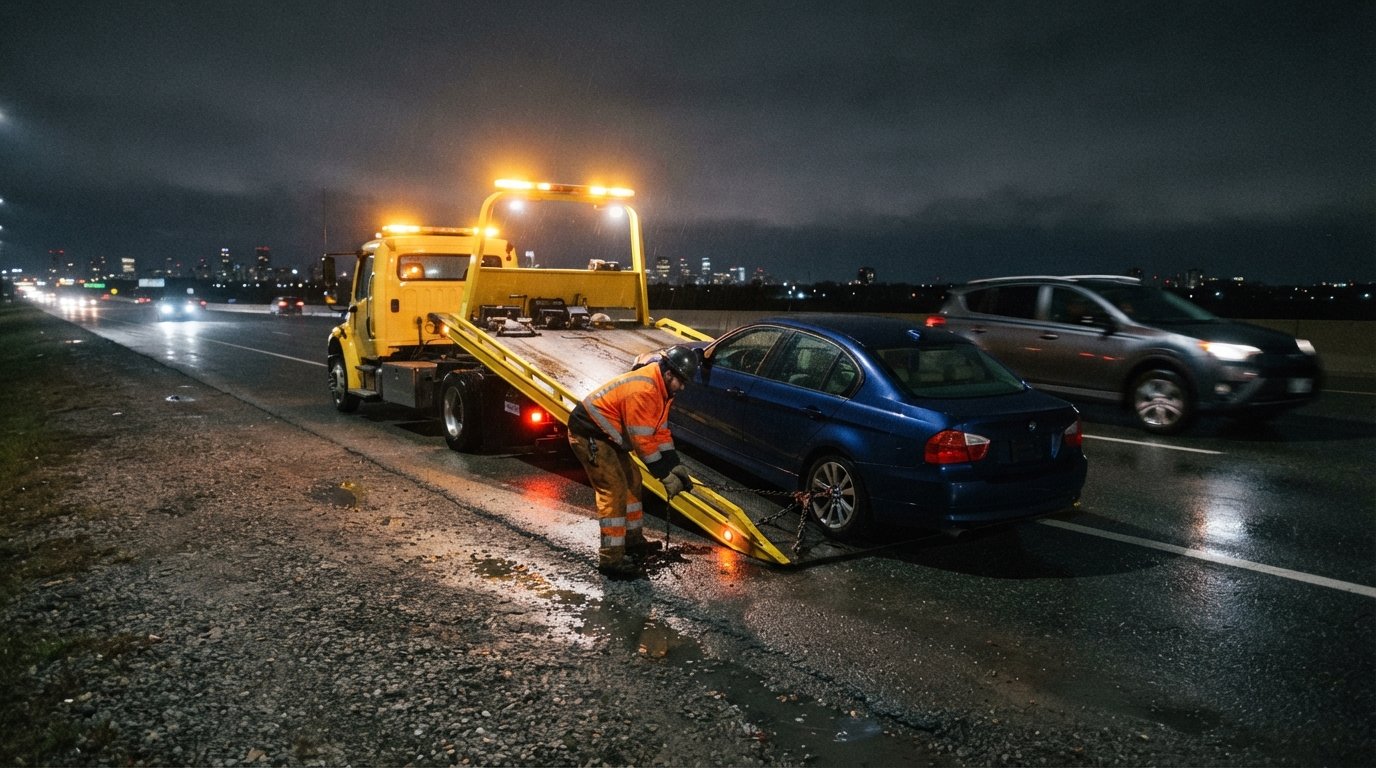
Tow truck operators and roadside assistance workers face one of the most dangerous jobs in the country. To protect them, and to protect passing drivers, state and federal rules require specific warning devices and visibility equipment. These rules are not just safety guidelines; they are evidence of the standard of care. If a tow operator failed to set out cones, failed to activate flashing lights, or parked in a travel lane without adequate warning, that failure can support a negligence claim.
Federal motor carrier safety regulations apply to commercial tow trucks that meet certain weight thresholds, and many states have additional rules for all tow vehicles. Common requirements include reflective clothing, warning triangles or flares, rotating amber lights, and proper placement of the truck itself. The specific rules vary by state and by road type, so it is important to preserve evidence of the scene exactly as it was before anything was moved. Photographs of cone placement, lighting, and vehicle position can be worth more than any witness statement.
Evidence to Collect: Lighting, Cones, and Placement
If you are physically able, or if a family member or bystander can help, document the scene immediately. Time is critical because tow operators often clear the scene quickly, and road crews may remove debris before investigators arrive. The following items are the most valuable pieces of evidence in a tow truck or roadside assistance accident liability claim:
- Photographs and video of the tow truck, the disabled vehicle, and the surrounding area, including cone placement, flares, and warning lights.
- The tow truck's identifying information: company name, DOT number, license plate, and driver name.
- Contact information for the tow driver, the roadside assistance dispatcher, and any witnesses.
- Weather and lighting conditions, road surface, and any visible signage or lane markings.
- Your own injury documentation, including photos of bruises, cuts, and vehicle damage.
After the scene is documented, request the tow company's dispatch records, driver logs, and maintenance records. These documents can reveal whether the driver was fatigued, whether the truck had a history of lighting failures, and whether the company followed its own safety policies. An attorney can send preservation letters to prevent the company from destroying these records, which is a real risk in commercial cases.
Special Deadlines and Legal Hurdles in Public Entity Claims
Claims against government entities come with traps that do not exist in ordinary negligence cases. The first is the notice of claim requirement. Depending on the state, you may have to file a written notice with the correct agency within a short period, and the notice must include specific details about the incident, the injuries, and the amount sought. A vague or late notice can be rejected, and courts are often strict about compliance.
The second hurdle is the statute of limitations, which may be shorter for public entities than for private parties. In some states, the deadline to file suit against a city or county is measured in months rather than years. The third hurdle is damages caps. Many states limit how much you can recover from a public entity, even in cases of serious injury or wrongful death. These rules vary widely, so a claim that would be straightforward against a private tow company can become a procedural maze when a government agency is involved.
If your crash involved a government tow truck, a road maintenance vehicle, or a publicly owned roadside assistance program, do not wait. Contact an attorney as soon as possible so the notice deadline can be calculated and met. The same urgency applies to private claims, but the consequences of missing a public deadline are especially severe. A free case review can clarify which deadlines apply to your situation.
How Insurance Companies Handle Tow Truck and Roadside Claims
Insurance adjusters are trained to minimize payouts, and tow truck cases are no exception. They may argue that the tow operator was not at fault, that the injured driver was comparatively negligent, or that the injuries were pre-existing. They may also try to settle quickly, before you understand the full extent of your medical needs. Accepting a fast settlement can be a costly mistake, especially if you later discover that you need surgery or ongoing rehabilitation.
Commercial auto policies often have higher limits, but that does not mean the insurer will offer them voluntarily. You may need to demand the policy limits, request the full claim file, and involve an attorney who can negotiate from a position of strength. If the at-fault driver was uninsured or underinsured, your own policy's uninsured motorist coverage may respond. That is another reason to review all available policies, including your own, before accepting any offer.
For those who are unsure where to turn, a free personal injury case review through CheapInjuryLawyer can connect you with participating attorneys who work on contingency. The service is not a law firm and does not provide legal advice, but it can help you understand your options without upfront cost. Similarly, if your crash involved a motorcycle and a tow truck, the fault analysis can become even more complex, and our guide on motorcycle accident liability when the other driver caused it explains how shared fault and comparative negligence rules can affect recovery.
Steps to Take After a Tow Truck or Roadside Assistance Accident
The actions you take in the hours and days after a crash can shape the outcome of your claim. The following steps are not a substitute for legal advice, but they are a practical framework for protecting your rights:
- Call 911 and request police and medical assistance. A police report is valuable evidence, even if the responding officer does not assign fault.
- Document the scene with photos and video, focusing on warning devices, lighting, vehicle placement, and road conditions.
- Exchange information with the tow driver and any other drivers, and collect witness names and phone numbers.
- Seek medical attention promptly, even if you feel fine. Some injuries, such as whiplash and concussions, do not appear immediately.
- Notify your own insurance company, but avoid giving a recorded statement to the tow company's insurer without legal guidance.
- Keep all medical bills, repair estimates, and correspondence related to the crash in one organized file.
After the immediate steps are complete, the next priority is identifying all potentially liable parties and their insurance coverage. A tow truck may be owned by one company, operated by a contractor, and dispatched by a motor club, and each of those entities may have its own policy. An attorney can run the necessary searches and send preservation letters before evidence is lost. If you are unsure whether you have a claim, a no-cost case review can help you decide without obligation.
Frequently Asked Questions About Tow Truck Liability Claims
Can I sue a tow truck company if the driver was an independent contractor?
It depends on the level of control the company exercised over the driver. Courts look at factors such as whether the company set the driver's schedule, provided the truck, and supervised the work. Some states apply a rebuttable presumption that a worker is an employee, while others focus on the right to control. An attorney can review the contract and the working relationship to determine whether the company can be held liable.
What if the tow truck was stopped legally but I still crashed into it?
Even a legally stopped tow truck can be part of a negligence claim if the operator failed to provide adequate warning. Warning device rules exist precisely because stopped vehicles on the shoulder are hazards. If the truck lacked reflective markings, cones, or flashing lights, or if it was stopped in a travel lane without proper notice, the operator may share fault. Comparative negligence rules in your state will determine how damages are divided.
How long do I have to file a claim against a city or state tow truck?
The deadline varies by state, but it is often much shorter than the standard statute of limitations. Some jurisdictions require a notice of claim within 60 to 180 days, followed by a lawsuit within a year or two. Because these deadlines are strict, it is important to speak with an attorney as soon as possible after a crash involving a public entity.
Tow truck and roadside assistance accidents involve layers of liability that most people never expect. From commercial insurance policies to sovereign immunity rules, the path to recovery requires careful evidence gathering and a clear understanding of deadlines. If you were injured, do not assume that the tow company's insurer will treat you fairly or that the government will voluntarily accept responsibility. A free, confidential case review can help you identify the responsible parties and protect your right to compensation.